Wednesday, 18 June 2008

Rahu Chab Chann

When the moon underwent a partial eclipse on July 5, you may not even have noticed.
Many young Khmers, too, went on with their daily lives as if nothing was happening
But for many older Cambodians, especially those in the countryside, the implications are far reaching. They believe that the night time lunar eclipse that occurred on July 5 between 8.30 and 10.57pm may shape their lives for months to come.
The scientific explanation of an eclipse is an obscuring of light from one heavenly body by another. A lunar eclipse occurs when the earth blocks the sun's light from the moon.
But in Khmer, the eclipse of the moon is called Rahu Chab Chann. Rahu (pronounced Reahou in Khmer) is the king of all demons and evils, chann means moon and chab means to catch or swallow.

 
Rahu appears in both Brahmanist and Buddhist legend.
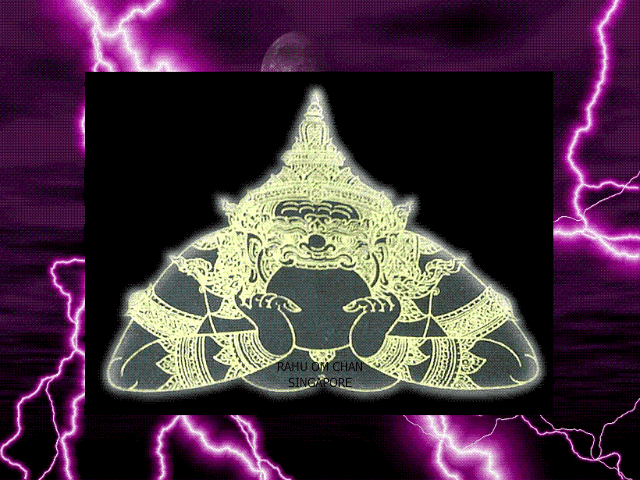
Rahu, or Rahu a'surin, rides through the sky on a silver chariot. Rahu is a being which exists like a mask _ he has no body, just a head with round bulbous eyes, a human or sometimes a lion's nose, and claw-like hands.
Rahu causes eclipses by seizing and swallowing the sun and the moon. They eventually reappear from inside his throat, thus ending the eclipse, but the battle is never ending and Rahu immediately resumes his quest to eat the sun and moon once more.
His picture is commonly found over the lintels of both Hindu and Buddhist temples.
One of the most striking portrayals of this powerful spirit can be seen in Takeo Province, on the old concrete portico of Banteay Trav Pagoda, on National Road 2, just between Tonle Bati Resort and Phnom Tamao Zoo, about 30 km south of Phnom Penh.

 
Rahu serves a protector of the temples. His picture is also often found above doorways of traditional Khmer houses, as a reminder of his terrible powers and to protect the inhabitants. What better way to keep the ordinary demons and devils from the door than to have their king sitting above the doorway?

To traditional Khmers, the eclipse is a time of mixed emotions. On the one hand, it is terrible to see the moon or sun devoured by a demon, perhaps never to return. On the other, the length of the eclipse can signal good harvests to come or bad. Believers in the power of Rahu and eclipses says "There are three ways to read an eclipse,"
"If Rahu swallows the moon but quickly spits her out, we believe that farmers will enjoy a very good harvest of rice and secondary crops.
"We will have a moderate harvest when there is Chann kreas chamhieng the moon is swallowed by
Rahu but then bursts of his left or right rib. The last one is a poor fate. The farmers will suffer and reap a poor harvest whenever they observe that Rahu is so hungry he swallows the whole moon straight down his throat and then just defecates her."
When they observe an eclipse happening, many Khmers start to make as much noise as possible, banging on pots and pans, hitting farming implements against trees whatever it takes to draw Rahu's attention."We would cheerfully shout 'Juoy Lauk! Juoy Lauk,' which means 'help the moon'!" he said. "By requesting Rahu not swallow the moon, we believed he would not eat it all and leave plenty of fruits and agricultural products to us human beings."

"Rahu chab chann can be also called chann kreas. When we say monus kreas kanlang pee kamneut, it means a person is born half crazy after his soul was kidnapped by a demon," she said.
She said many people still believed that this was a great risk around the time of a lunar eclipse if they watch the eclipse.
"To prevent this, a pregnant woman should place an ak kambor (a small silver or copper box with a conical top used to hold lime for betel nut chewing) in her tnoak sampot (the pleat hanging from the knot of a Khmer skirt) at the time of a lunar eclipse. This will protect her baby from being kidnapped by the demons."
Those building homes during an eclipse must take care, too.
If construction of a house is not yet complete when a lunar eclipse occurs, villagers believe they must tie sbov pleing (a kind of roof thatching plant with large leaves (in Latin, rottbelia exaltata) to the main rafter of the roof because demons are afraid of sbov pleing.
Though they live in modern world, many Khmers believe the planets influence their daily life. Most farmers still stand staunchly by traditional observations and rituals, such as the lunar eclipse, and predictions gleaned from the Royal Ploughing Ceremonies and Water Festival.

Even today, Khmers build temples and houses based on their knowledge of astrology to determine auspicious sites and other factors of importance.
Belief in Rahu is an example of intangible heritage. If the locals think such a practice is helpful to their daily life, let us help to rehabilitate and promote it.
Source: Leisure Cambodia July-August, 2001 Vol 1 No.3

Rahu, Visnu and Garuda

Tuesday, 17 June 2008

Bogus Monk in Singapore

This is a real picture of a typical Bogus monk in Singapore. It's sad that they tarnished the reputation of monks.

Friday, 13 June 2008

信仰的类别

常听到有人说:「只要心好就好了,何必信仰宗教呢?」既然心好,为何不信宗教呢?也有人说:「我什么都不信。」然而一旦遇到人生重大苦难,例如失意、失业或生病时,很自然就会想要找一个宗教来依靠,尤其家中有人往生时,也会找法师诵经,所以人只要有生死问题,就离不开宗教。

基本上,人本来就是宗教的动物,必然要有宗教信仰,只是谈到信仰,也有层次上的不同,一般可分为四种类别:

一、邪信:

有的人一开始信仰宗教就走错了路,信了邪魔外道,这就是「邪信」。

二、不信:

比邪信好一点的是「不信」,不信仰任何宗教固然不好,但是至少他没有走错路,没有中毒,将来再选择一种正确的信仰,还有得救的机会。

三、迷信:

有一种人信仰虔诚,虽然不懂教义,不会分辨而「迷信」,但迷信总比不信好一点,因为虽然迷信了,总还有一种信仰。像一些老公公、老婆婆,手里拿着一枝香,虔诚的跪在神明面前,口中喃喃有词,在一般人看起来是迷信的行为,但是他们那一片纯真的心,是非常可贵的。至少宗教劝善止恶的观念,已深植在他们的心中,因此即使是迷信,也比不信好。

四、正信:

当然,信仰宗教还是「正信」最好。所谓「正信」宗教,就是必须信仰具有历史考据的、信仰世界公众承认的、信仰能力威势具备的、信仰人格道德完美的。

「正」是正常、正当、正确;正就是对的、好的、善的。例如我们建一栋房子,要强调「正」,栋梁要正,门窗要正;宁可「正而不足」,也不可「邪而有余」。「正」的重要,由此可见。

自古以来,有人类便离开不了宗教,宗教信仰是发乎自然、出乎本性的精神力。宗教的重要,在于能领导生命的大方向,能将生命之流的过去、现在、未来衔接,所以人人都应该有宗教信仰,尤其有正信的宗教为导,我们的生命才有规范与目标,我们的心中才能找到真正的自我。

来源:人间福报

Thursday, 12 June 2008

不为小事烦恼


在古时候的中国,有一位师傅问他的两个徒弟应怎样对待人生。其中一个徒弟回答道:'身是菩提树,心如明镜台,时时勤拂拭,莫使惹尘埃。这里,他的意思是说做人应时时保持自己心灵的纯净,遇到问题时,应想方设法地去解决。
 
这个徒弟说得不错,但另一个徒弟却有另一番见解,这个徒弟说:'菩提本无树,明镜亦非台,本来无一物,何处惹尘埃。'这个徒弟是在说,世界上的得与失,成与败都是相对的,并没有真正的得失和成败,所以不必事事太过在意。"
 
有时候我们总希望能把每一件事情都做好,但偶尔也应该放轻松,不要事事都太执著。试着用开朗豁达的心态去面对身边事物,不再为一些小事烦恼。

Wednesday, 4 June 2008

理财,理事

理财不理事

理事不理财

~~~佛教居士林李木源先生


任何一个慈善团体或宗教团体的负责人都应该以这套哲学作为经营管理的方针. 不论是捐款还是香油钱都一定要很妥善处理,一分一毫都不可以滥用才能够向信众,有心人士交代. 其实这点是人们的通病,每个人都希望能够拥有权利,既想管财,又想管人,搞到自己一个头两个大. 这时候思考能力降低,耳朵也相对的变轻了,只要身边的人开口跟他商量任何事,包括先拿钱来周转时,他可能就会不设防,那么事情就糟了.

只要是跟钱财有关的,希望大家都要保持脑袋清醒,不要让人有机可乘, 很多人其实是有目的地在一步步藉机会取得你的信任以达到他们的目的,一旦你心软了,到时候赔了夫人又折兵,对不起广大民众.也让自己伤心,失望.

奉劝那些想借行善,宗教,信仰之名来达到目的,利用人性本善的天性来达到你们想要的名与利时,人在做,天在看..再穷也千万不要动那些钱..有些债是一辈子也还不清的. 还有一些眼睛和耳朵都被人给蒙住的人, 多用心去看, 失去了眼和耳你还有一颗善良的心,不要让人利用,仔细听佛祖给你的建议,任何人都可能在利用你,欺骗你,只有佛~~~他才是唯一可以帮助你看得更清楚.


Thursday, 29 May 2008

Glass coffin with body of revered Buddhist monk stolen from Myanmar monastery

Ven. Tharmanya Sayadaw - U Vinaya (1910- 2003 )

A group of armed men on Wednesday stole the body of one of Myanmar's most revered Buddhist monks, whose corpse has been preserved in a glass coffin since he died more than four years ago. Officials said the coffin containing the body of Sayadaw Bhaddanta Vinaya, better known as Thamanya Sayadaw, was stolen from the monastery in eastern Myanmar where he had preached.

The officials, who insisted on anonymity because they were not authorized to release information, said at least nine armed men wearing camouflage clothing carried out the theft. They said they had no idea who they were or why they took the body.
Thamanya Sayadaw ― the abbot of Thamanya mountain ― was a highly revered monk who attracted thousands of followers to his temple daily before he died in November 2003 at the age of 93.
Among those who journeyed to pay homage to him at his mountain retreat 160 kilometers (100 miles) east of Yangon was pro-democracy leader Aung San Suu Kyi. She, like most people in Myanmar, is Buddhist.

Emerald Buddha - Wat Phra Keow, Chiang Rai

Wat Phra Sri Rattana Satsadaram  วัดพระศรีรัตนศาสดาราม
 
This is Chiang Rai's Temple of the Emerald Buddha, which claims to be the original Thai home of the Emerald Buddha. Wat Phra Kae is attributed as being the first royal temple of Chiang Rai.

Although no one can confirm the date of its construction, it is believed that the temple has existed ever since the city was founded. It was initially known as "Wat Pa Yia" which means the yellow bamboo forest in Thai as there was a lot of bamboo growing in this area.

The Emerald Buddha is believed to have been hidden in the chedi of Wat Pa Yia by King Mahabhrom in 1392 A.D. Legend tells that In the year 1434 A.D.the Emerald Buddha was discovered by chance when lightning struck the chedi. After this, the name of the temple was changed to Wat Phra Kaew. The Emerald Buddha remained in Chiang Rai for 45 years before being taken to Chiang Mai. However, the elephant carrying it refused to go all the way and the image was housed in a temple in Lampang for 32 years. Then in 1468, it finally moved to Chiang Mai where it stayed for 85 years at Wat Chedi Luang. In 1553, it was captured and taken to Laos where it stayed for 225 years. The Thais, under King Taksin, retrieved the sacred image and took it to Thonburi and then finally to its present location in Bangkok in 1778. A replica of the Emerald Buddha was created and can be seen in it's original home in the Chiang Rai Wat Phra Kaeo.

The temple contains many interesting design and style features and is definitely worth a visit.
 
Note: Thank you Mr SCY for contributing the photos.

Tuesday, 27 May 2008

Mummified monk at Wat Khunaram

The body of Samui's most famous mummified monk, Loung Por daeng, is on display here in a specially constructed building. When he died more than 20 years ago, he was sitting in a meditation position. He is still in that same position and his body shows few signs of any major decay. Wat Khunaram is on the 4169 ring-road between the Na Muang waterfalls and Hua Thanon.

Phra Khru Samathakittikhun (Dang Piyasilo) or Loung Por Daeng, was born in 1894, was a well respected family man within the local community on Koh Samui and first become ordained as a monk when he was in his early twenties. He spent two years in Wat Samret before exiting and marrying a local lady from Lamai with whom he had six children, a few still alive on the island today.

Upon reaching fifty years of age, once his children were all grown up, Loung Por Daeng, decided to dedicate the latter part of his life to Buddhism and returned to the temples where he felt so at peace. He was ordained as a monk in 1944.

He then travelled to Bangkok where he spent some time studying and learning more about Buddhist texts and meditation, one of the great passions of his life.

It is believed that upon returning to Koh Samui he went to meditate in a cave, Tham Yai in Lamai, which is located within present day Tamarind Springs.

Later he moved to Chaweng and was one of the first monks to stay in the location that nowadays is known as Wat Pang Bua. He was one of the first Jao Wat's, which is the Thai term for Abbot, who led the temple into its present existence.

Following this, he decided to return to his family home, which was located just behind the current Wat Kunaram where the temple school is located. Most famously, two months before his death, at the age of 79 years and 8 months, he requested the company of his students to inform them that he felt his death was imminent and wanted to instruct them as to his last wishes. He requested that should his body decompose that he be cremated and his ashes scattered at the famous 'Saam Jaeg' in Hua Thanon, meaning the three forked road intersection, in Thai.

He went on to request that should his body not decompose, he would like to stay at the temple and be placed in an upright coffin on display as a symbol to inspire future generations to follow Buddhist teachings and be saved from suffering.

In his final seven days of mortal life, he no longer spoke to anyone or ate or drank anything, concentrating solely on his mediation and the path to enlightenment. He died a week later in the same position that we can see him sitting in nowadays.

He's in impeccable condition considering he died 30 years ago and on his head one can still see some hairs.

When his eyes fell into his head, the monks at the temple fitted him with some sunglasses.

He is still sitting in the original position of his meditation.

Luang Phoo Budda Thawaro


Monk Luang Phoo Budda Thawaro, hundred and one years old, has been dead for more than thirteen years stands before his congregation.

Monday, 26 May 2008

Blogging will be temporary impossible!

Sigh.. I don't know what's wrong with the PC at home. It just can't stop "hanging"! I can't access to my Internet, the stup** message " Internet explorer not responding" keep coming out and the page just don't seem to be open at all. Not only did it happen to blogger but hotmail and many more. I'm not an expert in this, I don't know how long will this last, I have no idea what's wrong, I have scan for virus, nothing happen!

I can't blog in the office and now I can't do it at home! Arrggg.. It's so frustrating! I have some article on hand, but since I'm outside now, I can't post all up.. It's really really frustrating!

Well, I almost throw the PC down from 18 floor yesterday, I guess i'll just let it rot till some kind soul come and visit my PC, as for when?? I DON'T KNOW! What to do, It's not the latest model nor the best PC so I can't expect much from it! Guess "she is just too tired and needs a rest. Meanwhile Let see what will happen, I'll find my ways to put up the article somehow!


Tmrw will be better! :)

Dead Monk Walking

Supported by his fellow monks, Luang Phoo, 101 years old, stands before his congregation.

He has been dead for 13 years.

Wat Krang Chu Si Charoensuk is located near Singburi, a provincial town in central Thailand, a couple of hours north of Bangkok. Born in 1894 in Lopburi and ordained in 1922, the revered monk acted as abbot for several monasteries, surviving wars, civil conflict, dictatorships and military coups. His charisma brought people to the temple. Under the guidance of Luang Phoo, life at Wat Krang Chu Si Charoensuk blossomed.

Nowadays, Luang Phoo rests in a glass coffin within the wat's prayer hall. On his birthday, he is lifted from his slumber, cleansed and paraded in front of the ever-shrinking congregation.

Once Luang Phoo has been extracted from the glass coffin Everyone pushes to the front to pay their respects. Camera flashes illuminate the scene while the monks undress the dead abbot and put a new orange robe on him. A woolly hat is pulled over Luang Phoo's bald skull. A second hat is pushed on top. Even his socks are changed. Finally, the crowd pushes in, tiny flakes of gold in their hands

Finally, the other monks pick up Luang Phoo as gingerly as possible and maneuver him back towards his coffin. Eventually, the monks manage to return the corpse to its repository with sufficient dignity.

Incredibly, the abbot does not decompose. His body has mummified, allegedly because Luang Phoo dehydrated himself on his deathbed. It is believed that a monk who does not decompose following his death should be preserved and worshipped. Often, local authorities disagree and there have been conflicts over whether to burn some monks' remains or keep them in a glass coffin, as at Krang Chu Si Charoensuk.

Friday, 23 May 2008

Buddhist monks produces free wheelchairs

Phra Khru Boonchuay Khantivaro is the abbot of Mongkhol Thep Prasit Temple in the central province of Lopburi.

Over the past ten years, he has led a group of villagers in producing wheelchairs, efforts which have helped a total of 4,000 disabled people to carry out their errands and daily life.“Some disabled people cannot run an errand. Therefore, we want to help them. A finished wheelchair is delivered to the provincial administration, which can give it away at its own choice. But my wheelchairs cannot be sold.”, said Phra Khru Boonchuay.

Phra Khru used cash donations from his temple to buy wheelchair frames and major parts.Before entering the monkhood, Phra Khru Boonchuay was a mechanic. That’s how he’s able to produce a wheelchair which costs about 3,000 Baht, while a typical one is sold at around 10,000 Baht. His team can produce a total of around 300 – 400 wheelchairs per month.

Despite his goodwill, some cynics said the abbot initiated the project in the hope of gaining publicity. The abbot said the criticism was only natural."At first, the criticism was rather strong. But it has been less severe. Criticism is an unavoidable component of our life. What we should do is to keep doing good deeds in order to pay for our sins in a past life.", said Phra Khru Boonchuay Despite being a Buddhist monk, Phra Khru Boonchuay took several years to prove his good intentions.

He has promised to carry on the charity project for many years to come.

Thursday, 22 May 2008

Thai superstitions and Old Wives Tales

(1) Do not kill big animals such as elephant, horse, cow, buffalo, etc. because it is a big sin
(2) Do not touch a buffalo horn because it won't grow any more
(3) Do not turn over a puppy because it will go and eat your chicken
(4) Do not touch a horse's tail because it will get sick
(5) Do not hit a dog with a bamboo pole meant for carrying things because it will become rabid
(6) Do not hit a cat because it is as much sinful as hitting a novice monk
(7) Do not hit a cat on the head because when you grow old your head will shake like the cat did when you hit it
(8) Do not rest a cow or a buffalo in the temple grounds because it is a sin
(9) Do not let a black cat jump across a corpse because the dead spirit will then become an angry ghost
(10) Do not raise five cats and six dogs because it will be bad luck for you
(11) Do not chain a monkey because your children will have small wrists like it has been chained(12) Do not pat a cat’s back because you will make it thin
(13) Do not catch a firefly because your plates and bowls will break often
(14) Do not allow a husband and wife to go and see a snake together because the wife will have a miscarriage


Credits: Richard Barrow

Wednesday, 21 May 2008

Old Buddha statue stolen, pets killed

AYUTTHAYA : Thieves poisoned temple dogs and cats at Wat Pueng Dad in Bang Pahan district on Sunday night and stole an ancient Buddha statue, police said.

Abbot Phra Kru Santisunthorn said the thieves broke the lock on the entrance door of the ubosot, or ordination hall. The dead temple pets were found inside.
A gold-plated statue of Buddha subduing Mara was missing from its pedestal. The four centuries-old statue was invaluable, dating back to the early Ayutthaya period, he said.
The abbot believed the thieves gave the animals food laced with poison to make it easier for them to steal the statue, which was heavy. He said they would have needed a vehicle to take it away. A donated sound system kept in a nearby pavilion was also stolen.

Police believed the thieves may have been paid to steal the statue.

Bangkok Post 20.05.2008

Karma - Thai Point of Views

If you do something wrong now, it will catch up with you in a later life. Many Thai Buddhists believe this, as well as people from other religions around the world. People in Thailand are very subservient which means that they often accept whatever is given to them without complaining. If they are poor in this life it is because of consequence of a bad deed in a previous life.


* If you build or maintain public roads in this lifetime, you will have your own car in the next.

* If you donate robes to a monk in this lifetime, you will have fashionable clothes in the next.

* If you donate food to the poor in this lifetime, you will have plenty of food in the next.

* If you are stingy with your money in this lifetime, you will be poor in the next.

* If you donate money to the temple in this lifetime, you will have a large house in the next

* If you put flowers on the shrine in this lifetime, you will be beautiful or handsome in the next.

* If you pray often in this lifetime, you will be clever in the next.

* If you release birds or fish

* you will enjoy a long life in the next.

* If you kill people in this lifetime, you will die young in the next.

* If you abuse your husband in this lifetime, you will be a spinster in the next.

* If you have affairs with married women in this lifetime, you will never find a wife in the next

* If you donate oil for lamps at the temple in this lifetime, you will have bright eyes in the next

* If you are rude to your parents in this lifetime, you will be deaf and dumb in the next

* If you didn't pay your debts in this lifetime, you will be born as a cow in the next.

* If you donate medicine for sick people in this lifetime, you will be healthy in the next

* If you are cruel and cold-hearted in this lifetime, you will be all alone in the next.

* If you like to look at nude pictures in this lifetime, you will be blind in the next.

* If you gossip about people in this lifetime, you will have a harelip in the next.

* If you like cheating people in this lifetime, you will be born as an animal in the next.

* If you don't help people in danger in this lifetime, you will be in prison in the next.

* If you sneer at beggars in this lifetime, you will starve to death in the next.

* If you look down on servants in this lifetime, you will be ugly in the next.

* If you don't believe in the Buddhist teaching in this lifetime, then you will be deaf in the next.

* If you hurt animals in this lifetime, you will have leprosy in the next.

* If you are envious of other people in this lifetime, you will have body odour in the next

* If you make a false charge against a monk in this lifetime, you will be struck by lightning in the next.


Although there is nothing you can do about it for this lifetime, you can take steps to give yourself a better time in the next life or the one after that.

Karma - Thai Point of Views

If you do something wrong now, it will catch up with you in a later life. Many Thai Buddhists believe this, as well as people from other religions around the world. People in Thailand are very subservient which means that they often accept whatever is given to them without complaining. If they are poor in this life it is because of consequence of a bad deed in a previous life.

* If you build or maintain public roads in this lifetime, you will have your own car in the next.
* If you donate robes to a monk in this lifetime, you will have fashionable clothes in the next.
* If you donate food to the poor in this lifetime, you will have plenty of food in the next.
* If you are stingy with your money in this lifetime, you will be poor in the next.
* If you donate money to the temple in this lifetime, you will have a large house in the next
* If you put flowers on the shrine in this lifetime, you will be beautiful or handsome in the next.
* If you pray often in this lifetime, you will be clever in the next.
* If you release birds or fish
* you will enjoy a long life in the next.
* If you kill people in this lifetime, you will die young in the next.
* If you abuse your husband in this lifetime, you will be a spinster in the next.
* If you have affairs with married women in this lifetime, you will never find a wife in the next
* If you donate oil for lamps at the temple in this lifetime, you will have bright eyes in the next
* If you are rude to your parents in this lifetime, you will be deaf and dumb in the next
* If you didn't pay your debts in this lifetime, you will be born as a cow in the next.
* If you donate medicine for sick people in this lifetime, you will be healthy in the next
* If you are cruel and cold-hearted in this lifetime, you will be all alone in the next.
* If you like to look at nude pictures in this lifetime, you will be blind in the next.
* If you gossip about people in this lifetime, you will have a harelip in the next.
* If you like cheating people in this lifetime, you will be born as an animal in the next.
* If you don't help people in danger in this lifetime, you will be in prison in the next.
* If you sneer at beggars in this lifetime, you will starve to death in the next.
* If you look down on servants in this lifetime, you will be ugly in the next.
* If you don't believe in the Buddhist teaching in this lifetime, then you will be deaf in the next.
* If you hurt animals in this lifetime, you will have leprosy in the next.
* If you are envious of other people in this lifetime, you will have body odour in the next
* If you make a false charge against a monk in this lifetime, you will be struck by lightning in the next.

Although there is nothing you can do about it for this lifetime, you can take steps to give yourself a better time in the next life or the one after that.

Tuesday, 20 May 2008

Rahu the Dragon's Head-Astrology

The North Node of the Moon is called RAHU in Vedic astrology
and the South Node is called KETU.
They are called dark or shadow planets, because of the Nodes' association with the phenomena of eclipses.

They have no sign ruler ships, although they are said to favor Mercury and Jupiter's signs according to some authorities, while others claim that Rahu favors the sign of Aquarius and Ketu the sign of Scorpio.

Rahu, the North Node of the Moon means to conceal, engulf or hide in Sanskrit. This Graha is associated with the world of material manifestation and worldly desire. Rahu is associated with the spiritual process of involution, or the engrossing of spirit in materialization. Rahu is a karaka, or indicator, of worldly desire, fame, greed, high intelligence, manipulation, obsessive behavior, foreigners, mass disease, dementia and inertia. The nature of this Graha is Vata, or Airy.

The gemstone associated with Rahu is a honey colored hessonite. Rahu reaches full maturity at age 42. The Puranas describe Rahu as half-bodied, born of a lioness, snakelike, having a huge body and being extraordinarily powerful.The Skanda Purana says that Rahu is instrumental in strengthening ones power and converting even an enemy into a friend. The effect of snakebite is removed by his grace. The lunar and solar eclipses are attributed to Rahu and Ketu. Rahu and Ketu stay 1 1/2 years in each Graha.

The orphan monks of Myanmar

For these boys, the monastery becomes a family

The head monk chews beetle nut as he quietly shaves the head of a young boy settled at his feet. A line of 10 others, all between the ages of 5 and 10, patiently wait their turn to be left with the patch of hair on their foreheads that marks them as orphans.
The simple, rough building that houses the Mhan Kinn Monastery on the outskirts of Yangon will be the only home many of them will ever know, the monkhood the only family they ever have. On average, the monastery takes in about 15 young orphans a year. This year, there are 50. At least until the age of 15, they will wear the bright red robes of novice Buddhist monksTheir limited worldly possessions will include a cup, an umbrella, a toothbrush and an alms bowl. As Theravada Buddhists, they will learn to seek from the community everything they need, from the robes they wear to the food they eat.

Monday, 19 May 2008

LP Noi~~Wat Srisathong

The Venerable LP Noi, together with his adherent LP Djeut
Statues containing the relics of LP Noi

The Venerable LP Noi, was one of the last Masters to have accepted the direct descendants of educations of Phra Rahu, his Temple is one at present of the main places where amulets of Phra Rahu was made and where Phra Rahu is still venerated. Tradition assures that to make a good amulet Phra Rahu it is necessary to use of the coconut shell with an eye which is considered to be a powerful Magical material.
胡

卫塞节快乐

1

一声佛号传千里,一盏油灯照十方, 一香花莲池海会,一品果赞十品德, 一水化甘露法雨,一心皈依佛法僧!

希望天下太平﹐没有战争也没有天灾人祸. 阿弥陀佛!

Sunday, 18 May 2008

Wisakha Puja

Wisakha Puja Day is a very important day in the Buddhist tradition, for it was on this day that Prince Siddhattha Gotama was born, 35 years later became the Buddha, and in another 45 years, passed away into total Nibbana (Parinibbana). In each case, these events took place on the full-moon day in the Wisakha month (usually in May). Wisakha Puja Day is a great Buddhist holiday. It falls on the 15th day of the waxing moon in the 6th lunar month, i.e. full moon day.In Thailand, Wisakha Puja is celebrated throughout the country. On Wisakha Puja Day people put up religious flags outside their houses. They take part in ceremonies at temples and they make merit. They bring flowers, candles, and incense to pay respect to the Triple Gem, i.e. Buddha (the Great Teacher), the Dhamma (the Truth) and the Sangha (the community of followers). In the evening, people take part in candle-lit processions and walk around the main chapel of the temple three times. In the procession, each person carries flowers, three incense sticks and a lighted candle. There is another way of making merit. It is Bhavana or development of the mind. In English Bhavana is usually translated as meditation. Mental development means working from a base of morality (Sila), together with the development of concentration (Samadhi) and mindfulness (Sati). It was this kind of practice that enabled him to become a self-awakened Buddha. It enabled many of his noble disciples to become Arahants as well.

Happy Vesak Day

BUDISMO

Happy Vesak Day !

May you be enlightened by Lord's preachings... And may HIS Perpetual Light shine upon you.

Wishing that Peace and Tranquility be by your side.. Today and Always!

Saturday, 17 May 2008

天狗抱月之神


啦天神佛像外型全身黑色,戴,豹眼獠牙,身高大,口中咬著太阳或月亮,神情十分凶恶,使人望而生畏。
一般人也会奇怪,为何神像只有上半身根据泰國民间记载並转帖如下 :

约于一万年前,啦壶的父亲「他屈神连」,是掌管地狱众生的夜叉王。啦壶少年时很顽皮,性格好动。他不但武藝高強,还会凌空飞行,时常飞上天宮玩耍。有一天,天宮举行大法会,由天帝「拍意實運」主持,保护神「拍啦啦」担当总护法,日神與月神及众天神担任守衛。這次大法会是集合众天神的法力,制造威力強大的甘露圣水。

制造甘露圣水大功告成,众神正在庆祝。啦壶喜愛热闹,好奇地潛入法会观看,卻被日神和月神发觉,將他驱逐出外,态度十分橫蠻。啦壶不甘受辱,便与日月兩神打斗起來。他有飞行之术,跃高竄低,非常迅速,转眼间已失去了踪迹。 

啦壺乱打乱撞的闯进一个密室,飞翔了一会,感到口甘舌燥,拿起供案上的水壶,便喝得一滴不剩。水壺中的竟然是众天神合力製成的圣水。啦壶喝后,功力大增,日月兩神赶到時,已不是他的对手。  
日月兩神发觉啦壺偷喝了圣水,连忙禀报天帝。天帝大怒,召集众天神围攻啦壶。惟是啦壶喝了圣水之后,武功突然增強,众神亦奈何他不得。后來总护法拍啦啦祭起了无圣堅不摧的锯齿金轮,把啦壶橫腰斩断。

啦壶喝了圣水,身体虽被斩断,仍能生存不死,飞返家中。夜叉王得知情由,亲自绑起爱子帶到天宮向天帝请罪。天帝看见啦壺的下身已被斩去,仍能不死,又爱他武藝高強,便赦免了他的罪行,还把他封为护法,以此改邪归正。
由于啦壶的半截身体被斩去,所以佛像是沒有下身的。他被封为天神之后,嫉恶如仇,尤其是最憎恨小人。所以泰国人要剋制小人,便会配戴啦壶天神的佛像。

由于啦壶当日闯入天宮時被日月兩神驱赶,害得他被斩断身体,所以他对日月兩神,仍是怀恨于心,发誓要將天地间所有小人,告密者一一消滅及和吞噬。佛像口咬太阳或月亮,也是这个缘故。泰国人还把日食和月食,当作是啦壶天神对日月兩神的惩罚。每逢日食或月食,泰国人认为这是向啦壶天神请求庇佑和许愿的最好时机。
配戴啦壶天神的佛像,不但可以剋制小人,还可以把衰运转为好运。

Spreading 2,500-year-old teachings


"A lotus grows out of mud, yet it remains unaffected, unstained by the dirty, stagnant water. You are lay people; you live in the world and yet you can lead a spiritual life. It is spiritual values that bring real beauty, colour and fragrance to human life. Without spiritual values, human life is like a flower tree without flowers!"
So preached Gautam Buddha more than 2,500 years ago.


What is Buddha Jayanti?Buddha Jayanti or Buddha Purnima is the most sacred festival of Buddhists. It is the birth anniversary of Lord Buddha and falls on the full moon of the fourth lunar month (month of Vaisakh).The day commemorates three important events of Buddha's life, his birth, his enlightenment and his attainment of Nirvana.
胡

Never Judge a book by it's cover.

I've always wanted very much to help the needy, if i can afford. First was the Tsunami, then the Myanmar cyclone and now the China Quake. Not easy to gather people around to contribute.

Always, there will be someone, whom i should say, just simply did not think before they say something which will hurt others. I sent out a few smses to my friends and relatives, they are people who always help when some disaster happened and a donation is needed. To my surprise, one of them, I wonder what went wrong, reply me - DON'T WANT! yes, in cap and just these 2 words.

Okay, i was shocked, but at the same time telling myself, it's alright, all these donation are voluntarily, i can't force people to do so, but i was really taken back by the reply, but that won't stop me from doing all these, of course I hope no more disaster would happen and I don't have to do so.

This is not the only time, someone once told me they would like to contribute to the old and needy, they proposed to buy food and groceries for them, so I have to do some homework such as list of old folks home, what they need and etc.. after consolidating the info I presented to them and guess what ? First man said " Aiya, i think we should help the orphan instead"! Then the next one said " aiyo, they are so old, and it's their karma to be ended up in the HOME, don't need lah"!

I was angry, very angry with those irresponsible comment from him, very sad that all my effort and hard work gone! I'm just stupid, and not once but cheated twice by the same group of people. That's why I have 2 sets of info at home, but I didn't give up, I can't help much, but i have my siblings and good friend who is willing to help me to help the needy, we visit them like every 6 month and we donate food and medicine to different homes very 6 month, I'm sure i'll be able to complete my list some years, at least i make an effort. We don't earn much, but i think we are much better than the group who drive big cars, wearing expensive clothing but uncompassionate people.

Thank you to my friends and sisters out there who had contributed. Thank you!

Eclipse Myths of India

In India eclipses are believed to be caused by a demon named Rahu.

Legend tells us that long ago the Asurases, gigantic demons battled the Vedic gods led by Vishnu for control of the universe and the possession of the Amrita, the food of immortality. Although the Vedic gods triumphed, during the banquet where they celebrated their victory and were to share the Amrita, one of the Asurases, disguised as a woman entered the hall.

This was the demon Rahu. Stealthily, he approached the banquet table, grabbed the Amrita and absconded with it. But his crime did not escape detection. Both Surya and Chandra the gods of the sun and moon respectively witnessed the theft. Becoming the first cosmic crime stoppers, they immediately informed Vishnu. Grabbing the huge stone discus that was his chief weapon in battle, Vishnu immediately went searching for the demon. When he caught up with him, Rahu was preparing to partake of his stolen meal. In a flash Vishnu flung his discus and decapitated the demon. But as the head of Rahu crashed to the ground, a crumb of the Amrita fell upon his tongue. Thus the head of Rahu became immortal. And to take revenge on both Surya and Chandra for ratting on him, Raha hides at one of the points in the heavens that crosses both the paths of the sun and moon (the two points are called the ascending and descending nodes. Rahu hides at the ascending node) Whenever Surya or Chandra venture too close to him, he attempts to devour them.

Devout Indians when an eclipse begins, raise a noise to frighten away Rahu. If they are successful, the eclipse is only partial, and the sun or moon proceed on unharmed. If they fail, however, the demon succeeds in swallowing his solar or lunar prey and the eclipse is total. But no real harm comes to either, for as soon as Rahu swallows, the celestial beings re-emerge through his severed neck. Slight variations to this legend deal with the other half of the demon.

According to most accounts his hind quarter became Ketu and hides at the descending node and also attempts to swallow Surya or Chandra during an eclipse. However, according to some variations to the legend, Ketu became the constellations. Still another account says that the hind quarter became poisonous vapors and mists that fall to earth during an eclipse. Therefore Indians turn all pots and other containers for food or water upside down. Food left uncovered during an eclipse is thought to be spoiled and thrown out. Beggars, driven more by hunger than a fear of cosmic impurity, usually fare very well during eclipses.

Friday, 16 May 2008

He's the real boss

Thai PM Samak's worship of the mythical snake Rahu underscores Thai politicians' obsession with the much-feared mythical figure.

-Daily XPress Woranaree Kosajan and Budsarakham SinlapalavanSat,

Apr 19, 2008

Daily XPress


PM Samak Sundaravej is in good spirits about his fortune, or duang, and that of his government's after participating in an elaborate ritual worship of the mythical snake Rahu.

But wait. Are the stars above Thailand in Samak's favour?

Other astrologers believe that the duang mueang, or city fortune, will be bad for most of the year."Jupiter is now in an abnormal position. Speaking in layman's terms, Jupiter is under the influence of bandits. This will continue for another three months, until some time after June 6," says an amateur astrologer who asked not to be named."But then you have to watch out for incidents in August and September. This year is not peaceful at all," she says.

Samak sneaked into Wat Traimitr Wittayaram in Bangkok on Thursday evening to participate in the worship of Rahu, the mythical snake that swallows the sun and the moon and causes eclipses. Rahu is associated with bad omens when it moves to certain positions. This time it's moved to lakhana, or in the ascendant, which is the origin of all beings and the universe, and this creates bad omens, leading worshippers to pray for bad luck to disappear. Samak is reluctant to discuss participation in the ceremony, asking reporters not to make a big deal of it. Samak says "of course" his spirit was lifted after the ceremony. "If my spirit wasn't lifted, why would I do it in the first place? This is not about duang. There were lots of people at the ceremony."Several astrologers say Samak's duang hasn't been good lately because Rahu moved to lakhana.But Samak says: "Rahu did not eclipse anything. But take a look: Rahu has eclipsed us all."Samak says Rahu moved out of lakhana yesterday, but other astrologers say that won't happen until tomorrow, or Monday.Samak believes Rahu's move from lakhana will improve the situation for his government."It depends on the beliefs of each individual, but I believe things should be better," he said.

Is it appropriate for the PM to worship Rahu? Pinyo Pongcharoen, president of the International Astrology Association, says Samak might be afraid something bad will happen to him because Rahu had moved."It's a personal belief to worship Rahu. People make merit, which makes them happy and confident," he says, adding the ritual is, at least, a reminder to the PM to rule with prudence and consciousness."It was a normal event. The ritual is a part of local culture," says political scientist Pitch Pongsawat. He says Samak did it for personal reasons, not on behalf of the country.

关公

关公-成隍庙 (上海)
关公- 澳门

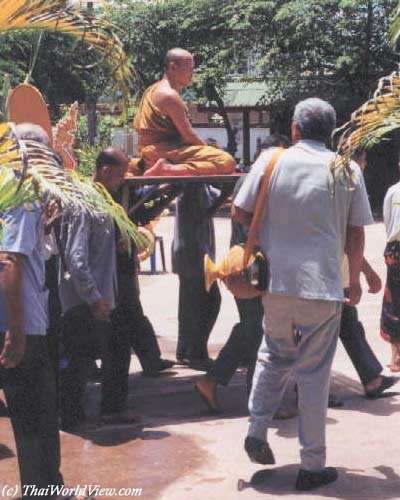
Carry abbot ceremony

Some Buddhist ceremonies happen for special events. For example, if a monk decides to stay longer in a temple or has reached a new level of wisdom and knowledge, a ceremony might be organised to celebrate the event.

In the morning Thai people bring food, gifts, money for the temple. Women and men will help to prepare the feast and cook the dishes. It is an occasion to gather together and to gossip together. The Buddhist feasts have always soldered the Thai community since centuries.
Before and after the meal the abbot says a speech. All the monks staying in the monastey are present.
In the afternoon the abbot and the "celebrated" monk are lifted and carried three times around the temple. Faithful people sing and shout loudly. Everybody enjoy the feast
Then the ceremony finishs with a visit to the cemetery. The aim is that deceased persons also receive their part of merit.

Thursday, 15 May 2008

致四川地震不幸罹难的灾民

天灾让很多人失去了自己的家人,那种痛是非笔墨所能形容的.绝非一朝一夕能忘记的. 刚刚才把捐给缅甸灾民的奶粉和水送到,又传来了四川的不幸...我们能做的也不多,没有什么东西能弥补他们所受的创伤,唯一能做的是替罹难者念经,希望他们能安息.

往生净土神咒
南无阿弥多婆夜。哆他伽多夜。哆地夜他。
nā mó ā mí duō pó yè。duō tuō qié duō yè。duō dì yè tuō。
阿弥利都婆毗。阿弥利哆。悉耽婆毗。
ā mí lì dū pó pí。ā mí lì duō。xī dān pó pí。
阿弥唎哆。毗迦兰帝。阿弥唎哆。毗迦兰多。
ā mí lì duō。pí jiā lán dì。ā mí lì duō。pí jiā lán duō。
伽弥腻。伽伽那。枳多迦利。娑婆诃。
qié mí nì。qié qié nuó。zh duō jiā lì。suō pó hē
大悲咒经文
南無、喝囉怛那、哆囉夜耶.南無、阿唎耶,婆盧羯帝、爍缽囉耶.菩提薩埵婆耶.摩訶薩埵婆耶.摩訶、迦盧尼迦耶.唵,薩皤囉罰曳.數怛那怛寫.南無、悉吉慄埵、伊蒙阿唎耶.婆盧吉帝、室佛囉愣馱婆.南無、那囉謹墀.醯利摩訶、皤哆沙咩.薩婆阿他、豆輸朋,阿逝孕,薩婆薩哆、那摩婆薩哆,那摩婆伽,摩罰特豆.怛姪他.唵,阿婆盧醯.盧迦帝.迦羅帝.夷醯唎.摩訶菩提薩埵,薩婆薩婆.摩囉摩囉,摩醯摩醯、唎馱孕.俱盧俱盧、羯蒙.度盧度盧、罰闍耶帝.摩訶罰闍耶帝.陀囉陀囉.地唎尼.室佛囉耶.遮囉遮囉.摩麼罰摩囉.穆帝隸.伊醯伊醯.室那室那.阿囉參、佛囉舍利.罰沙罰參.佛囉舍耶.呼嚧呼嚧摩囉.呼嚧呼嚧醯利.娑囉娑囉,悉唎悉唎.蘇嚧蘇嚧.菩提夜、菩提夜.菩馱夜、菩馱夜.彌帝唎夜.那囉謹墀.地利瑟尼那.波夜摩那.娑婆訶.悉陀夜.娑婆訶.摩訶悉陀夜.娑婆訶.悉陀喻藝.室皤囉耶.娑婆訶.那囉謹墀.娑婆訶.摩囉那囉.娑婆訶.悉囉僧、阿穆佉耶,娑婆訶.娑婆摩訶、阿悉陀夜.娑婆訶.者吉囉、阿悉陀夜.娑婆訶.波陀摩、羯悉陀夜.娑婆訶.那囉謹墀、皤伽囉耶.娑婆訶.摩婆利、勝羯囉夜.娑婆訶.南無、喝囉怛那、哆囉夜耶,南無、阿唎耶.婆嚧吉帝.爍皤囉夜.娑婆訶.唵,悉殿都.漫多囉.跋陀耶,娑婆訶.
愿以此功德。庄严佛净土。上报四重恩。下济三途苦。若有见闻者。悉发菩提心。尽此一报身。同生极乐国。
愿以此功德回向给地震中的灾民.

Wednesday, 14 May 2008

The Planets- Rahu & Ketu

Rahu has smoke like blue body, lives in forests and is horrible. He is windy in temperament and is intelligent. Like Rahu is Ketu.

Myth:
Lord Vishnu was dispensing amrita (divine nectar) amongst the gods. A demon, Rahu, was hiding himself and imbibing the drink without Lord Vishnu's knowledge. The Sun and the Moon discovered him and alerted Lord Vishnu. Vishnu threw his discus, cutting off the head of Rahu, but he had already swallowed the nectar and was now immortal. Therefore, there remained an immortal head called Rahu and an immortal body called Ketu.
Significations of Rahu:
Foreignness, strangeness, that which is unfamiliar. Rahu and Ketu form the army of the planetary cabinet. Ketu is the "flag" and Rahu is the marching troops. Therefore, Ketu represents that which is already conquered and Rahu represents that which is to be conquered. Other significations of Rahu are: Maternal grandmother, paternal grandfather, multicolored clothes, outcastes, lead, impulse, disillusionment, compulsions, obsessions, immaturity, insanity, fear from the unknown, worldly desires, separation, crime, drugs, extreme changes, upheavals.
Significations of Ketu:
Innate talents, intense scrutiny, dissatisfaction, doubt, fear from past experiences, mystical experiences, occult knowledge, asceticism, intrigues, enlightenment, worldly indifference, maternal grandfather, paternal grandmother. Ketu, as being the "flag", represents what we have already conquered and become very familiar with. The saying "familiarity breeds contempt" comes directly from Ketu as Ketu makes us contemptuous of all that is substantive.

Tuesday, 13 May 2008

Prayers

For Buddhists in Thailand, incense is an important element of worship to pay respect to Buddha.
When praying and requesting a favor to the Lord Buddha, Thai people take three incense sticks (ธููป), i.e one for the Buddha, one for the Sangha (สังฆ - Buddhist community), one for the Dharma (ธรรม - teachings of the Buddha), a flower (ดอกไม้ - orchid or lotus, which symbolizes the Buddhist teachings purity) and a small candle (เทียน - it symbolizes comprehension enlightenment). They lit the incense sticks and kneel three times and put the incense sticks in front of the statue.

They cover the Buddha statue with a thin golden leaf to honour Buddha teachings. In case of pain, the thin golden leaf shall be stuck at the same painful location on the Buddha statue.Garlands ("DOOK MALAI" - ดอกมาลัย) are also offered to Buddha statues. Their white color symbolizes the beauty of Lord Buddha teachings. When they get old, they symbolize the life impermanence.Thai Buddhist people also read the future in paper wrapped around sticks. In a box there are a few sticks. They move the box up and down in order that a stick falls from the box. Then they read the paper to know their future.
Buckets are offered to monks as a way to get merit. In buckets can be found many items such as rice, washing powder, medicine, monks clothes, fruit juice, candles, matches, soap, umbrella, sandals, lights, milk, tins, brushing tooth paste and brush, water, toilet paper, noodles. Bulks are wrapped with transparent paper. In some crowded temples, buckets are not opened and are sold again immediately. In fact there are more buckets sold than monks living in the temples. It is just an another way to get merit.

Monday, 12 May 2008

Another Hindu Version - Rahu

Rahu, the planet in shadows, is accorded recognition by the Indian astrologers and like Ketu, this planet is also not visible in the galaxy.


Source material: A mine of information about Rahu is available in Brahmaavaivartha puraana, Mahaabhaagavatha, Mahaabhaaratha, Matsya puraana, Rigveda and Vishnu puraana.
Rahu was born to Simhika and Viprachitthi. Rahu’s mother simhika (also known as Simhita) was the daughter of Hiranyakashyapa (Bhakta Prahlada’s father). There are several brothers to Rahu and they are Salya, Nabha, Vaataapi, Ilvala and Namuchi. It is also believed that Rahu is the eldest of the 100 brothers. He also has a sister by name Maahishmathi.

Bhagavatha makes a mention of Rahu in the cosmic churning. As the demons and the gods went on churning the milky ocean with Meru parvatha, several interesting things surfaced and the ambrosia (amrita) is one among them. Lord Vishnu, disguised himself as Mohini, a celestial dancer and took upon himself the task of distributing the amrita. In this process, he elbowed the demons and went on offering the amrita to gods and angels. Seeing this, Rahu impersonates as one of the gods and sits in the row of the gods to partake the amrita. Noticing this surya and chandra alerted mohini. Mohini, loses no time in beheading but by then Rahu swallowed amrita and so he could not be killed. Henceforth the neckline became Rahu and the torno is referred to as Ketu. Since then Rahu is said to have nursed a gurdge against the surya and chandra, and gobbles them up in the wake of an eclipse.
Nature: The fierce face of Rahu adorns a crown and a garland runs round his neck. Clad is black, the four shouldered Rahu sports sword, shield, trishula and varamudra in his four hands. He sits on a lion. As the faint trace of nectar made him immortal, Lord Brahma conferred upon him the status of a planet. The eight horse driven chariot of Rahu is darkness. The presiding deity of Rahu is Yama and Surya in his pratyadhidevata. His position in the galaxy is south - westwards and it resembles a winnowing fan.
Astrology: Born into paithenasa gotra, Rahu is fierdish in nature. He was born in the year parthiva(Rakshasa –in some other books) in bhaadrapada maasa, krishna paksha on the fourteenth day of the waving moon on a Sunday. Visakha is his birth star. Rahu dasa lasts for 18 years. He has no aura of his own as he is considered a "chaaya graha". At the intersecting points of lunar and solar circumferences, there are two dots. The northern dot is called Rahu or the dragon headed and the southern dot is referred to as dragon’s tail. Rahu, like other planets does not preside over particular zodiac sign. Vrishabha lagna is his best place whereas vrishchika lagna is his worst. For ketu, vrishchika is the best place. According to parasara samhitha, kanya rasi is his nature place.
Mrityunjaya japa is considered to be highly efficacious to pacify Rahu. The beejaakshara runs thus:

OM BHRAAM BHREEM BHROUM SAHA RAHAVE NAMAHA

This mantra or the mantra in the Navagraha stotra pertaining to Rahu need to be chanted for 18000 times.

Sunday, 11 May 2008

Rahu Yantra

He is the presiding deity of this shadow (Chhaya). According to the rigveda when Rahu – the son of Asuya or Sinhika covers the sun and the moon with his darkness, then it becomes so dark that the people became unable even to identify their places. The presiding deity of Rahu is ‘Kaal’. It is symbolised by a black flag in north west direction among all the nine planets. The great phase of Dragon’s head lasts for 18 years. Barring few situations it is generally considered to be an inauspicious planet. According to the astrology if ‘Rahu’ is situated unfavorably in the horoscope then it causes many types of physical illness. It also causes obstacles in accomplishment of works and accidents.
Rahu can be appeased through devoted worship and chanting of Rahu mantra to prevent hidden enemies, wrong diagnosis of illness, deceit from those around us and negative energies from affecting well-being.

Holy shower of Buddha - Vesak Day

Bathing of Prince Siddhartha
Most temples hold ceremonial bathing of an image of baby Prince Siddhartha (the Buddha-to-be) placed in perfumed water with flowers. The perfumed water is scooped with a ladle and poured over the statue. This symbolises the purification of one’s unwholesome deeds with wholesome deeds.

Whilst kneeling before the altar, carefully fill the ladle and pour water over the image of the young Buddha. At each pour chant the following.
• 1 st wash: May I eliminate all evil thoughts

• 2 nd wash: May I cultivate good deeds

• 3 rd wash: May I help save all living beings


浴佛
多数寺院都会举行将悉达多太子的圣像置于充满鲜花及香水的盆里,用勺子掬起净水淋在佛像上,为佛沐浴的仪式。这象征以善行来净化我们的恶业。

The Offering of Flowers
The offering of fresh and beautiful flowers, which soon fade away serves as a reminder of the transience of all things, including our lives. This urges us to treasure every moment of our lives while not becoming attached to it.

供花献世尊
供养美丽的鲜花,它们却在转瞬间枯萎凋零,提醒我们万物皆属无常。这会激励我们更珍惜生命中的每一刻而又不产生任何的执着。

Saturday, 10 May 2008

Vesak or Visakah Puja

Vesak Day, the full moon day of the fourth lunar month, is the most important annual event for the Buddhist community. It commemorates the Birth, Enlightenment and Final Nirvana of the Buddha. It is named for the month of May and is celebrated on the full moon, when the Buddha's mother is said to have given birth to him in a garden in the Himalayan foothills while en route to her parents' home.


The meaning of Vesak lies with the Buddha’s universal peace message to humankind. It has become a festival for rejoicing and goodwill to all – and a moment to reflect on our spiritual development and gratitude towards everyone. The name "Vesak" comes from the Indian month of that name in which it is held.

On Vesak day, some buddhists observe the Eight Precepts, while others may join the communal observances by going through the ceremony of taking the Threefold Refuge (in the Buddha, Dharma- the Buddha’s Teachings and Sangha-the community of monks and nuns), observing the Five Precepts of respect for life (not to kill); respect for personal property (not to steal); respect for personal relationships (not to indulge in the senses); respect for truth (not to lie); and respect for mental and physical well-being (not to take intoxicants); making offerings at shrines and chanting of sutras. They may also participate in processions and circumambulation, and listen to sermons of the Buddha’s Teachings.

Many Buddhists also take vegetarian meals on this day as they recall the teaching of universal Compassion. This is a day when temples are colourfully decorated with Buddhist flags and lights, and shrines filled with flowers, fruits and other offerings.


卫塞节, 农历四月十五的月圆之日, 是佛教团体每年最重要的一个节日。它纪念了佛陀出生、悟道及涅槃的三件大事。这天世界各地数以万计的佛教徒都会庆祝这个节日。卫塞的意义在于佛陀传达给全人类普遍性的和平讯息。这是一个让大家喜悦及互相祝福的美好节日,也是我们检讨自己在灵修上的进展与感恩大众的日子。

对于一些佛教徒而言,卫塞节的庆祝仪式始于早上到佛寺去受八关斋戒。有些信徒可能会集体接受三皈依 (皈依佛、法及僧)、受五戒 (尊重生命即断杀、护生;尊重个人的产业即不偷盗、乐于施舍;尊重人际的关系即不邪淫 、知足;尊重真相即不妄语、诚实; 尊重精神及身体的良好状态即不服用麻醉品)、供养三宝及诵念经文,他们也可能参加绕佛仪式并听闻佛法。
许多佛教徒也会在当天忆念广大的慈悲而持素戒杀。在卫塞节这一天,寺院挂上佛旗,张灯结彩,佛龛上摆放琳琅满目的鲜花、水果及其他供品。

愿天下母亲们快乐,安康!

好久没有写东西了,最近非常地忙,忙工作,忙家里,忙着办好友母亲的丧事.

今年的母亲节我真的感触非常的多, 我的好朋友失去了她的妈妈, 我们大家也失去了一个让人非常尊敬的Aunty. 她是一个在年轻时为了家里生意而蹉跎岁月, 结婚后依然时常回娘家帮忙的传统女性. 把家里照顾得井井有条, 在旧时代已经是一个事业,家里都能兼顾的女性. 一生节俭,善良,虔诚,无时无刻都那么地替别人着想. 她人生的岁月都在为别人忙忙碌碌,从来没有真正的休息,享福, 就走完了人生的80年. 说她命好?同意与否,因人而异. 她并非儿孙满堂,唯一的女儿是领养的,但没有人可以否定她们两母女的爱, 是那么的真,那么的深. 可能是她的福报, 在患病时,并没有受太多的苦,虽然她走的时候没有人在身边,但我们都知道她走得平静,安详,没有一丝的痛苦与遗憾. 我想因为不舍得看见老伴,女儿伤心,也因为她的善良,佛祖来把她带往极乐世界.

这几天因为忙着丧事,我看见了人们美好与丑陋的一面. 并非每一个身为母亲,长辈的人都是 值得我们尊敬的.这么说也许会得罪人,但是为什么一些口口声声说要帮忙的人,却是让我们头痛的人. 为什么在我们最需要你们这些长辈的时候,你们却没有伸出援手,为什么在我们需要帮忙的时候,你们却落井下石, 放马后炮呢? 当你们不愿帮忙时,却竟然可以在背后批评我们所做的一切. 我们不需你们的赞美,但不要对我们不公平. 你们吃盐比我们吃米多,你们会的东西也比我们还要多, 为什么不能够体谅我们. 为什么不让往生的人安息呢? 就那么短短的5天,为什么不能好好地送她一程? 并非是我们要对你们不敬,但是我想冥冥中Aunty在指引我们, 告诉我们要坚强地, 勇敢的去面对即将,或已经发生的事, 是她给我们指示,要如何去面对那些为老不尊的长辈们. 好辛苦啊! 原来两全其美是那么地难, 在她们无理取闹的当而,要站定脚,不受影响. 又要在她们有过分要求时紧记得要尊敬长辈, 太难了,而我们却熬过来了!

也无可否认, 当中一定也有几个"天使" 如朋友开通的家婆, 一个会默默在一旁帮忙的人. 还有朋友的亲身母亲,姐姐们, 她们真的是太棒了. 知道吗?当我快要被那些人气到要爆炸时,只要想到她们,还有aunty时,我就真的可以控制自己,平静下来. 还有四舅母, 她也是一个很棒的长辈. 舅舅们虽然静静的,但已经足够了, 不得不提的是还有琪琪, 太棒了!

谢谢那些阿姨们让我们又学了人生宝贵的一课,谢谢你们的虚伪让我们得以成长,也让我们知道一切还是靠自己来得实际. 谢谢你们教会了我们什么叫人不可貌相, 也谢谢你们让我们知道"亲情"的可贵!

银绒阿姨, 安息吧!如果我们做得不好,希望你原谅我们. 希望你会满意我们所做的一切, 希望你在佛祖的身边开心,安详!


Saturday, 12 April 2008

Rent Buddha statue

Thai people never buy Buddha statues but rent them.

It is illegal to export antique Buddha images and statues without a license from the Department of Fine Arts. The export of Buddha images and statues is regulated by the Department of Fine Arts. A new piece can be exported by requesting a certificate. But to be frank, people who went to Thailand would ONLY want to have antique statues and not brand new ones, since they believe "old" statues are more "Powerful".
In year 2007, in a small ceremony at Phuket International Airport, Airport Customs officials handed over to the local Museum around 100 Buddha images seized from departing tourists over the past year. Most of the images were seized from tourists who bought them from shops unaware that they needed permission from the Fine Arts Department to take them out of the country.
In year 2008, an increase in robberies of valuable artifacts from ancient temples in Ayuthaya are driving monks to despair. Thieves have even removed gold foil from reclining Buddha images. In old times, people caught in this act were threatened with harsh punishment. Authorities would force-feed them with boiling liquid, the chemical used in the gold-making process! Temple robberies mostly involve the theft of ancient Buddha images and valuables such as dharma cabinets and brass accessories. Few stolen goods are ever retrieved.A source said that the theft of gold foil could originate from rising demand in the Buddha amulet market. Buyers want gold from ancient Buddha statues, which are thought to be sacred, for use in the frames of Buddha amulets.
Thieves even steal the eight "sema", leaf-like boundary stones (สีมาเล็ก), from around temple's ordination hall.

Friday, 11 April 2008

Miracle Buddha Image

Local villagers crowd around an amazing image of a revered Buddhist monk which survived a devastating blaze at Wat Paknam in Rayong Province. The fire destryoed the 100 year old sermon hall but left this image untouched and still beautiful. (Thai Rath)

曼谷著名佛寺古佛像失窃

本报讯】曼谷三圣路瓦波佛寺失窃,两尊佛像、1尊观音菩萨像及捐款箱内1000多铢现金被偷。佛寺里的尼姑说,窃贼今年内已两次作案,但没有报案,所以窃贼食髓知味再度作案。 曼谷市三圣区警署昨天上午获报案,在瓦波佛寺发生偷窃案。警方即赶到现场调查,案发地点是该寺的佛堂,供桌上被贼人搜翻得一塌糊涂,3尊古老佛像和捐款箱的1000多铢款项被窃,另有包在塑料袋里的6个烛台,掉在地上。看管佛堂的尼姑汶吹(74岁)向警说,本佛寺有400年历史,寺内有很多古董。昨天清晨,她来到佛堂时发现两尊古佛像、1尊观音菩萨像和捐款箱里的1020铢款项被偷走。 她说,今年1月16日,该佛寺财物也失窃,尼姑的钱也被偷去,损失1万多铢。今年4月4日,又有窃贼偷去寺内两尊佛像,对此市方均没有报案。警方经检查现场,发现佛堂的屋顶瓦片被掀起1大片,窃贼可能从此爬进来,警方收集到窃贼留在玻璃柜和佛像上的指纹,作为破案线索。警方估计作案者可能是住在佛寺附近的人。

本文引用地址:http://www.udnbkk.com/article/2008/0408/article_33960.html

Thursday, 10 April 2008

Rahu and Ketu – The Moon’s Nodes

Rahu and Ketu are the Lunar Nodes in Vedic Astrology. They are Grahas in that they grab and attach us to our karma just like the starry Grahas, yet they do not rule over Rasis like the other starry planets. They are shadows, the eclipse points where the Earth’s orbit around the Sun intersects with the Moon’s orbit around the Earth. Even though they are not physical planets they are perhaps the most influential forces in the chart. It is along the Rahu / Ketu axis that the main forces of karmic desire are seen.

The myth of Rahu and Ketu sheds much light on their function and greater possibility. Shortly after the beginning of time, the Gods and demons were in a terrible war over the pot of immortal nectar at the bottom of the Milk Ocean. (A metaphor for The Milky Way) Neither side was making much progress so they decided to join forces and churn the milk ocean to get the pot of nectar, agreeing to share the yield of their joint efforts. Once the nectar was extracted then came the job of distributing it. The Gods, not wanting the nectar to fall into the hands of the demons, devised a plan. Lord Vishnu disguised himself as the enchanting and beautiful Mohini to distribute the nectar. The Gods and Demons were seated on two different sides of an aisle as Mohini distributed the nectar to the Gods only. The demons were too enchanted by her beauty to notice she was not giving them the nectar. However one demon, Rahu, noticed what was happening and disguised himself as a God and managed to get a drink of the nectar. As soon as this happened, the Sun and Moon told Lord Vishnu what was happening and Vishnu returned to his form and let fly his sudarshan and chopped Rahu in half, but only after Rahu managed to take a drink of the nectar. Thus he is immortal, but chopped in half. The head is Rahu and the tail is Ketu. Rahu is a head without a body. Everything he comes into contact with he becomes obsessed with, like an immature person or a person with a voracious appetite. Rahu represents material desires that we want to experience, but because he is not a physical planet he operates on the subconscious level. He distorts our perceptions and colors the world according to his desires. He tends to obliterate the essence of things, focusing on their material substance. Rahu obsesses over the things we need to learn so we can eventually be freed of them. There are certain lessons we can only learn in a physical body, in the physical world. Rahu’s obsessions indicate those things. All human beings are at least slightly crazy in some way, Rahu shows the area of life where we are unbalanced and obsessed. Rahu keeps us obsessed until we learn detachment from what he is influencing. As such, he represents our most powerful attachments. Losing our higher self to the things of this world is the main reason we suffer in life. Rahu’s obsessions bring much suffering as long as we desire experience. However, once we desire liberation, Rahu is incredibly spiritual. Rahu will tend to feel like Saturn in that both of these planets bring stress and fear. The stresses of Saturn are based on the tangible known things in the universe that can go wrong, our health, our income, etc.

Rahu feels stress and worry about the many unknown, undeveloped qualities of our mind and experience. His obsessions are all attempts to strengthen the undeveloped part of our consciousness.

Wednesday, 9 April 2008

The Good and Bad Men

Good men and bad men differ from each other in their natures. Bad men do not recognize a sinful act as sinful; if its sinfulness is brought to their attention, they do not cease doing it and do not like to have someone inform them of their sinful acts.

Wise men are sensitive to right and wrong; they cease doing anything as soon as they see that it is wrong; they are grateful to anyone who calls their attention to such wrong acts.

Thus good men and bad men differ radically. Bad men never appreciate kindness shown them, but wise men appreciate and are grateful. Wise men try to express their appreciation and gratitude by some return of kindness, not only to their benefactor, but to everyone else.

Story of the snake

At one time the tail and the head of a snake quarrelled as to which should be the front. The tail said to the head:- "You are always taking the lead;it is not fair, you ought to let me lead sometimes." The head answered;- "It is the law of our nature that I should be the head;I cannot change places with you."


But the quarrel went on and one day the tail fastened itself to a tree and thus prevented the head from proceeding. When the head became tired with the struggle the tail had its own way, with the result that the snake fell into a pit of fire and perished.


In the world of nature there always exists an approriate order and everything has its own function. If this order is disturbed, the functioning is interrupted and the whole order will go to ruin.

Tuesday, 8 April 2008

小故事

宽容
一只小猪、一只绵羊和一头乳牛,被关在同一个畜栏里。
有一次,牧人捉住小猪,牠大声号叫,猛烈地抗拒。
绵羊和乳牛讨厌牠的号叫,便说:「他常常捉我们,我们并不大呼小叫。
小猪听了回答道:「捉你们和捉我完全是两回事,他捉你们,只是要你们的毛和乳汁,但是捉住我,却是要我的命呢!   
立场不同、所处环境不同的人,很难了解对方的感受;因此对别人的失意、挫折、伤痛,不宜幸灾乐祸,而应要有关怀、了解的心情。要有宽容的心!

靠自己   
小蜗牛问妈妈:为什么我们从生下来,就要背负这个又硬又重的壳呢?   
妈妈:因为我们的身体没有骨骼的支撑,只能爬,又爬不快。所以要这个壳的保护!   
小蜗牛:毛虫姊姊没有骨头,也爬不快,为什么她却不用背这个又硬又重的壳呢?   
妈妈:因为毛虫姊姊能变成蝴蝶,天空会保护她啊。   
小蜗牛:可是蚯蚓弟弟也没骨头爬不快,也不会变成蝴蝶他什么不背这个又硬又重的壳呢?    妈妈:因为蚯蚓弟弟会钻土,大地会保护他啊。   
小蜗牛哭了起来:我们好可怜,天空不保护,大地也不保护。   
蜗牛妈妈安慰他:「所以我们有壳啊!」   
我们不靠天,也不靠地,我们靠自己。

神迹   
法国一个偏僻的小镇,据传有一个特别灵验的水泉,常会出现神迹,可以医治各种疾病。
有一天,一个拄着拐杖,少了一条腿的退伍军人,一跛一跛的走过镇上的马路,旁边的镇民带着同情的回吻说:「可怜的家伙,难道他要向上帝祈求再有一条腿吗??」这一句话被退伍的军人听到了,他转过身对他们说:「我不是要向上帝祈求有一条新的腿,而是要祈求祂帮助我,叫我没有一条腿后,也知道如何过日子。」   
试想:学习为所失去的感恩,也接纳失去的事实,不管人生的得与失,总是要让自已的生命充满了亮丽与光彩,不再为过去掉泪,努力的活出自己的生命。

Monday, 7 April 2008

泰国乌隆男子与蟒蛇结成夫妻

【本报讯】乌隆他尼府平县1名35岁男子前天举行1场奇特的婚礼,竟和1条蟒蛇结婚。这消息轰动了全县。婚礼在从上午10时开始,这条蟒蛇身长3米,还被取名为「实提达」。并由75岁的巫师乃软主婚,约有200名村民前来参加。

这名35岁新郎名叫沙田,他的姑母努娜说,沙田的父母离婚,自幼由她抚养。上月26日深夜,沙田到家附近水塘捕鱼,突然有1条蟒蛇游过来缠住他的身子,而且是轻轻地缠住,蛇头来回慰依在沙田的腮部。於是沙田带著蟒蛇回家,她见了大吃一惊,她帮忙解下蟒蛇,但蟒蛇又缠上沙田的手臂,怎么都不肯下来。他们看到这是1条母蛇,就备下香烛膜拜,才解下蟒蛇,并把蟒蛇放走。

翌日,沙田回到水塘抓田鸡,又遇到这条蟒蛇,蟒蛇又缠上他的身子,又解下放走。同样的情况发生了3次,该事件令人惊奇,却不知是好是歹。本月1日,他们一起去找村里的巫师乃软,乃软落神,说沙田和蟒蛇结有缘分长达635年,蟒蛇前世为女子,爱上前世的沙田,但做不成夫妇,今世生为蟒蛇,再来找沙田,想结为夫妇。所以沙田需和蟒蛇举行婚礼消灾,要不全村人都遭殃。

在巫师与亲友的协助下,沙田於前天上午10时「良辰吉时」举行1场特别的婚礼,沙田备下聘金7000铢,及手线礼金690铢。婚礼结束后,新郎将带蟒蛇到家里拜祭祖先,再到巫师乃软家住宿6天后才回家。

本文引用地址:http://www.udnbkk.com/article/2008/0405/article_33811.html

蛇的诅咒? 北榄1户人家几乎灭门

【本报讯】北榄府纳叻镇沙卡寺庙前天(30日)为乃彦(82岁)举行超渡仪式,来参加超渡仪式的近500名亲朋好友都表示,乃彦是被蛇的诅咒害死的,因为乃彦全家打死一条大蛇,还剖蛇腹取卵食之。

事发今天年初,乃彦与家人建造新房,有一天有1条长约1.5米的大蛇误入新房的工地,被乃彦用木棒打死。乃彦随后剖开蛇腹,发现5个准备成型的蛇蛋,便取出蛇蛋烹调并与5名家人一同分食。

2天后家中名为朱拉的女子因病住院,不久后便因糖尿病而死亡,再过了2天乃彦因为胸闷也死於家中。1个月后儿子蒙德里驾驶机车发生车祸而丧命,过后第2个星期,乃彦家中又有人发生车祸,1人丧命,1人变成植物人。消息很快便传开来,乡亲们都认为是乃彦杀蛇取卵食用,触犯了蛇的灵魂,遭到蛇的诅咒导致全家都遇到意外事故而丧命或受伤。

本文引用地址:http://www.udnbkk.com/article/2008/0401/article_33614.html

注: 并非鼓吹迷信,但世界上就有很多无奇不有的事情每天都在发生, 不管是人类也好,禽兽也吧,得饶人处且饶人,千万不要自相残杀.
胡

Sunday, 6 April 2008

神奇的泰国宋干节

泰国的宋干节也称泰国泼水节,正值每年的4月13、14、15日,是泰国的新年,相当于我们的春节。“宋干”这个词是梵语,有移位的意思,指的是太阳移位进入新的黄道宫,意味着进入新的一年。和我们中国春节选在冬季农闲一样,泰国的宋干节选择在四月,正值农闲,适宜举行隆重的佛教活动和民间杂耍活动。
关于宋干节的神话故事,拉玛三世命人把它刻在曼谷菩提寺北佛殿外的亭子上,共七块石碑,故事是这样的:
有一个富翁膝下无子,被邻居一个酒鬼用粗俗的语言侮辱。富翁问道:“为何您看不起我们有钱人呢?”酒鬼说:“你虽然家财万贯,但没有子女继承。我虽赤贫如洗,但我有儿女,比你富有。”
为求子,富翁终日供奉日神和月神长达三年之久,但依然无子。当太阳运行到白羊宫的时候,富翁带着仆人到河边供奉树神,引发了仁慈的树神的怜悯之心。树神飞到天界向因陀罗为富翁求子。因陀罗命正义金童下凡投胎富翁家。富翁得子后,起名为固玛,在河边建起了一座七层宫殿供儿子住。固玛天资聪颖,七岁能诵《吠陀经》,懂鸟语。这件事被伽宾蓬仙师知道后,打算考考固玛。仙师下凡来,问了固玛三个问题。第一个问题:“早上,人的祥光在哪里?”第二个问题:“中午,人的祥光在哪里?”第三个问题:“晚上,的祥光在哪里?”并约定,如果固玛在七日内回答出这三个问题,仙师就把自己的头颅砍下来供奉固玛。但如果固玛答不上来,同样也把头颅砍下来供奉仙师。
时间过了6天,固玛没有想出答案。因为害怕,固玛逃到糖棕树下躲了起来。树上有两只鹰在垒窝,这对鹰正在谈论第二天觅食的事情。雌鹰问:“明天我们去哪里觅食好呢?”雄鹰说:“不用去很远的地方,因为明天固玛回答不了问题,会被仙师砍头了。”雌鹰说:“可怜的小固玛。仙师也是真是会问,尽问人类回答不了的问题。”雄鹰觉得讨厌就把问题的答案告诉雌鹰说;“早上,祥光在脸上,人们要洗脸;中午,祥光在胸部,人们要用水喷洒胸部;晚上,祥光在脚部,人们要洗脚。这样才能远离所有的不祥。”
固玛把听到的答案告诉了仙师。仙师不得不砍下自己的头颅供奉固玛。但仙师的头颅很毒,放在地上,大地会起火;抛入空中,雨会乱下;抛入海中,海水干涸。为此,仙师的头颅便由其七个女儿捧着,围绕须弥山向右旋转60分钟,然后供奉在盖莱山都里洞的四方形塔中。每供奉满365天,就是宋干,即进入了新的一年,女儿们就要捧着仙师的头颅围着须弥山向右旋转。
这就是泰国宋干节的神奇来历!作为泰国新年,宋干节有很多寄托,首先是感恩,感谢和彰显那些做善事和对社会有益的人;第二是忠于祖宗先民;第三是铭记自己对家人的责任;第四是颂扬佛教和僧侣;最后主张做人仁慈和慷慨。

Saturday, 5 April 2008

泰国泼水节传说

传说一
西双版纳傣族传说:远古的时候,有个魔王作恶多端,人们都恨透了他,想了很多办法都没有把他杀死。后来,魔王抢来七个姑娘做他的妻子。聪明的七姑娘从魔王口里打听到他的致命弱点,即用魔王的头发勒魔王的脖子,才能将他置於死地。七姑娘趁魔王熟睡时,拔下他的头发一勒脖子,魔王的头就滚了下来。可是头一掉在地上,地上就燃起大火,姑娘一抱起头,大火也就熄灭。为了避免大火燃烧,她和六个姐姐轮流抱住魔王的头,一年一换。每年换人的时候,人们都给抱头的姑娘泼水,冲去她身上的血污,洗去她一年的疲劳,为新的一年能消灾除难而祈祷。从此形成了送旧迎新的泼水节。

传说二
相传在很久以前,金沙江边一个聚居在密林深处的傣族村寨,因树林起火,村民处在被大火吞没的危难之中,一个名叫李良的傣家汉子,为保护村庄,不畏危险,冲出火网,从金沙江里挑来一桶桶江水,泼洒山火,经过一天一夜的劳累,山火终於被泼灭,村民得救,李良因为劳累流汗流干了,渴倒在山头上。村民打来清水给李良解渴,但喝了九十九挑水也解不了渴,后来,李良一头扑到江中,变成一条巨龙,顺江而去。有的人说,他变成了一棵大树。傣族人民为了纪念李良,每年农历三月初三之一天,每家房屋清扫一新,撒上青松叶,并在选定的江边或井旁,用绿树搭起长半里的青棚,棚下撒满厚厚的松针,两旁放上盛满水的水槽,午间太阳当顶时,众人穿行於棚下相互用松枝蘸水洒身,表示对李良的怀念和对新年的祝福。这项活动延续至今,成为傣族人民辞旧迎新、祝福吉祥的节日--泼水节。

传说三
古时候,一个叫捧玛达拉乍的魔神,违抗天神的旨意,为所欲为,把人间弄得雨旱失调,冷热不分,秧苗枯死,人畜遭殃。怎样惩治这个法术高明的恶魔呢?智慧的天神英达提心生一计,即装扮成英俊的小伙子,去接近捧玛点达拉乍的七个女儿,并将实情告诉她们。这七个姑娘生性善良,本来就对父王的罪恶有愤懑,这时,她们决心杀死父王,为人间除害。一天,她们终於探听到了父王的生死“秘密”,并趁机将他灌得酩酊大醉,悄悄拨下他的一根头发,做成弓赛宰(即用心弦做成的弓),断了恶魔的头。但滚落地上的这颗头颅竟又变成了新的灾难,倾刻间邪火熊熊,竹楼被烧毁,庄稼被烧焦,七个姑娘把魔头轮换怀抱,直到腐烂。每轮换时,她们便打来清水相互泼洒,去除污秽。七姊妹大义灭亲的果敢行动和功绩,受到普天下百姓的热情赞颂。深深的怀念变为了永久的敬意。也为了纪念麻哈捧重修风雨冷热法公诸於世,人们就把魔王捧玛点达拉乍的头颅腐烂的日子,定为泼水的日子。这一天,浴佛之后,人们就用清水相互泼洒,相互祝福,以求吉祥安康,幸福久长。
胡

Friday, 4 April 2008

The Thai Buddhist Calendar

Visakha Puja - falls on the full moon of the sixth month of the lunar year (around the middle of May on the international calendar). It is one of the most important days for Buddhists because on this day the Lord Buddha was born, attained enlightenment, and died. All three of these significant events fell on the same day. Visakha Puja is usually celebrated with a public sermon during the day and a candle lit procession to pay respect to the Lord Buddha during the night.


Magha Puja - falls on the full moon of the third lunar month (February). It was on this day that 1,250 enlightened monks converged to pay respect to the Lord Buddha without any prior appointment. The day is celebrated in a similar fashion to Visakha Puja day.

Asalha Puja - falls on the full moon of the eighth lunar month (July) and is also very important. It was on this day that the Lord Buddha preached His sermon to followers after attaining enlightenment. The day is usually celebrated by merit making, listening to a monk’s sermon, and joining a candle lit procession during the night.

Khao Phansa - falls on the first day after the full moon of the eighth lunar month (July) and marks the beginning of the three-month Buddhist ‘lent’ period. At this time, all monks and novices must remain in their temples. They should not venture out or spend the night in any other place except in cases of extreme emergency and, even then, their time away must not exceed seven consecutive nights. This is a time for serious contemplation and meditation for both monks and laymen alike. Traditionally, it is also important for laymen to ordain their sons into the monkhood on this day to get maximum benefit from the Buddhist teachings.

Ok Phansa - marks the end of the Buddhist lent and falls on the full moon of the eleventh lunar month (October). This is a day of joyful celebration and merit-making. For many families, it is also the day they welcome a son back into the home and celebrate his successful completion of a term in the temple.

Tod Kratin - lasts for 30 days, from Ok Phansa through to the full moon of the twelfth lunar month. During this time most Buddhists take part in ceremonies, either directly or indirectly. Robes and other necessities of temple life are offered ceremoniously to the monks on an appointed day. Each temple may hold a Tod Kratin ceremony once each year. Originally, in the time of the Lord Buddha, this ceremony was meant to teach monks humility and show them how to cut, sew, and dye the robes for themselves. The finished robes were then offered to the members of the company deemed most suitable. Today, however, the ritual has evolved dramatically into a grand celebration where hundreds and thousands of people join in the merit making. It is also an important occasion for the temple to raise funds.

The sequence of events for each of the above three religious days goes something like this:

Early in the morning, people begin to arrive at the temple wearing their best clothes. They carry food prepared at home, usually in highly decorative gold or silver bowls, and offer it to the monks. After this breakfast, the people are blessed by the monks and many return to their homes. The more devoted may choose to remain at the temple and, later in the morning, take a vow with the monks to keep either five or eight precepts throughout the entire day. After taking this vow, they split their time between praying, listening to the monks’ preachings and doing meditation. In the evening, the monks lead a candle lit procession, making three complete circuits of the main temple building. This event signifies the end of the celebrations.

Thursday, 3 April 2008

难得糊涂!

随着年龄的增长发现当今社会人是不可以太聪明的‘走的是人才,用的是庸才,留下的是蠢才’在老板,上司面前不能太聪明,这样的人时间长了还是容易被淘汰的;在朋友面前不能太聪明了,这样的人久而久之会让朋友防之再防.


颜回是孔子最得意的弟子,也是一个即聪明又勤奋的学生,老师都喜欢聪明的学生,何况孔子呢!所以,无论孔子走到哪里,无论孔子在哪里学说,都屡屡说走颜回的好,从这点上来看,影响孔子从而得宠于孔子的还是颜回的聪明。


颜回太聪明了,无论与谁谈论自己未来,总不夸耀自己的长处,从不表白自己的功劳。这样的人无论在什么地方都不会引起别人的嫉妒,从而在孔子的心中永远立于不败之地。甚至孔子说:“非礼勿视,非礼勿听,非礼勿言,非礼勿动。”颜回经典应喏:“弟子即使不才,也要照先生的话切实去做。”。


哈哈哈,这话,有几个老师不爱听啊?这样的弟子有几个老师不爱呢? 所以做人还是‘难得糊涂’一点的好,都说这样的人会‘一生平安’的,既不招人妒也不会招人怨!

BUDDHIST STORIES

THE LOST SON

"A young widower, who loved his five year old son very much, was away on business when bandits came who burned down the whole village and took his son away. When the man returned, he saw the ruins and panicked. He took the burnt corpse of an infant to be his son and cried uncontrollably. He organised a cremation ceremony, collected the ashes and put them in a beautiful little bag which he always kept with him. Soon afterwards, his real son escaped from the bandits and found his way home. He arrived at his father's new cottage at midnight and knocked at the door. The father, still grieving asked: "Who is it?" The child answered, it is me papa, open the door!" But in his agitated state of mind, convinced his son was dead, the father thought that some young boy was making fun of him. He shouted: "Go away" and continued to cry. After some time, the child left. Father and son never saw each other again."

After this story, the Buddha said: "Sometime, somewhere, you take something to be the truth. If you cling to it so much, even when the truth comes in person and knocks on your door, you will not open it."
 
eckhart tolle