13/05/08

Prayers

For Buddhists in Thailand, incense is an important element of worship to pay respect to Buddha.
When praying and requesting a favor to the Lord Buddha, Thai people take three incense sticks (ธููป), i.e one for the Buddha, one for the Sangha (สังฆ - Buddhist community), one for the Dharma (ธรรม - teachings of the Buddha), a flower (ดอกไม้ - orchid or lotus, which symbolizes the Buddhist teachings purity) and a small candle (เทียน - it symbolizes comprehension enlightenment). They lit the incense sticks and kneel three times and put the incense sticks in front of the statue.

They cover the Buddha statue with a thin golden leaf to honour Buddha teachings. In case of pain, the thin golden leaf shall be stuck at the same painful location on the Buddha statue.Garlands ("DOOK MALAI" - ดอกมาลัย) are also offered to Buddha statues. Their white color symbolizes the beauty of Lord Buddha teachings. When they get old, they symbolize the life impermanence.Thai Buddhist people also read the future in paper wrapped around sticks. In a box there are a few sticks. They move the box up and down in order that a stick falls from the box. Then they read the paper to know their future.
Buckets are offered to monks as a way to get merit. In buckets can be found many items such as rice, washing powder, medicine, monks clothes, fruit juice, candles, matches, soap, umbrella, sandals, lights, milk, tins, brushing tooth paste and brush, water, toilet paper, noodles. Bulks are wrapped with transparent paper. In some crowded temples, buckets are not opened and are sold again immediately. In fact there are more buckets sold than monks living in the temples. It is just an another way to get merit.

Labels:

12/05/08

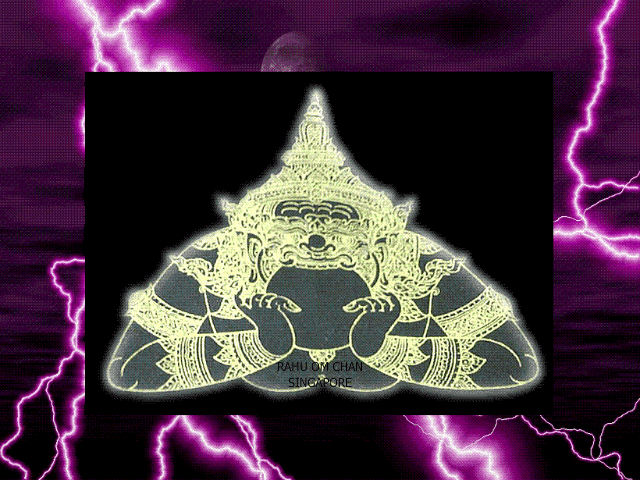
Another Hindu Version - Rahu

Rahu, the planet in shadows, is accorded recognition by the Indian astrologers and like Ketu, this planet is also not visible in the galaxy.


Source material: A mine of information about Rahu is available in Brahmaavaivartha puraana, Mahaabhaagavatha, Mahaabhaaratha, Matsya puraana, Rigveda and Vishnu puraana.
Rahu was born to Simhika and Viprachitthi. Rahu’s mother simhika (also known as Simhita) was the daughter of Hiranyakashyapa (Bhakta Prahlada’s father). There are several brothers to Rahu and they are Salya, Nabha, Vaataapi, Ilvala and Namuchi. It is also believed that Rahu is the eldest of the 100 brothers. He also has a sister by name Maahishmathi.

Bhagavatha makes a mention of Rahu in the cosmic churning. As the demons and the gods went on churning the milky ocean with Meru parvatha, several interesting things surfaced and the ambrosia (amrita) is one among them. Lord Vishnu, disguised himself as Mohini, a celestial dancer and took upon himself the task of distributing the amrita. In this process, he elbowed the demons and went on offering the amrita to gods and angels. Seeing this, Rahu impersonates as one of the gods and sits in the row of the gods to partake the amrita. Noticing this surya and chandra alerted mohini. Mohini, loses no time in beheading but by then Rahu swallowed amrita and so he could not be killed. Henceforth the neckline became Rahu and the torno is referred to as Ketu. Since then Rahu is said to have nursed a gurdge against the surya and chandra, and gobbles them up in the wake of an eclipse.
Nature: The fierce face of Rahu adorns a crown and a garland runs round his neck. Clad is black, the four shouldered Rahu sports sword, shield, trishula and varamudra in his four hands. He sits on a lion. As the faint trace of nectar made him immortal, Lord Brahma conferred upon him the status of a planet. The eight horse driven chariot of Rahu is darkness. The presiding deity of Rahu is Yama and Surya in his pratyadhidevata. His position in the galaxy is south - westwards and it resembles a winnowing fan.
Astrology: Born into paithenasa gotra, Rahu is fierdish in nature. He was born in the year parthiva(Rakshasa –in some other books) in bhaadrapada maasa, krishna paksha on the fourteenth day of the waving moon on a Sunday. Visakha is his birth star. Rahu dasa lasts for 18 years. He has no aura of his own as he is considered a "chaaya graha". At the intersecting points of lunar and solar circumferences, there are two dots. The northern dot is called Rahu or the dragon headed and the southern dot is referred to as dragon’s tail. Rahu, like other planets does not preside over particular zodiac sign. Vrishabha lagna is his best place whereas vrishchika lagna is his worst. For ketu, vrishchika is the best place. According to parasara samhitha, kanya rasi is his nature place.
Mrityunjaya japa is considered to be highly efficacious to pacify Rahu. The beejaakshara runs thus:

OM BHRAAM BHREEM BHROUM SAHA RAHAVE NAMAHA

This mantra or the mantra in the Navagraha stotra pertaining to Rahu need to be chanted for 18000 times.

Labels:

11/05/08

Rahu Yantra

He is the presiding deity of this shadow (Chhaya). According to the rigveda when Rahu – the son of Asuya or Sinhika covers the sun and the moon with his darkness, then it becomes so dark that the people became unable even to identify their places. The presiding deity of Rahu is ‘Kaal’. It is symbolised by a black flag in north west direction among all the nine planets. The great phase of Dragon’s head lasts for 18 years. Barring few situations it is generally considered to be an inauspicious planet. According to the astrology if ‘Rahu’ is situated unfavorably in the horoscope then it causes many types of physical illness. It also causes obstacles in accomplishment of works and accidents.
Rahu can be appeased through devoted worship and chanting of Rahu mantra to prevent hidden enemies, wrong diagnosis of illness, deceit from those around us and negative energies from affecting well-being.

Labels:

Holy shower of Buddha - Vesak Day

Bathing of Prince Siddhartha
Most temples hold ceremonial bathing of an image of baby Prince Siddhartha (the Buddha-to-be) placed in perfumed water with flowers. The perfumed water is scooped with a ladle and poured over the statue. This symbolises the purification of one’s unwholesome deeds with wholesome deeds.

Whilst kneeling before the altar, carefully fill the ladle and pour water over the image of the young Buddha. At each pour chant the following.
• 1 st wash: May I eliminate all evil thoughts

• 2 nd wash: May I cultivate good deeds

• 3 rd wash: May I help save all living beings


浴佛
多数寺院都会举行将悉达多太子的圣像置于充满鲜花及香水的盆里,用勺子掬起净水淋在佛像上,为佛沐浴的仪式。这象征以善行来净化我们的恶业。

The Offering of Flowers
The offering of fresh and beautiful flowers, which soon fade away serves as a reminder of the transience of all things, including our lives. This urges us to treasure every moment of our lives while not becoming attached to it.

供花献世尊
供养美丽的鲜花,它们却在转瞬间枯萎凋零,提醒我们万物皆属无常。这会激励我们更珍惜生命中的每一刻而又不产生任何的执着。

Labels:

10/05/08

Vesak or Visakah Puja

Vesak Day, the full moon day of the fourth lunar month, is the most important annual event for the Buddhist community. It commemorates the Birth, Enlightenment and Final Nirvana of the Buddha. It is named for the month of May and is celebrated on the full moon, when the Buddha's mother is said to have given birth to him in a garden in the Himalayan foothills while en route to her parents' home.


The meaning of Vesak lies with the Buddha’s universal peace message to humankind. It has become a festival for rejoicing and goodwill to all – and a moment to reflect on our spiritual development and gratitude towards everyone. The name "Vesak" comes from the Indian month of that name in which it is held.

On Vesak day, some buddhists observe the Eight Precepts, while others may join the communal observances by going through the ceremony of taking the Threefold Refuge (in the Buddha, Dharma- the Buddha’s Teachings and Sangha-the community of monks and nuns), observing the Five Precepts of respect for life (not to kill); respect for personal property (not to steal); respect for personal relationships (not to indulge in the senses); respect for truth (not to lie); and respect for mental and physical well-being (not to take intoxicants); making offerings at shrines and chanting of sutras. They may also participate in processions and circumambulation, and listen to sermons of the Buddha’s Teachings.

Many Buddhists also take vegetarian meals on this day as they recall the teaching of universal Compassion. This is a day when temples are colourfully decorated with Buddhist flags and lights, and shrines filled with flowers, fruits and other offerings.


卫塞节, 农历四月十五的月圆之日, 是佛教团体每年最重要的一个节日。它纪念了佛陀出生、悟道及涅槃的三件大事。这天世界各地数以万计的佛教徒都会庆祝这个节日。卫塞的意义在于佛陀传达给全人类普遍性的和平讯息。这是一个让大家喜悦及互相祝福的美好节日,也是我们检讨自己在灵修上的进展与感恩大众的日子。

对于一些佛教徒而言,卫塞节的庆祝仪式始于早上到佛寺去受八关斋戒。有些信徒可能会集体接受三皈依 (皈依佛、法及僧)、受五戒 (尊重生命即断杀、护生;尊重个人的产业即不偷盗、乐于施舍;尊重人际的关系即不邪淫 、知足;尊重真相即不妄语、诚实; 尊重精神及身体的良好状态即不服用麻醉品)、供养三宝及诵念经文,他们也可能参加绕佛仪式并听闻佛法。
许多佛教徒也会在当天忆念广大的慈悲而持素戒杀。在卫塞节这一天,寺院挂上佛旗,张灯结彩,佛龛上摆放琳琅满目的鲜花、水果及其他供品。

Labels:

愿天下母亲们快乐,安康!

好久没有写东西了,最近非常地忙,忙工作,忙家里,忙着办好友母亲的丧事.

今年的母亲节我真的感触非常的多, 我的好朋友失去了她的妈妈, 我们大家也失去了一个让人非常尊敬的Aunty. 她是一个在年轻时为了家里生意而蹉跎岁月, 结婚后依然时常回娘家帮忙的传统女性. 把家里照顾得井井有条, 在旧时代已经是一个事业,家里都能兼顾的女性. 一生节俭,善良,虔诚,无时无刻都那么地替别人着想. 她人生的岁月都在为别人忙忙碌碌,从来没有真正的休息,享福, 就走完了人生的80年. 说她命好?同意与否,因人而异. 她并非儿孙满堂,唯一的女儿是领养的,但没有人可以否定她们两母女的爱, 是那么的真,那么的深. 可能是她的福报, 在患病时,并没有受太多的苦,虽然她走的时候没有人在身边,但我们都知道她走得平静,安详,没有一丝的痛苦与遗憾. 我想因为不舍得看见老伴,女儿伤心,也因为她的善良,佛祖来把她带往极乐世界.

这几天因为忙着丧事,我看见了人们美好与丑陋的一面. 并非每一个身为母亲,长辈的人都是 值得我们尊敬的.这么说也许会得罪人,但是为什么一些口口声声说要帮忙的人,却是让我们头痛的人. 为什么在我们最需要你们这些长辈的时候,你们却没有伸出援手,为什么在我们需要帮忙的时候,你们却落井下石, 放马后炮呢? 当你们不愿帮忙时,却竟然可以在背后批评我们所做的一切. 我们不需你们的赞美,但不要对我们不公平. 你们吃盐比我们吃米多,你们会的东西也比我们还要多, 为什么不能够体谅我们. 为什么不让往生的人安息呢? 就那么短短的5天,为什么不能好好地送她一程? 并非是我们要对你们不敬,但是我想冥冥中Aunty在指引我们, 告诉我们要坚强地, 勇敢的去面对即将,或已经发生的事, 是她给我们指示,要如何去面对那些为老不尊的长辈们. 好辛苦啊! 原来两全其美是那么地难, 在她们无理取闹的当而,要站定脚,不受影响. 又要在她们有过分要求时紧记得要尊敬长辈, 太难了,而我们却熬过来了!

也无可否认, 当中一定也有几个"天使" 如朋友开通的家婆, 一个会默默在一旁帮忙的人. 还有朋友的亲身母亲,姐姐们, 她们真的是太棒了. 知道吗?当我快要被那些人气到要爆炸时,只要想到她们,还有aunty时,我就真的可以控制自己,平静下来. 还有四舅母, 她也是一个很棒的长辈. 舅舅们虽然静静的,但已经足够了, 不得不提的是还有琪琪, 太棒了!

谢谢那些阿姨们让我们又学了人生宝贵的一课,谢谢你们的虚伪让我们得以成长,也让我们知道一切还是靠自己来得实际. 谢谢你们教会了我们什么叫人不可貌相, 也谢谢你们让我们知道"亲情"的可贵!

银绒阿姨, 安息吧!如果我们做得不好,希望你原谅我们. 希望你会满意我们所做的一切, 希望你在佛祖的身边开心,安详!


17/04/08

Incense holder


Labels:

12/04/08

Rent Buddha statue

Thai people never buy Buddha statues but rent them.

It is illegal to export antique Buddha images and statues without a license from the Department of Fine Arts. The export of Buddha images and statues is regulated by the Department of Fine Arts. A new piece can be exported by requesting a certificate. But to be frank, people who went to Thailand would ONLY want to have antique statues and not brand new ones, since they believe "old" statues are more "Powerful".
In year 2007, in a small ceremony at Phuket International Airport, Airport Customs officials handed over to the local Museum around 100 Buddha images seized from departing tourists over the past year. Most of the images were seized from tourists who bought them from shops unaware that they needed permission from the Fine Arts Department to take them out of the country.
In year 2008, an increase in robberies of valuable artifacts from ancient temples in Ayuthaya are driving monks to despair. Thieves have even removed gold foil from reclining Buddha images. In old times, people caught in this act were threatened with harsh punishment. Authorities would force-feed them with boiling liquid, the chemical used in the gold-making process! Temple robberies mostly involve the theft of ancient Buddha images and valuables such as dharma cabinets and brass accessories. Few stolen goods are ever retrieved.A source said that the theft of gold foil could originate from rising demand in the Buddha amulet market. Buyers want gold from ancient Buddha statues, which are thought to be sacred, for use in the frames of Buddha amulets.
Thieves even steal the eight "sema", leaf-like boundary stones (สีมาเล็ก), from around temple's ordination hall.

Labels:

11/04/08

Miracle Buddha Image

Local villagers crowd around an amazing image of a revered Buddhist monk which survived a devastating blaze at Wat Paknam in Rayong Province. The fire destryoed the 100 year old sermon hall but left this image untouched and still beautiful. (Thai Rath)

Labels:

曼谷著名佛寺古佛像失窃

本报讯】曼谷三圣路瓦波佛寺失窃,两尊佛像、1尊观音菩萨像及捐款箱内1000多铢现金被偷。佛寺里的尼姑说,窃贼今年内已两次作案,但没有报案,所以窃贼食髓知味再度作案。 曼谷市三圣区警署昨天上午获报案,在瓦波佛寺发生偷窃案。警方即赶到现场调查,案发地点是该寺的佛堂,供桌上被贼人搜翻得一塌糊涂,3尊古老佛像和捐款箱的1000多铢款项被窃,另有包在塑料袋里的6个烛台,掉在地上。看管佛堂的尼姑汶吹(74岁)向警说,本佛寺有400年历史,寺内有很多古董。昨天清晨,她来到佛堂时发现两尊古佛像、1尊观音菩萨像和捐款箱里的1020铢款项被偷走。 她说,今年1月16日,该佛寺财物也失窃,尼姑的钱也被偷去,损失1万多铢。今年4月4日,又有窃贼偷去寺内两尊佛像,对此市方均没有报案。警方经检查现场,发现佛堂的屋顶瓦片被掀起1大片,窃贼可能从此爬进来,警方收集到窃贼留在玻璃柜和佛像上的指纹,作为破案线索。警方估计作案者可能是住在佛寺附近的人。

本文引用地址:http://www.udnbkk.com/article/2008/0408/article_33960.html

Labels: