Friday, 10 July 2009

The 10th Lunar Month for making Merit @ Thailand

The 10th Lunar Month Making Merit

5 Sep 2009 - 19 Sep 2009

Venue : Wat Phra Mahathat Woramahawihan and Suan Somdej Phra Sinagarindra 84
(Thung Tha Lat Park), Amphoe Mueang, Nakhon Si Thammarat

Features a large and splendorous event of Nakhon Si Thammarat, experience the spectacular procession from Sanam Na Mueang to Wat Phra Mahathat Woramahawihan. Purchase various local products on sale and enjoy various forms of entertainment.

Bathing Buddha Ceremony
17 Sep 2009 - 21 Sep 2009

Venue : Phetchabun City Hall, in front of Traipoom Temple and Botchanamarn Temple

A Bathing Buddha, or Um Phra Dam Nam ceremony, is held during September each year. It is a traditional religious and well known ritual held annually in Phetchabun.

Buddha statue, called Phra Buddha Mahadhamaracha cast in the ornamental Lop Buri style, was found in the Pasak River by a group of farmers four hundred years ago and it was then taken to be housed in Wat Trai Phum. According to a legend, the Buddha statue was disappeared twice from the temple and was later found in water.

The ceremony starts at 1 p.m. The Buddha statue is carried around town and put under a tent in Wat Trai Phum, so buddhists can pay respect to the image and stick gold leaf on the body of the Buddha statue. In the evening, prayers are chanted. At night, there are various kinds of entertainment. The next morning, people make merit as it is Sat Thai Day. Foods, including Krayasat and other necessities are given to monks. The Buddha statue is then taken to be immersed in the Pasak River by the local governor of Phetchabun in the belief that this act brings happiness and fertility to the province and traditional dances are performed to show respect to the Buddha statue.

After the ceremony, the water in the river is regarded as sacred. As a result, people swim in it or take the water to drink before the boat racing begins.

Phuket Vegetarian Festival 2009

18 Oct 2009 - 26 Oct 2009

Venue : Various Chinese shrines, Mueang District, Phuket
The Thai-Chinese in Phuket have long passed on the vegetarian festival to purify mind and soul by refraining from meat consumption and meditating. Symbolising the presence of the deities throughout the festival are 9 lanterns lit up and placed aloft on Ko Teng poles. On the 6th day of the festival, there will be religious processions and incredible displays of face-and-body piercing. On the last day, there will be a “Koi Han” ceremony to exorcize ill fortune and a farewell ceremony for the deities at night.

Wednesday, 8 July 2009

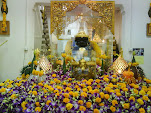
My New Altar

BEFORE
AFTER
As you can see, I have actually replace some of the statue with 2 statues of Monks ( Luang Pu Tuad & Archan Toh) and suddenly the altar seems so empty. Initially we wanted to return the statues to the temple which we got them from, but a friend, who was the committee member of the temple said he likes Guanyin statue and another of his friend wanted the Rahu & Sangkaja. We have made it clear to him that we gave him becos he wanted them and There is no money involve as that was a promise we had with all the statues before we gave them away, should someone breaks this promise by making money through selling away the statues, he would have to answer the consequences.

The small Buddha statue was given to my colleague and I know the statue will be in good hand.

Making Merit

Making merit is about giving, eg, to the wat or to the monks.

Thais make merit more generally by every wholesome action they undertake each day, a very good example, by giving food to monks every morning.

What does the book Buddhism Explained say about Giving?

Why is giving so important? If we are to make any progress along the Buddha’s way, we shall have to reverse our normal worldly ways. Worldliness talks about getting, and the Way talks about giving. So, the objective of giving is to break down, or at least to make a start on the destruction of the prison walls of ‘I have’. Now, giving should be done from the heart, proceeding from a pure faith which holds that the act of giving is meritorious, that the person to whom the giving is directed (often Buddhist monks and nuns) are pure and strive to lead a good life, and that the effect upon the giver is to ensure a happy rebirth, if nothing more. In the practice of giving one should never expect any return, the only return being that one’s own heart then becomes flexible and one’s ways easier to train.
Merit, as explained above, cannot really belong to one. Merit is actually made by giving away one’s merit. This is a way of teaching that one should not even be attached to the results of wholesome conduct but using wholesome conduct, one should push on to Nirvana, beyond both merit and demerit.

So, when a Thai person is having a difficult time, they often resort to making merit in an effort to improve their kamma. They will often describe it in English as trying to change bad luck.
But Thais don’t only tamboon (make merit) when they are having bad luck. Ask a Thai person what he did on his birthday, he is more likely to say that he went to the wat (temple) to make merit.
On the anniversary of the death of a relative or close friend most Thais will go to the wat to make merit on that person’s behalf.

I have decided that I shall go to Golden Mile to get the set of offering, usually a yellow pail with lots of daily nesscessity for Monks on my Birthday.

Monday, 6 July 2009

Quotes from Buddhism

The Buddha stresses that to escape from suffering one must not look to others for help, but do it himself.

"Your worst enemy cannot harm you as much
as your own unguarded thoughts."

Develop the mind of equilibrium.
You will always be getting praise and blame,
but do not let either affect the poise of the mind:
follow the calmness, the absence of pride.

-Sutta Nipata

Confused by thoughts,
we experience duality in life.
Unencumbered by ideas,
the enlightened see the one Reality."

- Hui - Neng

Wat Don Chan_ Chiangmai

A friend of us is really very keen on visiting this temple. Guess this article will give a better idea of what we can expect and a better understanding of the organization.
Chiang Mai project gives poor children a shot at education

A hilltribe girl has the chance to study in the same way as other Thai students, even though her family does not have enough money to support her.

Published on September 10, 2007

Chiang Mai Polytechnic College director's special project and Don Chan Temple's abbot provide help for disadvantaged, orphaned and poor children.

Chanokporn Lekpaijit, 16, is one of 511 hilltribe students studying at Wat Don Chan School in Chiang Mai's Muang district. She is studying for a vocational certificate in accounting.

"I dream of being an accountant after graduation," she said, adding she would study for a higher degree at the same time if she could.

It may not sound as grand as some people's dreams, but to have a good job and earn money for herself and her family is a very great thing for this hilltribe girl.

"My family is poor, but I'm very glad that I have a school where I can study. Studying here, my mother's financial burden has decreased," the Hmong girl said with smile.

There are about 560 students in the school, studying from Prathom 1 to Mathayom 6 and aiming for vocational and higher vocational certificates.

College director Chamnan Thammachai said he had started the project for disadvantaged students in May.

"I wanted these students to have vocational knowledge so that they would have the chance to get a good job, leading them to a better quality of life," he added.

The project offers training in two fields - accounting and computers.

In addition, the director has assigned some teachers in conjunction with private companies to train students in cooking, baking, computer repairs and playing musical instruments.

Meanwhile, Phra Athikan Anan Anantoe, the abbot of the temple, has supported hilltribe students around the northern region for at least 23 years, including Hmong, Akha, Karen, Yao, Tai Yai (Shan) and Lisu.

He said he wanted to do something good for the

country and His Majesty

the King. Since the children placed a burden on the country, he had decided to help them.

"Only Thai people's kindness supports these children's expenses. The temple doesn't ask for financial support from any organisation. It's up to organisations and individuals who desire to help," Phra Athikan Anan said.

He has taught the children to follow the King's sufficiency philosophy, instructing them to eat together as well as to learn and live happily in simple conditions.

"The food for the students under the temple's patronage is donated by local people, including vegetables, fruits, seasonings and rice," Phra Athikan Anan said.

The children still need consumer products for daily use, especially washing powder and toothpaste. To offer these or other donations, call 05-324 0184.

Wannapa Phetdee

The Nation

Saturday, 4 July 2009

Buddha's Teaching

The Buddha taught his disciples:
When you see, just see.
When you hear, just hear.
When you smell, just smell.
When you touch, just touch.
When you know, just know.
Thai Buddhists are encouraged to find their own truths and not to rely solely on the teachings of others.

Friday, 3 July 2009

泰国新闻报导了一宗令人不寒而慄的新闻,原来有来自柬埔寨的善信拿了一具蛇身人头的怪物到泰国一佛寺给和尚高僧看。从电视片段中所见,该具卷作一团的蛇,有着人般的容貌,有獠牙,且有长长的头髮,张牙舞爪十分狰狞。据说是来自柬埔寨某村落的一隻怪物,也有说是一不祥物,之后经村民打死后製成标本。而有关这头怪物,当地网友有如此故事。前几年在马来西亚的某偏僻村落,因为毒蛇为患咬死了几个村民,故村长请了当地一名有蛇王之称的捕蛇专家来帮忙捉毒蛇,怎料蛇王追寻蛇踪至附近的山林却发现此怪物,他运用了多年捕蛇的经验当场杀死了怪物,并带了这人头蛇身的怪物尸体回去并製成标本。但事情还未完结,蛇王在此事后不久便无故去世,死后在尸体上发现有两个疑似被蛇咬的牙印。蛇王死后此怪物标本辗转流落到不同人手上,但凡持有者却相继死于非命,最奇怪的是所有死者尸体上均有疑似被蛇咬的牙印。此怪物标本再辗转流落到柬埔寨,当地善信认为发现此怪物的地方,正是在泰国及马来西亚边境交界的深山当中,那裡有很多黑巫师及降头师在修练,这种蛇身人头的怪物就是他们修练出来,可操控牠们执行降头任务,这怪物虽然表面上已死去,但降头师的法力仍在,故仍会行凶杀人,因此带了此怪物到泰国寺庙,找当地高僧做法事,希望解除降头师的法力,使其不再害人。

http://image.bbs.tom.com/data1/pic/766/7/7240_n.jpg

Thursday, 2 July 2009

Buddhism Ritual

Buddhism rituals and practices comprise of very intricate and detailed prayers. Prayer or Puja in Buddhism is mainly a way of expressing dedication towards God and making offerings to Him. Meditation also forms a part of the rituals & practices in Buddhism.

Following of the rituals moves a person forward, on the path to enlightenment. The prayers are initiated with the evoking of a sangha. After the Sangha has been evoked, sadhaka or dharma student performs three prostrations, also known as three gates or three aggregates.

They consist of the body, the speech and the mind. They also indicate that the student has acknowledged the three bodies of Buddha, namely the Dharmakaya, the Smbhogakaya and the Nirmanakaya.

In the prostrations, five parts of the body touch the ground. These five body parts include the two palms, the two knees and the forehead, signifying the five elements of earth, water, fire, air and space. The other interpretations of the protestations symbolize the five wisdoms emanating from the five Buddha families and the five Buddha energies.

As a student performs these protestations, he surrenders himself to the Buddhas of past, present, and future and ten directions. The folded hands also connote a deeper meaning as a part of the Buddhist rituals. The touching of the ten fingers with each other symbolizes the ten directions. The right hand represents the male, active, yang energy, while the left hand represents the female, receptive, yin energy. When both of them join, they epitomize the Buddha's enlightening activity of upayakaushalya.

A number of other rituals also, follow these offerings to the deities and the three Jewels. These rituals include Bodhisattva vows, the 100-syllable Vajrasattva mantra, mandala offerings and the seven-line prayer of Guru Rinpoche and mon-lam prayers. After these rituals have been performed, the student practices meditation on shunyata or emptiness. The prayers come to an end with a ritual in which people express joy over the good deed and merit of others. They also request Buddha to teach them and not enter in parinirvana.

Tuesday, 30 June 2009

Buddhism Facts

Buddhism is the fourth largest religion of the world. Founded by Gautam Buddha, it is a path of spiritual development that helps a person in finding the true nature of life. Buddhism emphasizes on experiencing, rather than teaching or learning.

It considers meditation as the means to enlightenment and is based on a number of principles. The followers of Buddhism do not worship any God and follow the noble eightfold path to lead a meaningful existence. In the following lines, we have provided some quick information on Buddhism in a brief form. Read on to know some facts about Buddhism …

Meaning: System taught by the Buddha
Founded In: 6th Century BC Place
founded: North India
Founder: Siddhartha Gautama ("the Buddha"), an Indian prince
Followers: 376 million
Size: Fourth largest religion in the world
Main locations: China, Japan, Korea and Southeast Asia
Main Sects: Theravada and Mahayana
Sacred texts: Pali Canon (Tripitaka), numerous Mahayana sutras
Original language: Pali
Spiritual leader: Monk (lama in Tibetan Buddhism)
Place of ritual: Temple, meditation hall.
Theism: Varies - Theravada is atheistic; Mahayana is more polytheistic.
Ultimate reality: None, Nothing is permanent.
Holidays: Buddha's birthday, Buddha's enlightenment and lunar quarters

Monday, 29 June 2009

What is Theravada Buddhism

Theravada literally means 'The Way of the Elders'. This term embodies the entire sect in itself, as Theravada Buddhism is based on the original beliefs and practices of the Buddha and the early monastic Elders.

Also known as Hinayana Buddhism, it is mainly predominant in southern Asia, especially in Sri Lanka, Myanmar (Burma), Thailand, Cambodia and Laos. Just like Mahayana, Theravada is also based on the Pali Canon, which comprises of an early Indian collection of the Buddha's teachings.

Theravada Buddhists have a sole purpose in life, which is to become an arhat. Arhat is the name given to a saint who has reached nirvana and will not be born again. For this, they follow a rigorous austere existence and renounce the world. As per Theravada or the 'Lesser Vehicle', a layman can never ever achieve nirvana. There are the following four stages through which a Theravada Buddhist can become an arhat:
Sotapanna (Stream-enterer)
Sotapanna is the stage where the person is a convert. To attain this stage, he has to triumph over the false beliefs.
Sakadagamin (Once-returner)
The stage of Sakadagamin is that of being reborn again. It can be achieved by conquering lust, hatred and illusion.
Anagamin (Never-returner)
The stage of being reborn in heaven is known as Anagamin. It is the stage where he becomes an arahant.
Arhat (Worthy one)
The last stage is known as Arhat. Here, the person has attained perfect enlightenment and will never be born again.
胡

Sunday, 28 June 2009

Holy Shower at Wat Kancanaram

This morning, we went to Lorong Ong Lye at the advise of a master for the holy shower. Before we went to the temple, we went to get the flowers for the temple. This is not only normal flowers at the market, there's a few "unique and rare" items too. Luckily we managed to get all the stuff by 9am. When we reach the temple, we were told to pick up a pail filled with water and leave it near the monk, when it's our turn for the blessing, passed the packet of flowers to the monk and he will cut the lime ( got special way to cut, not what we always do). He also cut up the husk and the black colour plant. Then he lights up the candles and tied the white thread around the pails and passed it to us. Then he start his chanting which last about 5-8mins. We proceed to the room for shower and clear up the mess after we are done. The monk was very jovial, he was also impressed with the flower we prepared. He even asked why we know that we have to prepare all these and what is the special meaning behind all the item. When i answered all his queries, he gave me a smile and say " WIN ONLY, NO LOSS" in his thai hokkien ( 赢,没有输). After the shower, we went around the temple and start praying.
The Archan Toh Statue at the 2nd floor of the temple.

There's 7 kinds of flowers including jasmine, 3 limes, one black plant? wonder what is it and also things looks like coconut husk!

** The temple do prepare flowers for devotees, and with $1/- you can get a brand new towel should you forget to bring for the holy shower. It feels great after the whole session, I will sure bring my friends and family for it again. Thanks to the master who told us where and what to get for the session.
胡

Thursday, 25 June 2009

Wat Phet Samut Worawihan วัด เพชรสมุทร

Wat Ban Laem or Wat Phet Samut Worawihan was once a small and disregarded temple, prospered and was enlarged mainly from the donations made by the people out of their faith and from their merit making and worshiping Luang Pho Ban Laem.


Later, this temple was promoted to the status of royal temple of the class Worawihan and was granted the name of Wat Phet Samut Worawihan by the King.


To replace the lost alms-bowl of Luang Pho Ban Laem, Prince Phanuphanwongworadej presented a blue glass bowl which can still be seen today.

Tuesday, 23 June 2009

美国女演员拜访法师并刺青


美国女演员布里坦尼.丹尼尔昨天在曼谷拜访1名法师,并请这名法师在她背上刺青,她相信刺青会带来好运

** 任何种族,肤色都好,只要人们觉得可以带来好运,钱财,名誉的机会,都会不惜代价愿意去尝试.但是请师傅刺青是永远的印记,要三思!

本文引用地址:http://www.udnbkk.com/article/2009/0620/article_55591.html

胡

Color of the Day

Day-Sunday
Color - Red
Planet- Sun
God of the day- Surya

Day -Monday
Color - Yellow
Planet - Moon
God of the day - Chandra

Day - Tuesday
Color - Pink
Planet - Mars
God of the day -Mangala

Day - Wednesday
Color - Green
Planet - Mercury
God of the day -Buddha

Day - Thursday
Color - Orange
Planet - Jupiter
God of the day - Brihaspati

Day -Friday
Color - Blue
Planet - Venus
God of the day - Shukra

Day -Saturday
Color - Purple
Planet - Saturn
God of the day - Shani

Tuesday, 16 June 2009

Buddha on Friendship

According to Nettippakarana there are seven qualities by which you can judge a friend. He should be pleasant and loveable, respectful, worthy of emulation, willing to engage in useful conversation, willing to tolerate words, engages in profound talk and never exhorts groundlessly.

Today, the younger generation have a tendency to shun good advice and show resentment when their faults are pointed out by even parents. A stanza in the Dhammapada spells out a bit of excellent advice. "Someone who points out your mistakes, declare them as weaknesses and condemns them, think of such a person as one showing you a treasure.

Associate with wise people of that nature. (midhinam va pavattaram-yam passe vajja dassinam; niggayhavadim medhavi tadisam pabditam bhaje). This shows that a friend need not be always sweet and soft spoken, but could resort to constructive criticism.

How to win Friendship

The Buddha has explained how to win and keep friends. By being generous one can surely win friends (dadam mittani ganthati) and also by being courteous and benevolent. Rejoice in your friend's achievements, praise any commendable acts and strong points. But the Buddha says that if you always keep on talking of your friend's goodness, kindness, greatness and so on, then you are trying to deceive him. In dealing with friends, one's word should be as clean as the actions.

According to the Jataka Pali, striking a friendship is one, maintaining it is another. Buddha has given invaluable advice not only to keep the friendship but also to make the bonds stronger.
  • One should not visit the friends too often or overstay the welcome.This changes the friend to a foe. If your friend loses something, then you may be under a cloud. Visiting a friend too often invariably leads to gossip, which will involve you in a vortex of trouble. Buddha says that, it is equally bad not to visit your friends at all. You should judge for yourself how often you should visit your friend, how long you should stay and so on.
  • Buddha has pointed out that a friendship deteriorates by asking favours, especially at wrong times. If at all you ask a favour, it should not be unreasonable or of a demanding nature. Asking favours far too often makes you a pest more than a friend.

Buddhist Commentarial Tradition defines a friend thus:- "A friend is one whose association leads to spiritual profitability, protects you from evil that may befall you and is inclined towards your welfare."

Sunday, 14 June 2009

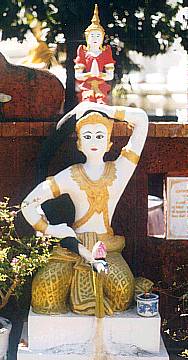
Phra Mae Thorani-Goddess of Earth. Straining water from long hair.


Mae Thorani (Pali: Dharaṇī) is a Thai goddess. She is recognized as the Goddess of the Earth. She is often shown wringing the cool waters of detachment out of her hair.
The water drowns the forces of temptation sent by Mara (demon) to distract the Buddha as he meditated under the Bodhi tree. When the evil Mara sent his three daughters Trsna, Rati, and Raga (thirst, desire, and delight), to seduce the Buddha & then his army to stop Buddha from attaining enlightenment, the latter touched the ground (depicted as the 'calling the earth to witness' pose in statues) & Mae Thorani appeared.
The water (representing the good merit accumulated by Buddha) she wrung from her hair caused a flood that drowned Mara's daughters & army. A statue of Mae Thorani protecting Buddha will be found in every Thai & Lao temple, sometimes beside or in front of the main Buddha image on the altar, or outside the viharn. She is also called upon as a witness during กรวดน้ำ gruat nam (pour water), when people pour water into a container while chanting & then empty it onto the ground, to share the merit they have made with the deceased (during ceremonies for weddings, dead ancestors, ordinations, house blessings, etc).

Saturday, 13 June 2009

Nine birth star ceremonies

At Wát Pêt sà-mòot (วัด เพชรสมุทร) you’ll find a table decked with candles and plastic flowers in shiny gold bowls, a box with pens and bits of coloured paper, and a box with a slit in the top through which to slide the aforementioned bits of coloured bits of paper.

The red, yellow, orange, green, pink, blue and purple pieces of paper are meant to correspond with the days of the week.

In Thai tradition, there is an astrological rule (which has influence from Hindu mythology) that assigns color for each day of the week. The color is assigned based on the color of the God who protects the day or Navagraha.

For example, the God of Sunday is Surya which has red color. These colors of the day are the traditional Thai birthday colors. For example, King Bhumibol was born on Monday, so on his birthday throughout Thailand will be decorated with yellow color.

Write your name and surname, day/month/year of birth to enter the Nine Birth Star ceremony held on the tenth of August of every year. Suggest give 20 baht - wrapped the annotated paper in a baht note and shoved it into the box next to the candle display.

You are supposed to choose the colour of the day of the week you were born, not the colour of the day of your birthday this year. Eg, if you are born on a Wednesday, then filled out a green slip of paper and stuffed it into the box too.

Dream

I had a dream last night. I dreamt that i was with uncle taking a stroll and suddenly the scene changed to a "forest", we were busy plucking some leaves ( if i'm not wrong, it's the time when master says he need the leave to do some ritual for uncle). We were enjoying so much then, busy selecting leaves and i need to keep a look out, in case someone caught us. I remember our expression was funny!

Then there's also the scene when we both enjoying our ice cream, we just squat at the roadside with an ice cream on the right hand and a packet of nuts on the left. Then uncle ask " Why didn't you visit aunty and myself anymore? Busy? or you hate taking care of me?" No uncle, no such thing, if i'm afraid, i wouldn't have visit you and help to change and feed you. It's different now, things had changed, people has changed too. I still respect you and aunty, but it's just inconvenient for me to go to your house anymore. Then uncle said " Have you forgotten what you had promised me in the hospital? Have you forgotten the pact we had". No Uncle, never, as long as i'm needed, i'll be there to help. I just hope that it will never happened. I still remember what i had promised you on 19th May 2006, and I WILL KEEP MY PROMISE, forever.....

** Old people always said we should never break a dead man's promise. I've always bear it in mind and try not to promise anything, but there are some circumstances when we just had to give our promise, to make them feel better. I have a bad feeling, i hope all will be well. God Blessed...

Thursday, 11 June 2009

Anniversary

Today is the death Anniversary of Uncle Chan. May he rest in peace and shall always be remembered.

求拜星期佛 一年行好运

只要知道自己是在星期几出生,可来到注明是代表星期几的佛像前虔诚膜拜,就能保佑你行好运。
是不是有些匪夷所思?
这种膜拜法在泰国的芭堤雅盛行已久,一个星期有七天,从星期一到星期天,每天都塑造一尊佛像作代表,只要查明自己的出生日期属星期几,就可前来膜拜。星期一至星期日里头,唯独星期三多了一尊佛像,据称这是因为星期三分为白天跟晚上两个佛像,佛像分别为以下名称:

星期日:成道佛祖、
星期一:平定佛祖、
星期二:涅槃佛祖、
星期三:托钵佛祖(上午)、禅定座佛(下午)、
星期四:冥想佛祖、
星期五:内观佛祖、
星期六:蛇神护法佛祖。

这七尊佛像每一尊都呈现出不同的形态与姿势,传说拜过这七尊佛像的人,一整年里都会走好运。

Tuesday, 9 June 2009

Wat Phra Thad Doi Suthep

This temple is one of the most famous Buddhist shrines in the region. A visit is a must for all Buddhists who come to Chiang Mai. Legend has it that an especially holy relic was brought to Chiang Mai in 1371. To decide where it should be enshrined, it was placed on the back of an elephant, which promptly set out to climb the mountain. It finally came to rest and there the relic was buried. The first chedi was built over it and the temple has been continually expanded and embellished ever since. Doi Suthep is a short seventeen kilometre drive from the city up a road that was first built in 1935. You then have to climb some two hundred steps up the naga stairway, or take a small tram to the temple. The view across Chiang Mai City and the river Ping valley is breathtaking and makes the exhausting climb worthwhile. And then there is the temple itself. Cloisters painted with bright murals depicting the previous lives of the Buddha and filled with Buddha statues, enclose a marble floored area in the middle of which rises up a glorious golden chedi. The chedi is surrounded with a railing and at the four points of the compass are places where people can offer flowers, light joss sticks and apply small squares of gold leaf as they pray and make their wishes. Doi Suthep can be seen from everywhere in Chiang Mai, it is a potent and powerful presence to which people often lift up their eyes for consolation in trouble or gratitude in happiness.

Monday, 8 June 2009

Wat Muen Ngern Gong

Wat Muen Ngern Gong is located on San Larn Road. This temple was first constructed in the time of King Mengrai in local Lanna style. Many rich families in Chiang Mai sponsor this temple since its name. Muen Ngern Gong, means millionaire or riches.

Sunday, 7 June 2009

Wat Chiang Yuen

Wat Chiang Yuen is located outside the city wall on Mani Nopharat Road. Wat Chiang Yuen is one of oldest temples in Chiang Mai where every King had to pay homage to the Buddha image called "Phra Suppunyu Chao" (located in the wiharn) in order to gain good fortune in life. Hence, it is believed that the words "Chiang Yeun" means "long life."

In the period of King Phra Muangkaew (A.D. 1495-1525) the Buddha relics were enshrined in the stupa. The temple was abandoned after the Burmese defeat. Later on it was rebuilt by Phraya Wachiraprakarn. The big white and golden stupa is the most striking feature of this temple. Tel. 053-211654

Saturday, 6 June 2009

Wat Dab Pai

Wat Dab Pai is located on Singharatch Road. In the past this temple was called Wat A-Pai or Wat Tung Kra Dang. Legend says that a monk called Phraya A-Pai, who was very sick and could not be cured, came to this temple and prayed for good health in front of an image of the monk, Dab-Pai. He recovered immediately. In gratitude he reconstructed the temple and changed its name to Wat Dab Pai and settled his family nearby. Today devout Buddhists still come to the temple to pray for good health. There is a sacred well in front of the wiharn, from which the King draws water to bathe images of the Lord Buddha. Tel. 053-222964

Friday, 5 June 2009

Wat Loi Kroh

Wat Loi Kroh is located on Loi Kroh Road. In ancient times this temple was called Wat Hoi Khor. It was constructed by the sixth King of the Mengrai dynasty, and so is more than 500 years of age. After the Burmese had been driven out of Chiang Mai towards the end of the eighteenth century, the city was deserted for twenty years. When Prince Kawila came to reconstruct the city, he brought in many people from other regions. Immigrants from Chiang Sean settled around this temple. The chedi and wiharn were designed in local Lanna style. Tel. 053-273873

Thursday, 4 June 2009

Wat Chaimongkon

This temple is located on the bank of Ping River. This temple was constructed during the reign of King Tilokkaratch. During the occupation of Chiang Mai by Burma this temple was called Wat Oop Pa Peng or Wat Oop Pa Pok. Later King RamaV changed the name to Wat ChaiMongKong. The pagoda of this temple is built in Burmese style. Tel. 053-214728

Wednesday, 3 June 2009

Wat Chedi Luang วัดเจดีย์หลวง

Wat Chedi Luang (วัดเจดีย์หลวง, lit. temple of the big stupa) is a Buddhist temple in the historic center of Chiang Mai, Thailand.

The current temple grounds were originally made up of three temples — Wat Chedi Luang, Wat Ho Tham and Wat Sukmin.The construction of the temple started in the 14th century, when King Saen Muang Ma planned to bury the ashes of his father there. After 10 years of building time it was left unfinished, later to be continued after the death of the king by his widow. Probably due to stability problems it took until mid-15th century to be finished during the reign of king Tilokaraj. It was then 82 m high and had a base diameter of 54 m, at that time the largest building of all Lanna.

In 1468, the Emerald Buddha was installed in the eastern niche. In 1545, the upper 30 m of the structure collapsed after an earthquake, and shortly thereafter, in 1551, the Emerald Buddha was moved to Luang Prabang. In the early 1990s the chedi was reconstructed, financed by UNESCO and the Japanese government. However the result is somewhat controversial, as some claim the new elements are in Central Thai style, not Lanna style. For the 600th anniversary of the chedi in 1995, a copy of the Emerald Buddha made from black jade was placed in the reconstructed eastern niche.

The icon is named official Phra Phut Chaloem Sirirat, but is commonly known as Phra Yok. Also on the temple grounds is the city pillar (Lak Mueang) of Chiang Mai, named Sao Inthakin. It was moved to this location in 1800 by King Chao Kawila; it was originally located in Wat Sadeu Muang. He also planted three dipterocarp tree there, which are supposed to assist the city pillar to protect the town.In a viharn near the entrance to the temple is the Buddha statue named Phra Chao Attarot (Eighteen-cubit buddha), which was cast in the late 14th century.

On the other side of the chedi is another pavilion housing a reclining buddha statue.

Wat Chedi Luang is home to many of the most important city and religious ceremonies.

Tuesday, 2 June 2009

Wat Phra Singh

Built in 1345, the temple is located on Sam Lan Road. It houses the North's most revered Buddha statue, Phra Phuttha Sihing which is enshrined in Vihan Lai Kham, a chapel that features exquisite woodcarvings and northern style murals. Every year on April 13, Songkran Day, the image is paraded through the streets of Chiang Mai for local people to sprinkle scented water on. This area was formerly Wat Li Chiang Market until 1345, when King Pa Yu, the fifth king of the Meng Rai Dynasty commanded the construction of this temple and a 24-feet chedi to contain his father's ashes.

This temple, situated in the heart of the city, is famous for its fine examples of Lanna art. It was founded in the fourteenth century, but all the buildings today date from the nineteenth century and much of the restoration work is of a very recent date. The rear viharn has some beautiful murals depicting scenes from every-day life in Lanna a hundred years ago. Here is housed a copy of the Phra Sihing Buddha Image. There is some exquisite wood carving on other buildings and the scripture repository, where holy texts written into folding books made of bai lan or sa paper, were carefully preserved, is a gem of Lanna art. The senior abbot in Chiang Mai resides at Wat Phra Singh and many important Buddhist ceremonies take place here.

Mueang Chiang Mai, Chiang Mai

Monday, 1 June 2009

Wat Chiang Man - Chiang Mai

This temple was built in 1297 at the site of the camp King Mangrai used when he supervised the building of Chiang Mai. It was the first temple to be built in Chiang Mai and contains several very old artifacts. The oldest structure is the Chang Lom chedi, which is in a style that could have originated from Sri Lanka via Sukhothai, or from Pagan.

Fifteen elephants represent a sea of unformed matter upon which the cosmos of the chedi floats. Nearby are a lotus pond, a raised scripture repository and an ubosot. The stela in front of the ubosot was inscribed in 1581, and is one of the oldest known records that establishes the founding date of Chiang Mai.The temple has two Lanna style viharn. The larger viharn was renovated by Khru Ba Srivichai in the 1920's.

The standing Buddha image (front right of the altar) has an inscription on its slightly lopsided square base that dates it to 1465. This makes it the oldest dated Buddha image to be found so far in Chiang Mai. Close study shows new gilt veneer covers pits and cracks that indicate the image's real age.

The smaller viharn to the north (open 09:00-17:00) contains two small but very famous Buddha images.

The Phra Sila image is a bas-relief that probably came from Ceylon in about the eighth century. The image is believed to have the power to bring rain and is the focus of a festival at the temple held from April 1-5.

The Phra Sae Tang Khamani crystal image belonged to Queen Chamadevi, who brought it from Lop Buri when she became the first ruler of Haripunchai. The image reputedly survived the burning of Haripunchai when it was razed by King Mangrai, and is honored for its powers to protect against disaster.


Address: 171 T. Sripoom A. Muang Chiangmai 50200

Saturday, 30 May 2009

The Mystery of Wat Phra Thong

The legend of the ancient Buddha image at Wat Phra Thong stretches back centuries — and is as intriguing today as it ever was. Protected by an ancient spell, the half-buried Buddha image has withstood man’s every attempt to remove it from the ground.

A young buffalo boy tied his animal’s lead to a hard, muddy object sticking up from a field in the north of Phuket – and suddenly died.

On this island it’s one of the best known of all legends. Like fables everywhere, it tells us much about the mores of its own society. Here a point very significant to Thai society - one to be remembered - comes from the special nature of the dirty, hard object sticking up from the rice field outside Thalang. It happened to be a part of an ancient, buried Buddha image, the spiral-like point rising from the top of an image’s head.
Why did the boy die? Thais consider the head the most elevated, most sacred part of the body, and that of a Buddha image is many times more holy. A lowly buffalo (despite the fact that Thais view these beasts of burden with a special affection, they’re considered the epitome of thick-headedness) being tied to so sacred an object is an insult of the most gross proportions.
Yet more, this Buddha image is widely believed to embody an ancient spell, and with it special spiritual powers. Today virtually every Thai visiting Phuket for the first time will make a pilgrimage here. Busloads of coarsely dressed villagers from distant provinces kneel before this image, alongside the country's refined elite, their Mercedes Benzes waiting outside.

In the hazy centuries of Phuket’s distant past, the famous young buffalo boy was laid to rest. The father cremated his son, and returned to fetch the buffalo. It, too, was dead. The father washed off the mysterious hard object to which the animal had been tied, and to his surprise found it resembled the tip of a Buddha image. The villagers reported the discovery to the ruling "Prince of the Province" at Bon Don on the coast.dig was ordered. As villagers put their tools to the object, hordes of angry wasps descended, driving off anyone who attempted to disturb whatever lay below the soil. Still they dug, revealing the face of Buddha cast from solid gold. But no matter what they tried, only the head could be bared. Eventually, their Prince ordered a shelter built right over it.
In the mid-1700s all of Thailand began to suffer the ravages of invading Burmese armies. Phuket was attacked, and eventually occupied. Gold, naturally, was one of the invaders’ passions. The Burmese general lusted for the gold Buddha.
Again, disaster befell any Burmese who attempted to dig at the image. A plague of ants arose in masses as thick as palms. Bitten, the Burmese died. But the general wouldn’t desist, and drove his men till hundreds were dead. Still, they could get only as deep as the golden image’s throat. Finally the Burmese armies were driven out with the Buddha still buried in a field outside Thalang township.
When the Burmese threatened Phuket in later years, the golden head and its protruding spiral-like tip were disguised by the construction of a much larger Buddha head directly over it. This large head and shoulders is the same one we can see today in the temple of Wat Phra Thong, The "Golden Buddha Temple", outside present-day Thalang.
Soon after the Burmese invasions a tudong monk, one of the those who wander endlessly without the comfort of a home monastery, arrived at the buried Buddha, and, feeling he could go no further, settled to build a temple over the image.

This founding abbot died, leaving a mystical riddle embodying a spell. In the form of a poem, this contained the three paradoxes involving the hierarchy of the spirits in the Phuket region and the Golden Buddha’s head.

Any future monk who wanted to remain abbot presiding over the temple of so powerful a Buddha image, the abbot said before dying, would have to first prove sufficient enlightenment to solve this riddle.

Thereafter, 13 monks successfully assumed the position of abbot at Wat Phra Thong. Then came a period – perhaps a low ebb in Buddhist learning – when no monk could answer the riddle. New abbots would die, go crazy or be driven from the monastery.
Finally in 1897, a foreign monk who was just 23 years of age, unravelled the riddle’s mystery.


This monk became the famous Luang Por Phra Kuwittatan, and presided over the monastery for 64 years.The influence that this buried Buddha image has over the people of Phuket and beyond is difficult to appreciate. But today one can readily visit the temple at Thalang and see the image, and once there, it is difficult not to be impressed. For the sense of mystery that surrounds this ancient image is just as strong today as it ever was.

Friday, 29 May 2009

Wat Prathong - Phuket

Wat Prathong (Wat Pra Phud) is famous for a half-buried golden Buddha statue called Luang Poh Prathong (Golden Buddha) in its grounds. The temple's other moniker, Wat Pra Phud, means 'Temple of the protruding Buddha'. It was built in the 1750s and received a visit from King Rama V in 1909, who gave it its name. Not a very big temple, but agreable to visit with its several buildings and colorful features.
Where is it ?
Wat Prathong is 20kms north of Phuket Town and is located near the Thalang District Office. On the way to airport, the street leading to the temple will be on the right hand side (you might have to do a U-turn if driving). Look for a small sign before reaching Thalang town. Once you enter the street, driving few kilometres will lead you to a large parking.
What to see?
The main attraction at Wat Prathong is the half-buried golden Buddha image which is said to be 'untouchable' in that every person who has tried to dig it out is reported to have been cursed. There is also a reclining gilded Buddha that is listed as one of the attractions in the Tourism Authority of Thailand's 'Unseen Thailand' programs. The current explanation as to why there is a half-buried Buddha image at Wat Prathong is that a canal changed direction and flooded the area, leaving it under a layer of silt.
The temple also houses a museum, founded by the current abbot. The museum features historical items donated by locals such as tin mining paraphernalia, a Chinese dowry basket, Chinese 'Teen-tuk' (feet reducing) shoes and many Javanese daggers.
Open: 00:08 - 17:30 Daily

Monday, 25 May 2009

Thai Superstition -The Unlucky Days

Certain days are unlucky, depending on which day you were born.

People born on:

Sunday, avoid doing anything auspicious on a Friday.

Monday, avoid doing anything auspicious on a Sunday.

Tuesday, avoid doing anything auspicious on a Monday.

Wednesday, avoid doing anything auspicious on a Tuesday.

Thursday, avoid doing anything auspicious on a Saturday.

Friday, avoid doing anything auspicious on a Wednesday.

Saturday, avoid doing anything auspicious on a Wednesday at nighttime.

There are taboos about days in Thai superstition. Doing something are forbidden in some days because they believe that it will not good. There have to be a chance in each situation.
  • On Monday, one could cut cloth for shirts, blouses. Sarongs but not cut wood for the building of one’s house.
  • On Tuesday, one could cut one’s hair and make knives and swords but one had to be careful not to show off one’s belongings ones riches. Tuesday, as well as Saturday, were good days for washing one’s hair, but Monday and Wednesday were deemed inauspicious.
  • On Wednesday, one was supposed to change the bedding. Wednesday was thought to be an unlucky day to settle a conflict by seeking a judgement from elders, headmen or a court of law. Alas, the court calendar does not allow for such reservations as to the best day to have a deposition taken.
  • Thursday was an auspicious day for the ritual tying of sacred thread on one’s wrists binding one’s ‘living essence’ to one’s body. However, it was a day to avoid venturing into the forest where misfortune was likely to occur. One might be attacked by a tiger or struck by a falling tree.
  • On Friday, one should not get involved with friends and should avoid recreation and play. On the other hand, it was a good day to work assiduously in one’s garden and fields.
  • On Saturday, new clothed should not be worn and one should not cut clothes. Alas, tailors and dressmakers would be hard pressed to follow these Brahmin ritualistic injunctions. Their impatient customers would not be pleased with the excuse their dresses and suits were not ready because it was unlucky to make clothes on certain days.

Sunday, 24 May 2009

Phutthamonthon

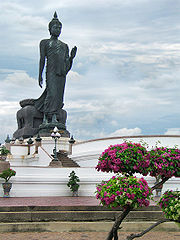
Phutthamonthon (พุทธมณฑล, also often called Buddha Monthon) is a Buddhist park in the Phutthamonthon district, Nakhon Pathom Province of Thailand, west of Bangkok.

It is highlighted by a 15.87 m (52 ft) high Buddha statue, which is considered to be the highest free-standing Buddha statue of the world. The park was created in 1957 (which was the year 2500 in the Thai Buddhist Era) on the basis of an idea of Thailand's prime minister, Phibunsongkhram.

The park covers an area of about 400 hectares, which in traditional Thai units is 2500 rai. Construction started on July 29, 1955, and the park was inaugurated on the Vaisakh Bucha day (May 13) in 1957. After a long pause construction on the park resumed in 1976; notably, the main Buddha statue was built after that time. Already designed in 1955 by art professor Silpa Bhirasri, the statue was cast in 1981. Given the name Phra Si Sakkaya Thotsaphonlayan Prathan Phutthamonthon Suthat by King Bhumibol Adulyadej,which 15.875 m high and located at the centre of the park.

Around the statue are sites memorialising the four main stations in the life of Buddha: his birth symbolized by seven lotus flowers, his Enlightenment under the Bodhi tree, his first sermon and his death. Another important building is the marble viharn, which contains the entire Buddhist canon engraved in 1418 marble stelas.
Source - Wikipedia
胡

Friday, 22 May 2009

Wat Phumin


Wat Phumin in Nan Province is an artistic temple that showcases the great faith of Buddhist people from ancient times.

Located in the heart of the province, the temple is famous for its unique architecture and murals, particularly among art lovers who come regularly and spend long hours admiring them. Built in 1596 by the ruling king of Nan, the temple is unique for the four-sided entrance to its chapel which concurrently serves three other purposes, namely as ubosoth or the ordination hall, vihara or the shrine hall, and as pagoda. Guarding the chapel's entrance along the north-south axis are a pair of naga serpents, with heads held high and their tails going a long way back, extending to the temple's four arched gates making it the only one of its kind in the entire nation.
In the middle of the chapel are four Buddha statues - their backs fused - facing in different directions.
The chapel houses beautiful murals. The last time they received a retouch was over a hundred years ago. The murals mirror the lifestyle and beliefs of Nan people in the old days.
Wat Phumin is one of the several Buddhist temples in the downtown area that combine an amazing blend of Sukhothai and Lanna arts and other cultures. Just across the road from the temple is Nan National Museum where you can learn more about the province's history and ethnic groups.
The flowered altar resting in the center of the bôt supports four Buddhas of Sukhothai style in the Bhûmisparsha-Mudrâ' ("Buddha Invoking Mother-Earth, Bhumi to be His Witness " or "victory over Mara" - the hand pointed down to the earth with the fingers touching the ground), facing the four directions. The shape of their ears and of their nose shows a Lao influence.
Aside to the altar, sits a splendid thammdat (a dhamma seat used by teaching monks).

GETTING THERE
Wat Phumin is located downtown. Nan is 668 kilometres north of Bangkok. Buses to Nan leave from Bangkok's Northern Bus Terminal every day. Sombat Tour (02-570-9030, http://www.sombattour.com) operates air-conditioned coaches on the route. For more information, call the Tourism Authority of Thailand's local office at 053-717-433, 053-744-674/5.
胡

Saturday, 16 May 2009

Chiangmai Festival and Tradition

Inthakin Ceremony (May or June)
A unique ceremony held in Chiang Mai every year, visitors are welcome to join in and observe. The annual rites connected with the sao inthakhin or pillar of Chiang Mai City, begin on the 13th day of the waning moon in the eighth Northern lunar moon and continue until the second day of the waxing moon of the ninth month (It is difficult to find anyone who can tell you the exact dates but it is usually sometime in June).
What is this famous Chiang Mai ceremony all about and what are its origins?
Old chronicles and modern experts have differing views. Some maintain that the lak muang or city pillar is a form of lingam and that the ceremony is a rite of fertility and rejuvenation as the rainy season begins. Others deny any phallic connotation and say that the lak muang - and many other regional Thai cities also have them - represents the centre of power of the local ruler.

The suwan kham daeng legend relates the story of the original city of Chiang Mai, which was founded by Lawa people before the birth of the Lord Buddha. At that time the city was in dead trouble, beset by demons. A certain hermit asked for help from the god Indra who gave them a protecting stone pillar and also much wealth for he knew that Chiang Mai was to become a great centre of Buddhist learning. In the course of time, however, the people came to break the taboos and the guardian kumphan demons took the pillar away whereupon disaster struck.

Again Indra was asked to help and he agreed to replace the pillar. This was the one that King Mengrai found amongst the ruins when he came to build his capital in 1296. He found out from the Lawa prince what the pillar was and how it should be propitiated. This, much altered no doubt, is the ceremony that we see today. The inthakhin is kept in a pavilion which no women are allowed to enter, in the grounds of wat chedi luang although it was not always there. If, and only if, the pillar is treated with due respect, Chiang Mai and all who live in her, will be prosperous, happy and safe.

Today the ceremony is organised by the Municipal Council together with many other groups and the Buddhist elements are stressed together with respect for authority, but nor are ancestors and the spirits of the city forgotten. An associated ceremony, pithee suab jata muang, is performed at the four city corners, the five city gates and at the Three Kings Monument, to ensure the continued long life of Chiang Mai.

Pu Sae - Ya Sae Ceremony (June)


A particularly gruesome animist ceremony still performed by some in Chiang Mai.

According to tradition, Pu Sae and Ya Sae are the guardian spirits of Chiang Mai, who now roam the slopes of Doi Suthep. The original inhabitants of this area were the Lawa who in early days are thought to have been cannibals and this is closely bound up with the Pu Sae - Ya Sae ritual as it is practised today.

Legend has it that the Lord Buddha visited Chiang Mai. These two, brother and sister, followed him with the intention of killing and eating him. The Buddha stopped and spoke to them and managed to persuade them to give up their cannibalistic ways. They pleaded with him to be allowed to eat buffalo flesh instead, even if only once a year. So it is that once a year at the beginning of the rainy season, usually in May, a buffalo is ritually sacrificed.

Formerly the Prince of Chiang Mai presided over the ceremony, which was also attended by Buddhist monks. This very ancient occasion now seems to be an attempt to bring together Shamanism and Buddhism and also to unite the Lawa people, some of whom still live in the area, and the Thais who replaced them. In the words of the Pu Sae - Ya Sae invocation, 'Let not the rice of the Lawa die in their swiddens; let not the rice of the Thai wither and die in their paddies.'
Clearly the association between Lawa and Northern Thai is both long and close.

Info & Pictures from -
http://www.chiangmainews.com/aboutchiangmai/details.php?id=21
胡

Friday, 15 May 2009

Letting Go - Dhamma teaching of Phrarajbhavanavisudh

When we begin to meditate, before we can bring our mind to a standstill position, we must train our minds to stop thinking of all tasks and worries, such as business, school, family and so forth.

We must clear our minds and leave these thoughts behind. Imagine that you are alone in this world and have never experienced any of those things before. We need to practice letting go of our thoughts gradually. It could be very difficult at the beginning, but we'll be able to do it through a consistent effort. Because meditation is the practice of emptying the mind of all distracting thought, it is the way to purify and keep the stillness of one's mind in order to attain Dhammakaya in oneself.

Thus, we must let go all the worries which obstruct meditation. We must practice letting them go and empty our minds of all thoughts. This will benefit us when we are to leave this world. Everyone will die, sooner or later. We cannot choose the time and place of our death. The moment of dying is important because we can not transform to the realm of happiness if our minds are worried about the house, family, properties, work, or business. These issues will bring us unhappiness and lead us to the realm of suffering.

It is crucial for us to learn and practice letting go and how to empty/free/clear our minds of all worrying. Nobody else can help us when we are to leave this world. The others can only watch us dying; we need to help ourselves. All people, materials, families, and work can not help us at all. We need to let go of them. Indeed, they belong to us only temporarily during our life time.

When we were born, we brought nothing with us but we begin to accumulate things as we grow up. If we consider our lives carefully, we see that they are temporary belongings. We should not count on them as permanent. They are only possessions that accommodate our living. We should think of it this way during meditation. In our daily lives, we have to work to support our living and deal with many problems and obstacles that enter our mind. When we do that, we forget these truths about life. If we remind ourselves of these truths, we will be cheerful and detached from all worldly things. Thus, the result of this feeling will help our mind to focus quickly and steadily. It will be easier for us to attain dhammakaya, where true happiness awaits everyone, in ourselves.

Source - Dhamma Foundation
胡

Thursday, 14 May 2009

Respectfulness- Dhamma teaching of Phramongkolthepmuni

After attaining enlightment, every Buddha accepts the customary practice of only respecting the Dhamma, or the Truth of life.
When we were children, our need for food, clothes, love, and a proper environment to learn in were provided by our parents. We were dependent on them for our physical and emotional needs. As we matured we returned love and respect to our parents, which they gave so freely to us. If we are adopted by others, we learned to respect and love them as if they were our biological father and mother. As we travel through life we are often confronted with obstacles and problems, and we think of the advice or guidance our parents can provide for us. Our parents provided our needs and we continue to love and respect them. We respect our parents because of their concern and love for us. When we started school, our parents provided the necessary tuition and fees to support our education. After we graduated, planned for marriage, and began our own family, again, our parents continued to support us.
Children show love towards their parents to ensure and satisfy the child's material and emotional needs. A child's love to a parent is love without wisdom, because it is a love that does not lead one to the Truth of life or the Dhamma. The love that children have towards their parents is different from the love that Buddhists show toward the Dhamma. As a Buddhist adult, one learns to respect others.
For example, a husband and wife respect each other resulting in a household filled with peace and happiness. Regardless of the difficulties or obstacles they are confronted with they continue to support and love each other. If a couple is unwilling to respect and help one another, their marriage would probably consist of many arguments that ultimately lead to divorce.
In conclusion, friendships and alliances can still be established and maintained through respect. Mankind can achieve a far greater sense of happiness when humanity learns to respect each other, regardless of differences in skin color, religious beliefs, or nationality.

Every Buddhist believes and respects the Dhamma. Often it takes many lifetimes before a person to understand and come to respect the Dhamma. When a person loves and respects the Dhamma, he or she will develop more self-control and compassion towards others than the one who doesn't respect the Dhamma. That is, when one reaches the level of seeing the Dhamma sphere in one's own body, one will show a greater sense of compassion towards others. The people receiving the kindness and compassion are more likely to accept it and return the same kind of love and compassion towards others.

When one gives good to others, they will always receive good in return, it may be in the near future or the distance future, but good is always returned to the giver. This can also be interpreted as a person having power over another. In the Buddhist sense, power over another should not be looked at in a negative manner as one person having physical control over another, it should be looked at as a spiritual control, where goodness to others returns goodness to oneself.

The Dhamma Sphere is at the seventh base or the center of the body, in every sentient being. On the contrary, when one's mind wanders from the Dhamma Sphere, one can also become less fortunate. As one's mind wanders from the center, we begin thinking about worldly affairs that are less pure, our balance starts to shift and we become weak. We are no longer as productive or efficient because we have surrendered some of our purity to worldly desires.

From Luang Pu Wat Paknam's meditation experience, he assured that every sentient being has the Dhamma substance in a spherical shape at the center of one's body. A person will become more energetic and prosperous if the Dhamma Sphere is bright and clear, indicating pureness of the mind. It manifests that one's mind is pure and clear because it doesn't attach itself to worldly things or desires. By keeping your mind clear and pure and it is much easier to successfully complete any task at hand.
According to the Buddha, to respect the Dhamma, is to rest your mind at the center of your body until your mind comes to a complete stand still. The seventh base or the center of the body is the location of Dhammakaya, the body of enlightenment, that gives us the needed wisdom to understand the Truth of life.Naturally, a person's mind always wanders away from the seventh base and this results in thoughts about worldly materials. For example, as you read this message, your mind may be wandering around to different places such as home, entertainment, work place, school, or any other worldly place. As one's mind begins to wander it must be brought back by shifting your thoughts to the Dhamma Sphere located at the center of the body, or the seventh base. People with wisdom understand the importance of maintaining one's mind at the center of the body. In this manner of maintaining purity one is showing respect to the Buddha by accepting and practicing the teachings of the Dhamma.

Source - Dhamma Foundation
胡

Wednesday, 13 May 2009

Giving - Dhamma teaching of Phramongkolthepmuni

Giving had not been an aspect of Buddhism only.
Even before Buddha's time, giving existed.
For husbands and wives to stay together, giving is a critical element of the relationship. They have to give happiness, clothing, and other things. They have to share. Otherwise, they couldn't stay together. Giving is absolutely essential. Giving is very important for the success of givers.
Knowing this, whatever occupation one has, one should not overlook giving.

In the family, the husband must give to the wife and vice versa. When a child is born, the mother has to feed milk to the child. Even milk is considered as the parents' money. It is a byproduct of their money. The mother eats. The food is transformed into milk for her child. As the child grows, the parents have to find the food for the child; to find the toys for the child's play. Giving is critical. Whatever the child needs, the parents will find and give to the child. If the parents do not give to the child, the child will die.

It is because of the parents' giving that children live. Knowing this, we should give continuously. If someone is angry with us, we should find a way to make that person understand us by giving good words and some gifts. To one who criticizes his own parents, we should give first and share our thoughts later. When he receives what we have to give, increasingly this will lead him to believe in, and have faith in us.

The foundation of Buddhism is giving. Giving is crucially important because everyone lives by giving and being given to.
According to records (Buddhist Canons), giving a meal symbolizes giving these five things to the receivers : -Life, Freshness of complexity and health Happiness, Power of these three qualities : physical, intellectual, spiritual Wisdom
These five qualities everyone wants.
It is not only giving, but also three other actions that will help us live happily in society.
The other three actions are :
Use good words : When we have many friends, we have to speak gentle words. We have to have good manners. We must not bother others with our words. This is very important.
Help others : We should help others. Do not care only for ourselves. When we have children, we have to allow them to study until they can work and support themselves.
Do not disturb other people :Wherever we go, we will not bother people with our actions, words, or thoughts. Moreover, we should adjust ourselves to their lives/living and make them as comfortable with us as if we were their family.
The world will be peaceful if we do these four things :give, use good words, help others, and not disturb people.
If we don't do these four things, parents will not receive respect from or be respected by their children. The wise considered this carefully and agreed on this philosophy.

Source - Dhamma Foundation

胡

Tuesday, 12 May 2009

Wat Phra Dhammakaya and Dhammakaya Foundation

The Dhammakaya tradition in our era started in 1916 when the Great Abbot of Wat Paknam (Phra Monkolthepmuni) strove with a determination to the degree he was prepared to devote his entire life, to rediscovering through meditation the knowledge known to the Buddhas.


Meditation, previously considered nothing more than a mental exercise or spiritual austerity, became popular through this master’s dedication to teaching and research in the Dhammakaya tradition he has discovered.

The Great Abbot’s most gifted disciple was a nun Khun Yay Ubasika Chandra Khonnokyoong. Wat Phra Dhammakaya was founded by Khun Yay in 1970 after the Great Abbot’s death when her own dwelling at Wat Paknam in Bangkok became too small to accommodate all those coming to study meditation there. Khun Yay and her students led by Ven. Dhammajayo Bhikkhu and Ven. Dattajivo Bhikkhu wanted to see the continual growth of the Dhammakaya Tradition and established the temple with vision of a sanctuary for peaceful spiritual practice a refuge in the midst of a turbulent world.

The temple was to be a centre for international meditation study. The temple was established on Magha Puja Day, 20 February 1970, on an eighty-acre plot of land donated by lady Prayat Phaetayapongsa – Visudhathibodi.

On Magha Puja Day, March 25, 1994, hundred-thousand of disciples under the leadership of Ven. Phra Dhammajayo Bhikkhu, the present Abbot of Wat Phra Dhammakaya, gave the deep gratitude to Luang Pu Wat Paknam by creating an image of Luang Pu Wat Paknam - Phra Mongkolthepmuni in solid gold as an object of veneration and symbol of the teachings of Vijja Dhammkaya led by Khun Yay Upasika Chandra Khonnok-yoong.

The Golden Image of Luang Pu Wat Paknam, is believed to be the largest image in the world to be built out of pure gold. MISSION - Spread the universal teachings of Lord Buddha to enable every humankind attain the Inner Peace

Dhammakaya Foundation & Wat Phra Dhammakayaare
located at :Khlong 3, Khlong Luang, Pathumthani 12120, Thailand
Tel. (662) 524-0257 to 63
http://www.dhammakaya.net/index.php

Driving from Bangkok takes approximately one hour. The Temple is about 20 km north of the Donmuang (old) Airport.

Every Sunday and on Buddhist holidays, chartered buses depart from Sanam Luang (near the main gate of Thammasart University), from Jatujak Park (opposite the Northern Bus Terminal) and from the Victory Monument (in front of the TV 5 Building). Look for passengers dressed in white. Buses leave for the temple from 07.00-08.00 H.
胡

Monday, 11 May 2009

佛说

慈悲为本,为善心安
慈悲是佛道之根本,慈爱众生并给与快乐,称为慈;同感其苦,怜悯众生,并拔除其苦,称为悲。二者合称为慈悲。有慈悲心的人,才能普度众生,才能成佛;佛说,自作善恶,自受其报。一念慈悲即是天堂,一念恶心即陷地狱;心存善念,即是福源:多行善事,必得善缘,怀慈悲行善,人安心安。
诸恶莫作,无恶心安
佛说,诸恶莫作,众善奉行,善有善报,恶有恶报,恶人虽能一时得志,但罪恶会陪伴他的一生,还要受到自己良心的责罚和别人的责罚,这便是恶报,不做亏心事,不怕鬼敲门,做了亏心事,自然心难安稳,佛说,不必非要把恶事做出来才是恶,只要起心起恶也是恶,无愧于心,心自安.
放下诸多事,心中自然安
佛说,放下才能得到解脱。困扰我们的是我们的心灵,而不是当下的生活,如果以一颗平常心去对待生活中的一切,就会祛除心中的杂念,享受一种自在安宁的人生。在现实生活中,我们不断的得到,不断的失去,无论得到还是失去都应坦然接受,不要以得到为喜,更不要以失去为悲,记住:放下诸多事,心中自然安。
无求则无敌,无敌则心安
佛说,是你的,终归是你的;不是你的,你怎么都得不到。现实生活中我们常常会有太多的奢求,没有的总想有,得到的还盼望,最后是索求的越多所得的越少,怀有一种无欲无求的心态,就不会为物质所累,也不会在现实生活中与人纷争,树立敌人,当一个人放下一切私欲时,就会达到“无求则无敌,无敌则心安”的境界。
平常心是道,道在心自安
佛说,平常心是道,道不用修,但莫污染。平常心即是无造作,无是非,无取舍,无断常,无凡无圣。凡尘俗世间,若万事以平常心去对待,就会达到这样的境界;无事时,心能澄然;有事时,心能断然;得意时,心能淡然;失意时,心能泰然。平常心并不是要人不思进取,坐以待毙。世事无常,在各种磨难面前,在各种诱惑面前,我们都不要屈服,在物欲横流的世界中保持一颗平常心,用平常心看待世间万物,自会获得心灵的安稳。
超然洒脱,豁达心安
佛说,超然是豁达,也是一种理解,一种尊重,一种激励,更是一盏智慧的灯,它轻易地就能照亮千年烦恼的暗室,超然所展现的不是小聪明,而是大智慧,是大彻大悟-洞悉过去、现在和未来。只有超然了,方可以坦荡了,可以无拘无束了,更加无尘无染了,更加安然自在了,当然,超然并不是无原则地放纵。佛说,要用超然之心,忍人所不能忍,行人所不能行,容人所不能容,处人所不能处,活在凡尘俗世要看得开,放得下,悟得透,握得住,才能超然洒脱,才能豁然心安。
宽容即是福,度大心自安
佛说,宽恕别人,就是善待自己,是一种福分,别人的伤害如果是满满一杯的苦水,你心如是那杯,虽能容之,却会让你满心痛苦;你心如是那盆,痛苦便不再满心;你心如是那佛,如是那海,苦便不再是苦,而是一种超度,用宽容与胸怀超度了苦,化成了甘。海纳百川,有容乃大,世界上最宽阔的是海洋,比海洋更宽阔的是天空,比天空更宽阔的是人的胸怀,做人要有宽容之心,要有度量,宽容即是福,度大心自安。
常怀感恩情,心中自然安
佛说,感恩是一种善行,我们要感恩一切善待自己的人,感恩世间万物,并且要知恩图报,感恩是一种生活态度,是一种品德,更是一种大智慧,一个人只有心怀感恩,才会懂得珍惜,懂得尊重,懂得付出,才会感受到人生的美好,常怀感恩之情,必得善念之恩泽,心境自然安宁。
看透释然,自在心安
佛说,看透才能获自在,得解脱;人生说起来或许真的很沉重,成败,荣辱,福祸,得失……面对挫折和苦难,一路生活,一路坎坷;若将自己沉缅于悲忧低落的圈套中,再美丽的生活也会黯然失色,在纷纷扰扰的尘世间,心灵当似高山不动,在滚滚的红尘中要有一双看透尘世慧眼。把一些事看开看透,就会释然,就会平抚浮躁,心自然就得安宁。
随缘而行,随遇而安
佛说,若想让心安宁,就要一切随缘而行,随遇而安;随缘不是得过且过,因循苟且,而是尽人事,听天命,“随”不是跟随,是顺其自然、不怨怼、不躁进、不过度、不强求;“随”不是随便,是把握机遇,不悲观、不刻板、不慌乱、不忘形.
握紧拳头,你的手里是空的;伸开手掌,你拥有全世界。

Quotes by Buddha

All that we are is the result of what we have thought. If a man speaks or acts with an evil thought, pain follows him. If a man speaks or acts with a pure thought, happiness follows him, like a shadow that never leaves him.

Good men and bad men differ radically. Bad men never appreciate kindness shown them, but wise men appreciate and are grateful. Wise men try to express their appreciation and gratitude by some return of kindness, not only to their benefactor, but to everyone else.

Wherever there is light, there is shadow; wherever there is length, there is shortness; wherever there is white, there is black. Just like these, as the self-nature of things can not exist alone, they are called non-substantial.

Buddha: Siddhartha Gautama, Indian Hindu Prince and founder of Buddhism. Born 563 B.C. Died 483 B.C.

Sunday, 10 May 2009

Story of Rahu - Hindu Version

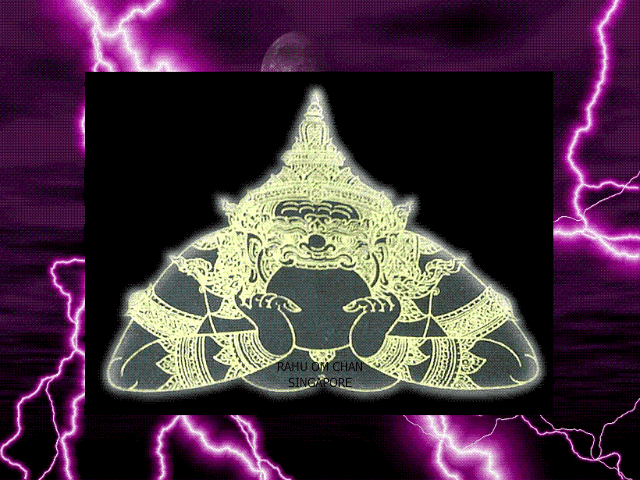
Rahu (Hindu) Rahu, also known as Abhra-pisacha, the 'demon of the sky,' was a great prince of the Daityas, a race of gigantic demons who warred against the gods. His father was Viprachitta who was king of the Daityas and his mother was Sinhika who was a flesh-eating fiend who could seize the shadow of the object she wanted to devour and so drag her prey into her jaws.

Rahu had four arms, and sometimes the lower part of his body ended in a dragon's tail. He is best known for his attempt to interrupt the regular gods and has the reputation of a cunning and mischievous demon. By churning the ocean, the gods had produced Amrita, the elixir of immortality.

One day they were waiting in line for the beverage to be passed out. Rahu, wearing a disguise, insinuated himself among the gods and hid between Soma, the moon, and Surya, the sun. By the time these two gods discovered the fraud and called out to Vishnu, Rahu had already sipped the divine liquid. Vishnu turned towards the demon in rage, and with his discus cut Rahu's body in half. But the Amrita had already had time to take effect, and both parts of Rahu lived on.

Rahu never forgave the sun and moon for informing Vishnu of him, and his bodiless head has been pursuing his enemies ever since, occasionally swallowing them. Lacking a body, he can't retain them, and they reappear for a short time. He is thus the source of eclipses.

Rahu is sometimes shown riding an owl or reclining on a divan. His name means 'to abandon' or 'void,' hence blackness or having no body, links him to the astronomers' 'umbra.'

He is associated with a star in the northern sky, in the constellation of Draco, which is sometimes referred to as the Crooked Serpent.
胡

Saturday, 9 May 2009

Inspiration by Buddha

佛说:忘记并不等于从未存在,一切自在来源于选择,而不是刻意。不如放手,放下的越多,越觉得拥有的更多。 放下了,就拥有了每个人所见所遇到的都早有安排,一切都是缘。缘起缘尽,缘聚缘散.

我问佛,这个世界什么最大?佛说人心。
我问佛,人心有多大?佛说无穷无尽。
我问佛,我为什么会有烦恼? 佛说那是因为你有欲念。

Let us rise up and be thankful; for if we didn't learn a lot today, at least we learned a little, and if we didn't learn a little, at least we didn't get sick, and if we got sick, at least we didn't die; so, let us all be thankful.

There is only one time when it is essential to awaken. That time is now.

This Vesak day is a fruitful one. A day for Him to realise that it's time to give up what he has always been clinging onto. A day for him to give up his hopes for people who are not worth his effort, a day for him to wake up from his dream of trying to change the surrounding and people around him.

He said ~~ it's a failure, it's a disappointment! I'm sure tonight gonna be a sleepless night, but it's also a blessing in disguise as Rahu and GOD wants him to know that it's time he should wake up. I went through that 2 years ago and i know the feeling, it's not easy, but it's ok. Life goes on! Enough is enough, it's time to leave that circus, leave those clowns, but Rahu will always be in our heart.

Pictures of Rahu

胡

Friday, 8 May 2009

Rahu - Wat Khun Chan วัดขุนจันทร์


胡

HAPPY VESAK DAY

"Naddi Santi Parang Sukhung"
No Happiness greater than Serenity of the Mind - The Lord Buddha

Thursday, 7 May 2009

Monk's Funeral


Thais, particularly Mon, attend a funeral of Phra Pubang Panyatepoh, former abbot of Wat Samosorn in Nonthaburi on Sunday. The late abbot was wellknown among Thai Mons.

** So this is how a Monk's Funeral looks like.

The Story of the Buddhist Saga Vessantara Jataka

The light and sound display tells the story of the Buddhist saga about Prince Vessantara, who practiced Dhamma (Buddhist teachings) and followed the precepts of Buddha, which emphasize charity and giving.

The story tells and profoundly praises the prince’s good example of making donations and sacrifices and compares such goodness with the endless unlimited craving and yearning of the professional beggar named Jujaka.

According to the synopsis of the story, Prince Vessantara realized the importance of charity and liked making donations until he was eventually expelled from his home city. He took his family and went to live his life as a religious pilgrim in the forest. One day when his wife, Princess Matsi, was out gathering fruits to feed her children, Jujaka, the beggar, came up and begged Prince Vessantara to give him his children, Kanha and Chali. Prince Vessantara asked Jujaka to wait for Princess Matsi to come back first, but Jujaka said he could not wait (because he knew the nature of women is sympathetic and she would never give her children to him). So Prince Vessantara gave his children to Jujaka and told him to go to the palace of the King of Sanchai to receive a valuable treasure.

When Jujaka received the children, he beat them in front of Prince Vessantara. Prince Vessantara suddenly got angry and wanted to kill Jujaka, but eventually he regained calm and thought about the great merit of giving. This allowed his anger to die. So Jujaka led the two children away into the forest, beating them continuously. Then one day, Jujaka stumbled across the royal platform of the King Sanchai. The king saw the children and recognized them as the children of Prince Vessantara. Then, the King reclaimed them from Jujaka in exchange for a plethora of valuable treasures and an abundance of food and drink. Jujaka was so greedy that he overstuffed his stomach until he couldn’t take it anymore and he died.

That is the result of the endless greed of human beings.

Source - Siam Cultural Park.

胡

Wednesday, 6 May 2009

佛誕節活動5月2-8日在皇家田舉行

【本報訊】曼谷市政府副常務次長他威薩昨天透露,市政府與宗教廳、泰國弘揚佛教協會等部門合作,於5月2-8日在皇家田廣場舉行本年度佛誕節弘揚佛教周活動。 由於5月8日是佛誕節,曼谷市政府與各有關部門合作,按慣例於下月2-8日舉行本年度佛誕節弘揚佛教周活動,目前有關部門已在皇家田周圍搭建帳篷,作為各佛教團體或者佛寺舉行弘揚佛教展覽會的場所,市政府還將迎請神聖舍利子和佛像供奉在皇家田廣場中央,讓佛教善信舉行巡燭禮。 據悉,詩琳通公主殿下將於5月8日佛誕節當天下午5時駕臨皇家田廣場,賜主持巡燭禮和禮佛法會。由於佛誕節已被聯合國定為世界的重要節日,有關部門將盛大舉辦本年度佛誕節活動,並號召佛教善信到皇家田廣場參加禮佛、齋僧布施、從屠宰廠贖回水牛和黃牛、誦經禪座以及聆聽高僧宣講道法。僧王法駕昨天發表佛誕節講話表示,佛誕節是全球佛教善信的重要節日,同時也是紀念釋迦牟尼佛祖誕生、悟道、涅槃的同一個日子,佛祖是人類至德、至智、至誠的代表,因此佛教善信應感念佛祖的恩惠,加強自身心境修行,以佛教道德作為日常行為準則。
本文引用地址:http://www.udnbkk.com/article/2009/0429/article_52994.html

慶祝佛誕節 80國逾千高僧聚首

【本報訊】來自80個國家的1000多位高僧齊集佛統府佛教城,慶祝「佛誕節」,努力用佛教道義來促使各國共同努力建設和諧世界,讓世界人民安居樂業,共促和平。 佛誕節紀念活動4-6日在佛統府的佛教城隆重進行,來自80個國家的1000多位高僧將齊集佛教城舉行盛大的誦經傳道活動,曼谷金山寺高僧將擔任此次活動的主席。國內外佛教信善也將齊聚集到佛教城參與這個難得的佛教盛事。 朱拉佛教學院長戈薩章僧人透露,今年佛誕節除了來自外國的1300多位高僧以外,國內僧人也有1200多位前來參加法會,紀念佛祖創建佛教和悟道的重要日子,共同祈福人類永無貧窮、和平。據悉,今年的佛誕節紀念活動於4至6日進行,5日的分組研討會分別在佛統府佛教城、朱拉佛教學院和大城府等3地進行,而6日下午4時各國高僧與泰國高僧代表將齊集佛教城共同進行盛大的佛事。

本文引用地址:http://www.udnbkk.com/article/2009/0505/article_53227.html

Monday, 4 May 2009

來興民眾拜橄欖樹 求彩票號

【本報訊】來興府1棵橄欖樹最近火了起來,這株巨大的橄欖樹被當地人稱為橄欖娘娘,人們相信拜過橄欖娘娘後會獲得彩票的開獎號碼。昨天(1日)許多人帶著香燭等物來拜,求神保佑中獎。一些賣彩票和飲食的商販也來擺攤銷售,生意特別紅火。 來興府美素縣美巴鎮3鄉下331號民居大院內有一顆橄欖樹,這株橄欖樹曾因暴風而倒下,但又漸漸長直起來,當地便傳出該橄欖樹是妖精的化身,還稱其為橄欖娘娘。因為相信橄欖娘娘具有神力,於是越來越多的人帶著香燭、花朵來拜,並求彩票開獎號碼。 許多民眾開著車子來,將車輛停在附近的公路,造成交通堵塞。不過也有一些聰明的飲食和彩票商販隨著人流而來,生意居然還比往時要紅火了許多。 不過這樣也給屋主帶來困擾,由於來拜橄欖娘娘求彩票號碼的人太多,導致他不得不在門口立了一塊牌子,禁止求開獎號碼的人進入,只歡迎普通的信徒。

本文引用地址:http://www.udnbkk.com/article/2009/0502/article_53118.html

**人类的通病,什么神也好,什么东西也好,只要拜了会发达中奖就一定很多人争着去!管它是什么妖魔鬼怪也不怕。
胡
 
eckhart tolle