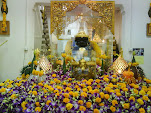
Ku Kut, Wat Phrathat Chamthewi

Phra Nang Din, Amphoe Chiang Kham

Phra Prathan Chaturathit, Wat Phumin
胡
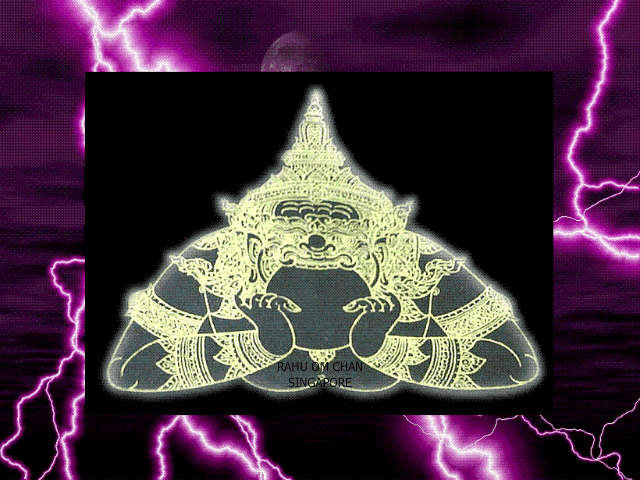
Ku Kut, Wat Phrathat Chamthewi
Phra Nang Din, Amphoe Chiang Kham

Features Hindu gods and goddesses Brahma, Vishnu, Shiva, Uma, Lakshmi, Ganesh, Indra, Narai, Sarasavadi
Land of Mahayana-Taoism

Features the supreme sages and foremost teachers of China such as Lao Tse, Confucious, Tao-Tse and other famous Chinese saints who have toiled to protect and bless people in the world and bestow happiness on all.
 Featuring the five great mothers who protect and bestow merit to human beings inhabiting this world
Valley of the Four Buddhist Saints

So, what can we do??
The first step toward spiritual freedom from the worldly bonds and fetters is to control one's mind, to stop idle talk, and to be somewhat pensive.
He who is influenced by his likes and dislikes can not rightly understand the significance of circumstances and tends to be overcome by them; he who is free from attachments rightly understands circumstances and to him all things become new and significant.
 A holy site situated in the midst of forests, mountains and nature, The Kuan Yin Inter-Religious Park offers complete serenity and spiritual inspiration.


 People are always changing -


 Opposite Wat Mahathat in Ayutthaya stands Wat Ratchaburana, built in 1424 and splendidly restored. The towers (both rounded Khmer-style prangs and Sukhothai-style pointed chedis) have even retained some of their original stucco.


 Wihaan Phra Mongkol Bopit is home to Thailand's largest seated bronze Buddha.
 Shwedagon's main stupa at dusk
 Southern entrance
 Devotion
 Stupa of Wat Phnom
 Temple buildings of Wat Phnom
 Shrine beneath the stupa
 View of Wat Phnom (Photo by Magalie L'Abbé)


 Wat Mahathat is perhaps the most striking of all of the temples in Ayutthaya and is located the very heart of the city.

 There are four types of people who should be known as enemies disguised as friends
The greedy person is an enemy disguised as a friend for four reasons.
He who speaks but does not act is an enemy disguised as a friend for four reasons.
The flatterer is an enemy disguised as a friend for four reasons.
The squanderer is an enemy disguised as a friend for four reasons also.
A friend who always wants to take, A friend who says but doesn't do, A friend who uses flattering words, A friend who joins you in wrong -These four friends are really foes, And one who is wise, having understood this, Will avoid them from afar, As if they were a dangerous road.


 When you really feel the need to seek refuge, we must always keep in our minds that the Buddha can't help us without us helping ourselves first.
Size rank: Fourth largest world religion
Main locations: China, Japan, Korea, Southeast Asia
Major divisions: Theravada, Mahayana, Vajrayana
Sacred texts: Pali Canon (Tripitaka), numerous Mahayana sutras
Original language: Pali
Place of ritual: Temple, meditation hall.
Varies: Theravada is atheistic; Mahayana is more polytheistic.
Ultimate reality: None. Nothing is permanent.
Human nature:
There is no self or soul. Human existence is nothing more than a combination of five impermanent components (khandas).
Purpose of life:
Theravada - Become an arhat, escape the cycle of rebirth, and attain nirvana. Mahayana - Become a boddhisatva then help others attain enlightenment.
Afterlife:
Rebirth or nirvana. Nirvana is seen simply as the cessation of suffering by some and as a heavenly paradise by others.
Three Jewels/Three Refuges:
*The Buddha * The sangha (monastic community) *The dharma (truth or teachings)
Three Delusions:
*Ignorance * DesireAnger * hatred
Three Trainings:
*Moral discipline * Concentration * Wisdom
Three Marks of Existence:
1. Impermanence (anicca) 2. Unsatisfactoriness (dukkha) 3. No-self (anatta)
Four Noble Truths:
*All of life is marked by suffering. *Suffering is caused by desire and attachment. *Suffering can be eliminated. *Suffering is eliminated by following the Noble Eightfold Path.
Four Immeasurables or Sublime States:
*Equanimity (upekkha) *Loving-kindness (metta) *Compassion (karuna) *Sympathetic joy (mudita)
Four Reminders:
*Human life is precious *Death is inevitable. *The laws of karma cannot be avoided. *Suffering permeates all existence.
Four Bodhisattva Vows:
Five Precepts:
*Do not kill *Do not steal *Do not engage in sexual misconduct *Do not lie *Do not use intoxicants.
Five Powers:
*Faith and confidence *Energy and effort *Mindfulness *Samadhi *Wisdom
Five Hindrances:
*Sense craving *Anger or ill will *Sloth and torpor *Restlessness and worry *Doubt and the inner critic
Five Dhyani (Wisdom) Buddhas:
**Vairochana **Akshobhya**Ratnasambhava **Amitabha **Amoghasiddhi
Six Perfections:
1)Concentration 2)Effort 3)Ethical behavior 4)Generosity 5)Patience 6)Wisdom
Six Realms of Existence:
*Hell-beings *Hungry ghosts *Animals *Humans *Anti-gods or demigods *Gods
Noble Eightfold Path:
*Right beliefs *Right aspirations *Right speech *Right conduct *Right livelihood *Right effort *Right mindfulness *Right meditational attainment
Ten Paramita:
*Giving or generosity *Virtue, ethics, morality *Renunciation, letting go, not grasping *Wisdom and insight *Energy, vigour, vitality, diligence *Patience or forbearance *Truthfulness *Resolution, determination, intention *Kindness, love, friendliness *Equanimity
Twelve Links of Dependent Arising: Ignorance *Karmic formations *Consciousness *Name and form *Six senses *Contact *Feeling *Craving *Grasping *Becoming *Birth *Aging and Death
 For Buddhist, there are three important Buddhist celebrations: Makabucha Day (on February),Visakabucha Day (May) Asahabucha Day (on July).
Makabucha Day or (Buddhist All Saints’ Day) is a Buddhist holiday which takes place annually on the night of the full moon duringthe third lunar month of the year.
It first took place during the time of Lord Buddha over 2500 years ago when 1,250 monks all of whom were ordained by Lord Buddha himself decided to come back to see Lord Buddha at Weluwan Wanaram without prior appointment on the night of the full moon of the third lunar month after traveling around to teach about Buddhism. Because it was the first assembly of a large group of Buddhist monks, Lord Buddha gave them Owata Patimok which is considered the firstconstitution for all the laws of Buddhist monks. The 3 core teachings are:
To allow Buddhists in Thailand an opportunity to perform religious activities on this special day, the Thai government makes Makabucha Day a national holiday. Buddhists across the country flock to temples for candle-lit processions as part of activities on this religious day. Other activities include alms offering and listening to monks' teachings. Activities are organised in almost every temple and the ones at most famous temples draw more participants, young and old alike.
There are many activities in which people can choose to participate - Early in the morning Buddhists give food to the monks. They may make merit by freeing fish and birds. During the day they listen to the teaching of Lord Buddha and practise meditation.
The evening they perform a religious activity called Wian Tian by walking clockwise 3 timesaround the Bot or the main building of the temple.Monks are holding a sacred thread and a candle while devotees carry a lighted candle, 3 incense sticks and flowers in their hands.
This candlelit procession is called การเวียนเทียนรอบโบสถ์สามรอบ.
 泰国南部北大年府,有座林姑娘庙,香火特别旺盛,神灵显赫,有求必应。 “林府姑娘”,是供奉在北大年市中灵慈圣宫。
 尤其是每年正月十五,来朝拜的信徒,来自四方八面,全国各地甚至,也吸引了来们来。也招徕了马来西亚和新加坡的香客,前去朝拜。
 天公就是指"玉皇上帝"又稱「玉帝」.
 我是福建人,从小到大都跟着爸爸一起在年初八晚上12点拜天公.以前根本不知道为什么一定要在半夜三更才被叫起来拜拜,只知道这一天爸爸非常的忙碌,从早到晚都忙着卤鸭,煎鱼,煮鸡,蒸螃蟹还有很多的斋菜,水果和甘蔗当然还有过年必备的年糕和发糕他都自己一手包办.忙碌烹煮一番后,深夜时辰一到,就摆好丰富祭品,安好天公座,点起香烛祭拜天公。祭拜天公的祭品,包括鸡鸭、鱼虾、甘蔗、水果、香烛、大金、小金、香烛、龙香等等。拜天公时,必须诚心膜拜,一点不能马虎.