Monday, 31 December 2007

泰国佛牌


大多数泰国人颈上必定挂有一尊泰国佛牌,他们深信泰国佛牌,有神奇力量,能帮助他们运程,遇上意外更能保命,的确泰国佛牌的神奇事迹,每天不断发生,不断流传,慢慢在亚洲各地,佩带泰国佛牌亦是非常普遍,很多人都会请一尊泰国佛牌佩带,帮助运程。

其实对一般人而言,佩带任何一种佛牌,都会对运程及各样都会有所帮助。但如果是有所求的人,就好像想请尊佛牌佩带,帮助人缘或财运或特别要帮助一样事情,便应该要请教对佛牌有所研究的人。 泰国佛牌虽然全都是能辟邪、挡险、助运程、保平安,但原来部份泰国佛牌是会对其中一种功效方面,特别灵验.
  • 好像坤平将军 - 人缘方面特别灵验

  • 招财女神 - 利财运

  • 拍洛佛牌,助运程,避官非等等,

因此如是有所求,便应以你所求的方向,来选择佛牌。

还有那些在运程已经很差,才"临急抱佛脚"来请佛牌佩带的人来说,如想帮助财运,便请财运方面,最灵验的佛牌佩带,这样原来也未必可以的,因运程已经太差,这样选择佛牌的方法,未必能有大的帮助。所以如有意佩带佛牌,应在运程未至很差时,便以要佩带,就好像预防一样,因佛牌会在你运程好时,令你运程更好,在运程转差时,便会帮助你的运程,不会让运程不断转差。

另外我们恭请佛牌,必定要清楚佛牌是由那佛寺所出,由那僧人所制,因以佛牌来说,必定要佛寺所出的佛牌,才算是正佛,而且很多不法商人会自制佛牌来从中行骗,所以恭请佛牌,最好是到庙里去.

其实不管我们是否有佩带佛牌,我想只要我们平日多做善事,积德,天上的神佛自然会保佑我们。人最重要的是 - 行得正,坐得正!

Sunday, 30 December 2007

佛牌的禁忌

其实对一位尊重佛法僧的人来说,佩带佛牌并没有什么特别的禁忌,因为这些禁忌对尊重佛法僧的人来说都不会触犯,而佩带佛牌需要遵守的禁忌有以下几点:

  • 佩带佛牌不可进行性行为,性行为时必需将佛牌除下。

  • 除下的佛牌不可放置於太低的地方(低过腰间),包括裤袋。

  • 依古时留传,佩带泰国佛牌,必需以单数佩带,例如一尊、三尊、五尊、七尊.....,如此类推。

只要紧记以上三点经已十分足够。如因一时忘记触犯佩带佛牌禁忌(注意是一时忘记不是明知故犯),你只要诚心向佛牌忏悔,下次不再触犯同样错误,有机会将佛牌给僧人或一些师父再加持便可,但如你是明知故犯,我想你也不太适合佩带佛牌了喔。

Friday, 28 December 2007

泰国有关佛教的禁忌

佛教在泰国的地位是神圣不可侵犯的,任何冒渎的行为均可能会遭受到拘禁,即使对于外国游客也是同样的。

有关游客应注意的事项:

  • 游览佛寺前,先检查一下衣着,袒胸露背者及穿短裤、背心者是禁止入内的,甚至衬衣没塞进裤子、袖管翻卷在胳膊上的人也不准进佛寺的门。
  • 游客在进入佛殿前还要脱鞋,否则,会被视为沾污佛堂。
  • 游客如果对寺庙、佛像、和尚做出轻率的举动,就被视为罪恶滔天。拍摄佛像尤其要小心,绝对不可爬上佛像拍照。
  • 不要触摸佛像,不要爬上寺院内外的任何一尊佛像。对所有佛像,不管大小都要尊敬。
  • 不要把佛像放在裤袋内,泰国人认为身体的下部接触佛像是对佛像的亵渎。
  • 不能手指僧侣,不能接触(身体)僧侣。尤其女性不许与僧侣握手,在汽车上不许与僧侣邻坐,即使是僧侣主动前来打招呼(外国女性常遇到)也应礼貌地拉开距离。女士若想将东西奉给僧侣,宜托男士转交,如果要亲手赠送,那么僧侣便会张开一块黄袍或手巾,承接该女士交来的东西,过程中僧侣是不容许碰触女性的。
  • 遇女尼时,男子亦要小心不要触及她们身体。
  • 遇见托钵化缘的和尚,千万不能送现金,因为这是破坏僧侣戒律的行为。
  • 晴天路遇和尚时,如果从和尚面前经过,必须绕开和尚的身影。按佛教说法,和尚的身影即和尚本人,跨越和尚的身影,等于跨越和尚,这是对和尚不尊重的表现。
  • 在给僧侣拍照前,应先征得同意,拍照后应有礼貌地表示谢意。

Thursday, 27 December 2007

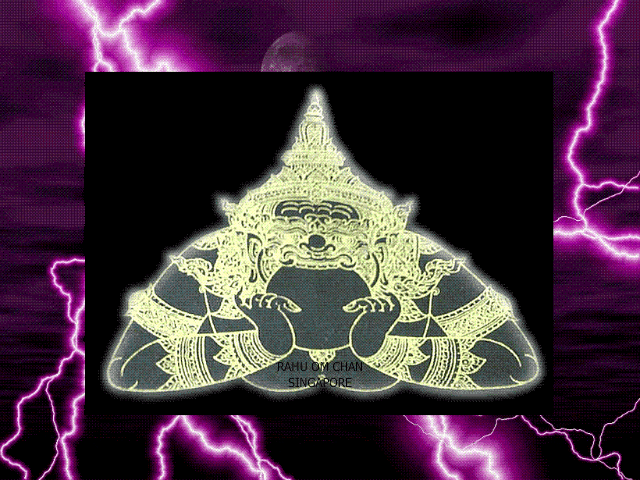
Rahu and Ketu - Folktales

Long ago there was a great war between the Asuras (demons) and Devatas (gods). The Devatas were routed in the war and they went to Lord Brahma to seek his help. Brahma told them to churn the ocean.As a result they would be able to obtain Amrit (nectar) which would make them immortal and all powerful and after consuming it they would be able to defeat the Asuras. Churning the ocean was a very big job and so the Devatas sought the help of the Asuras. The king of the serpents Vasuki was to become the rope, while a hill named Mandrachal offered to become the pivot. Lord Vishnu, in the form of a tortoise, became the base and the churning process began.

The Devatas held the tail of Vasuki and the Asuras held the head. Various things came out, during this churning of the ocean. There was a pot of Vish (poison) which created havoc in all the three worlds. Lord Shiva drank the poison to save the world, but he did not let the poison go beyond his neck which became blue in color. That is why Lord Shiva is also called 'NeelKant' ("one with a blue neck").

At last Dhanvantari came out with a pot of Amrit and immediately there was a mad scramble for it among the Devatas and Asuras. Seeing this, Lord Vishnu took the form of Mohini (a beautiful dancer) and offered her services in distributing the Amrit equally to both the Asuras and Devatas. She made both of them sit in two different rows but she gave the Amrit to the Devatas only. Towards the end, one of the Asuras saw through her trick. He went and sat among the Devatas and drank the Amrit. The moment Chandra (Moon) and Surya (Sun), who were sitting besides him, saw that he was a Asura, they informed Mohini. Lord Vishnu came in his real form and let out the Sudarshan Chakra (wheel) at the Asura. The Asura's neck was separated from the body, but he did not die as he had drunk the Amrit. His head was called 'Rahu' and his torso 'Ketu'.

According to legend, Rahu and Ketu swallowed the moon and sun to have their revenge, causing an eclipse.

Source : Encylopedia Mythica

Tibetian depiction of Rahu

A Tibetian depiction of Rahu (Rahula) with 9 heads and a face in his belly, the mouth of which swallows up the moon or sun during eclipses.

Wednesday, 26 December 2007

Quotes by Buddha - Anger

  • Anger will never disappear so long as thoughts of resentment are cherished in the mind. Anger will disappear just as soon as thoughts of resentment are forgotten.
  • Holding on to anger is like grasping a hot coal with the intent of throwing it at someone else, you are the one who gets burned.
  • Everything is changeable, everything appears and disappears; there is no blissful peace until one passes beyond the agony of life and death.
  • Endurance is one of the most difficult disciplines, but it is to the one who endures, that the final victory comes.

Times of luxury do not last long, but pass away very quickly; nothing in this world can be long enjoyed.

I'm really sicked of repeating to myself - Tomorrow will be better! but what can I do except this..... oh ya, Pray... Pray hard.. Pray harder...

Tuesday, 25 December 2007

龙甫湾大師神奇事迹

如要说大师的神奇事迹,便必要讲以下两宗,第一是令到英文报章也报导的事,第二宗是发生在大师圆寂后的。

先讲第一宗,话说一日泰国军用飞机飞至泰国清迈府之上,机上载著七位医生,突然其中一位医生看到在一片云上,有一僧人坐在云上禅定,其后更慢慢下降回地面,机上的人看到都说是自己眼花,但问题是所有的人都看到了,哪会同一时间各人都眼花呢?于是便查看地图位置,发现是在屈内咩宾佛寺附近,之后其中一位医生便到屈内咩宾佛寺附近查看,到屈内咩宾佛寺附近便向村人查问附近有否得道高僧,村人分分说在屈内咩宾佛寺,住有一位龙甫湾大师是得道高僧,这位医生便到屈内咩宾佛寺拜访,当看见龙泡湾大师,立即赫了一跳,因大师的容貌与医生在飞机上看到的高僧容貌一模一样,医生便问大师是否当日在云上禅定,大师只是笑说一句,"你当我是鸟吗?",其后一英文报章也有报导这事迹。   

第二宗事迹发生在大师圆寂后进行火化时,大师的火化法事,泰国国王及很多高官也有参加,善信人数不用说,也知道众多,就火化法事应没有什么特别,但在火化塔进行火化时,火化塔冒出烟火,这时奇怪的事发生,在火化塔旁特然出现一个发光人影,很多人都能看到,各人称奇。

Sunday, 23 December 2007

Rub Bua Festival

Locals from Bang Phli in Samut Prakan pay respect to the revered Buddha image, Luang Pho To, by throwing lotus flowers.


One of the famous festivals in Thailand marking the end of the Rains Retreat is the "Rub Bua Festival" in Bang Phli in Samut Prakan. This means "to receive lotus flower" but it is also called "yon bua" which is a better description.


This literally means to throw lotus flowers which is exactly what happens. The people of Bang Phli, and from far around, come to the temple at Wat Bang Phli Yai Nai to pay respect to the revered Buddha image called Luang Poh To. A replica of this sacred image is put on a boat which then goes up and down the canal in order for people to pay respect. They do this by throwing lotus flowers onto the boat. There are always thousands of people attending and it is complete chaos. Certainly worth attending if you are in this area at the end of the Buddhist Lent next year
Bang Phli is a district with an abundance of lotuses. The morning of the 14th full-moon night of October is the day before the end of the Buddhist Lent. Buddhists come here to pick the flowers for offerings to monks according to tradition. The people of Bang Phli regard this as great merit so they volunteer to keep the flowers for distribution to visitors who row to the district to receive them every year. This is to provide facilitation and is a way to jointly make merit. This tradition has become the "Rap Bua" (lotus receiving) festival.
These lotus flowers are meant as homage to the Triple Gem -- the Lord Buddha, Dhamma and the Sangka. Besides, the Bang Pli local People will also throw lotus flower onto visitors’ boats as a gesture to invite them join in their merit-making.

Friday, 21 December 2007

Yantra, Or Holy Tattoos.

Yantra, or Tattoos, used in Cambodia and Thailand, are believed to have magical powers. There are legends of some old people in Cambodia today who believe they will NEVER die because they have a tattoo which grants them eternal life.


The belief in the magic of tattoos is just one of many animistic elements which have remained a part of everyday Cambidian life for centuries. Even in the face of conversion to Buddhism, the belief in magic and "Spirit power" persists.

Tattoos were very common in olden times. During the 13th century, a visiting monk from China, Zhou Daguan wrote that the King of Angkor's body was inlaid with a piece of sacred iron in such way that even knives and arrows hitting his body, could not wound him.

During the Vietnam War, religious medallions carried by Cambodian soldiers would be covered back and front with tattoos to protect them from bullet. Khmer soldiers even put their religious medals in their mouth before an especially dangerous assult.

The base for many tattoos is geometrical figure. The figure will be overlaid with images of Buddhist and Hindu deities, accompanied by scriptures or mantras written in Pali or ancient Khmer. One was said to give you the power of command. But it was not all about power. One was said to make the bearer more attractive so people would naturally fall in love with him.


Believe it or not.....


Thursday, 20 December 2007

龙婆班


龙婆班大师出生在佛历2418年,泰国呀唷挞也俯. 他的左手尾指生有红色胎印,所以男婴父母为他起名为班(班即为胎印的意思),而这名称班的婴孩,便是我们所认识的龙婆班大师。

大师小时,跟父母到田耕种,及到佛寺由僧侣教导知识,大师求知欲十分强及很聪明,经常都主动发问,而且对佛学更是特别有兴趣,

大师在佛历2438年4月1日出家, 正式成为屈班林哥寺的僧侣。为大师主持出家仪式是屈班甩么佛寺的龙泡船大师,其后大师不断钻研佛学,更跟随龙泡船大师,学习了多种不同的佛法法门,还学习到医术方面的知识大师跟随龙泡船大师学习完毕后,继续不停钻研,其间很多善信求教及治病,部份善信更要求拜大师为师,僧侣便要求大师成为佛寺住持,但大师并没有接受任何要求,大师只说自己道行还未够,还要继续求法学习。其后大师果真不断到处求法,到过多位高僧处学习,其中如屈找七佛寺的龙泡前大师、屈铁官所跟佛寺的龙泡登大师、屈萨既佛寺的亚赞钻大师、屈内佛寺的龙婆林大师、屈矿乜登佛寺的龙婆龙大师、屈七朗佛寺的龙婆车大师等等.大师经过不断学习、求法、修行,其佛法经已十分高深,如利用法力为骨折病人接骨、驱邪、解降、医治各种疾病、成就多种不同佛法法门,但大师还经常将求法、学习挂在口边,就大师这种德行及精进,是很值得我们学习 往后大师还是在不断学习,及于屈班龙和佛寺为善信们作法事、治病、教导佛法,来请大师求教的善信非常之多,而且很多僧人都来向大师求法,拜大师门下大师就是这样一直教导善信及弟子,普渡众生,还一边自已不断学那钻研,希望能成就更多法门,能够帮助更多众生日子渐渐过去。

佛历2481年7月26日,大师如常用过早饭后,便回房休息,一会儿,突然从房中出来,向多位在等代大师教法的弟子,声称自己要离开了,说后便回去房间,众弟子也不知大师为何突然出来会这样说一句话便回房去,只好在等代大师教导时间,但当时间过了很久大师还没有出来,便到大师房间查看,原来大师真的离开了,大师经已圆寂离开人世。

现今的善信之所以这样尊敬大师,奉大师为九大高僧,因为其一生对佛法的精进,及对善信的慈悲外,大师所制的佛牌,也是其中原因,大师所制的佛牌也可说是崇笛佛牌一种,但最特别的是在佛牌上会加上不同的几种动物神兽,佛牌一般称为"拍龙婆班(加上佛牌上的神兽在后)"佛牌。

高僧再捐贈央行600公斤黃金

著名高僧銮达波昨天向中央银行捐献48条黄金锭,总重600公斤,价值5亿1200万铢。移交仪式在曼谷佛教城三路的「萱盛探」(佛光园)修行场所隆重举行。 这是銮达波高僧自1997年发生金融危机以来,第14次向中央银行捐献黄金锭。据统计,14次捐献的黄金锭总共有931条,总重1万1630公斤,还不包括1080万4489美元现金。这些黄金和美元是由这位高僧在全国的善信捐给的,銮达波高僧强调,捐给中央银行的黄金和美元,必须用作国库储备黄金和外汇存底,以提高国家金融和经济稳定,化解金融危机。 在朱拉蓬公主的赐主持和见证下,銮达波高僧昨天下午把这批黄金锭移交给中央银行行长她丽莎女士,移交仪式在曼谷佛教城三路的「萱盛探」(佛光园)修行场所隆重举行。

Wednesday, 19 December 2007

Om Mani Padme Hum 嗡嘛呢叭咪吽


'Om Mani Padme Hum' (translation: Hail the jewel in the lotus) is a six syllable invocation (mantra) of Avlokitesvara, one who is invoked as the Protector from danger.
It is claimed that one who recites this mantra will be saved from all dangers and will be protected. This mantra is widely used in Mahayana Buddhism. One can find this mantra inscribed on rocks, prayer wheels, stupa walls, loose stones heaped as Mani (jewels) on roads, paths, mountain passes, the approaches and exits of villages. One can find this Mantra inscribed outwardly in the prayer wheels with millions of this mantra inscribed on paper inside the prayer wheels. The devotee turning one round of the prayer wheel means he recites this mantra millions of times.
As this mantra is thought to save one from all dangers, it is widely used in pendants, rings, etc.
咒文:(ong)(ma)(ni)(bei)(mei)(hong)  
此咒又名最胜观音大士心咒,其利益如下:(1)降魔、(2)治病、(3)免劫、(4)各种成就、(5)去障、(6)登佛位。(即明心见性)
此咒即是观世音菩萨微妙本心,观音菩萨自己就是持此咒而成佛的,名叫正法明如来。
此咒又为一切咒之心,所以又叫大悲心咒,为大乘之精纯,而且只有六个字,便于持诵。持诵此咒之人,没有贫富男女老幼之分,皆可使七代祖先超升解脱,《大乘庄严宝王经》,专明此咒功德。
六字大明咒的表法,用六字表法即以六道轮回言之,“嗡”表天道,“嘛”表阿修罗道,“呢”表人道,“叭”表畜生道,“咪”表鬼道,“吽”表地狱道,持诵此六字咒即能断轮回,出三界,证圣果。以四圣表法,即:“嗡”字由菩萨心发生,初入十信位,由此增进,“嘛”字入十住位,由此增进,“呢”字入十行位,再进,“叭”字入十回向位,“咪”字入十地位,“吽”字入金刚乘到大觉位。所以念此六字咒即能立超十地成无上正等正觉。

Tuesday, 18 December 2007

Luang Phor Pahn - Wat bang Nom Kho

16.7. BE2418 – 26.07.BE2481

Luang Por Pahn was the 3rd abbot of Wat Bang Nom Koh. He was borned on 16th July BE2418 in Jangwat Ayuttayah. He came from a farmer family. He was just borned with a red birth marks on his left hand, so his parents named him as "Pahn", which means birth marks in Thai.

He ordained as a monk in 1st April BE2438 at the age of 21 years old. His preceptor was Luang Por Sun from Wat Pahngplahmor. Luang Por Joi Wat Bahnpaen and Pra Ah Jahn Oun Wat Sutahpoh were his dhamma teachers. Luang Por Pahn ordain name was Sohnantoh. After he became a monk, he learned from Luang Por Sun Wichah. Luang Por Sun taught Luang Por Pahn everything he knew about Wichah (magic chant), sammahdti and especially the skills to cure people from illness and black magic (during that period, there were very few doctors, so some monks learned this skill of curing the sick). After learning from Luang Por Sun, Luang Por Pahn went to Tudong alone in deep forest, but not too long he met some monks who later became his disciples. He went Tudong from Ayuttayah to as far as near Burma in the North West of Thailand.

Luang Phor Parn was a meditative guru monk and also had magical knowledges. On Buddhistic Dhamma, it was recorded that he reached the great six knowledges of miracle. So he possesses knowledge on precognition, out-of-body ability, mind detecting, and performing comprehensive paranormal phenomena,etc. Apart from these abilities, he also possesses the highest state of Wipassana or knowledge on mind cleaning to stop next rebirth. But he intended to become a future-to-be Buddha, his aspiration called in Thai " Prathana Buddha Bhummi". To achieve this goal, he did a great deal merits, building more than 41 temples and many chanting halls in Ayuthaya, Saraburi and Lopburi without asking any help from the government. The money were from the making of amulets and donations from devotees. He also had intensified great Dhamma practices which automatically cleaned and "distilled" his inner body(astral body) to become crystal-like state and changed his body's cells immortal. This is the reason why his body undecayed after he passed away.

Luang Phor Parn is worshiped as one of the top 10 greatest guru monks of present-day Thailand. He was the closest disciple of Luang Phor Niam Wat Noi, Suphanburi, and also a disciple of Luang Phor Nong Wat Klong Madarn. His two great teachers passed away undecayed. When Luang Phor Parn passed away in B.E.2481(July 26th), his body was also undecayed as same as his teachers'. In B.E.2476, five years before he passed away, he had announced to all his disciples the date and time of his death. His precognition was quite clear and exactly correct, he passed away on the date and time he had foretold.


Monday, 17 December 2007

佛说人生之最。。。。。

人生最大的敌人是自己

人生最大的失败是自大

人生最大的罪过是杀生

人生最大的愚蠢是欺骗

人生最可恶的是淫乱

人生最可怜的是嫉妒

人生最痛苦的是痴迷

人生最羞辱的是献媚

人生最危险境地是贪婪

人生最烦恼的是争名利

人生最善良行为是奉献

人生最大的债务是受恩

人生最大的欣慰是布施

人生最大的财富是健康

人生最大的破产是绝望

人生最可佩服是精进

人生最缺欠的是智慧


Sunday, 16 December 2007

Luang Poo Waen

Luang Pu Waen BE2431 - 02.07.BE2528

Luang Pu Waen was born in BE2431 at Loei province, northeast Thailand. At the age of 13, he became a novice monk at Wat Poh Chai and studied Dhamma and Pali, showing exceptional ability even at young age. He went Tudong with his Teacher, Ajahn Wuan, travelling to Ubon province where he remained to learn Dhamma from Ajahn Sing. During his Tudong, he met many disciples of Ajahn Man telling him how good he was, hence Luang Pu Waen wished to meet Ah Jahn Man and become his disciples. In BE2462 Luang Pu Waen finally met Ah Jahn Man at Bahn Kor forest, Udon Thani province and became his disciple. Both he and Ah Jahn Dteu went Tudong again.
During the period in Tudong, he endured many difficulties such as ghost, wild animals and many other danger but he was never afraid. He spent most of his monkhood as a forest monk, travelling from one province to another on foot, going as far as Laos, Cambodia, Burma and even Vietnam.

At BE 2470 Ajahn Man officially accepted him as his disciple and he studied Dhamma at Wat Jedi Luang.
He went Tudong in chiangmai and stayed at Wat Huainumrin for 10 years. During the stay, he spent most of the time in forest and only return to the temple during the Khao Pansa. In BE2505, Ajahn Noo, the abbot of Wat Doi Mae pang ask him to stay at the Wat as he treated Luang Pu Waen as a teacher. He became the abbot of Wat Doi Mae Pang after Ajahn Noo passed away and he too, living the life as a forest monk all the time in a small hut away from the temple. He was very skillful in Sammahti and Dhamma.

The most unique nature of Luang Poo Waen, was that he did not like crowded places and loved to live alone in the forests
Chao Khun Nor ever mentioned"There is a Phra Arahang, but he lives far away, in the forest hill."

Luang Pu Waen passed away peacefully on 2nd July BE2528.

Saturday, 15 December 2007

Tai Sui

The Tai Sui 太岁 are stars directly opposite of Jupiter. They influence the Chinese zodiac, and are also a theory in Taoism and Feng Shui.
In the Chinese zodiac, there are sixty heavenly generals who assist the Jade Emperor in taking charge of the well-being of the Mortal World. Each of them takes turn to be in charge for a year. Due to most of them having a military background, they are normally known as the Military Generals, or as the Cycle Gods. Each of their features and weapons signifies the well-being of that year. For example, if the Tai Sui of the year is one who holds a pen, it signifies political unrest for that particular year. On the other hand, if the Tai Sui of the year holds a spear or sword it signifies the need to work hard and excel for that year.
In Taoism, those who offended, or by their sign conflict with the Tai Sui of the year are advised to go through a prayer session with a Taoist Priest to ask for blessing in obtaining Peace and Good Fortune throughout the year. Talismans thought to protect again Tai Sui are sold in many areas.


The Taoist calendar is organized into a series of twelve "earthly branches" which rotate according to the five elements. The result is a sixty year cycle (in Chinese, the first year in the cycle is the "jia" year, while the last year in the cycle is the "zi" year). Taoists believe that the Heveanly heirarchy, under the leadership of the Jade Emperor, has assigned sixty Heavenly Generals, each with their own characteristics, temperments, abilities, etc., to rule the years of the Jiazi Cycle. People tend to take on the personalities of the Taoist Deity governing the year of their birth. The Deity also takes a special interest in the lives and affairs of those born under his reign. He functions in that respect as a type of "Guardian Angel." The Heavenly Generals are frequently asked to intercede on behalf of their "God-children" in matters dealing with higher ranking Taoist Deities. A normal person, for instance, rarely calls upon the Jade Emperor, but might frequently ask his or her Heavenly General to do so on their behalf.

In Feng Shui, the area of the house corresponding with the position of that year's Tai Sui is to be left undisturbed or misfortune will befall the residence.

Next year's (2008) Tai Sui General will be General Zou Dang.
Those whose chinese Zodiac sign - Rat , Rabbit, Horse and Goat are advise to pray to the Taisui.


2008 太岁

太岁是掌管一年凡间事务的天神,由六十位天界大将军轮流值年,即中国的六十花甲。要知太岁的来历典故必须从太岁的上司斗姆元君说来了。斗即北斗星群,姆即众生得圣子,补裨造化,统绐乾坤。一年春天,紫光夫人在后园九华曲池沐浴,忽然池中现出一宝座,紫光夫人登于宝座之上,得宝座灵气修练得道,经七日七夜,紫光夫人化生金莲九苞,莲苞开花放射光芒,化成九座大宝楼阁,大宝楼阁混凝直射上天界,形成众星群即斗姆生九子。斗姆九子即勾陈、北极、北斗中国三大星座,当中有六颗星即为六十大将军掌管人间每年事务,即为六十太岁了。

由于众星座中有不同位置,而这些位置古人亦以天干地支代表,而地支:“子、丑、寅、卯、辰、巳、午、未、申、酉、戍、亥”即各星星座位置,亦即每年生肖。有刑、冲、破、害,故每年太岁与各人生肖便有机会出现刑冲破害的效应,而出现所谓的犯太岁了。

人的出生生肖与太岁有着刑冲破害的不利关系,因恐冒犯太岁,故便有拜太岁的风俗传统,其生肖与太岁刑冲破害其实是来自算命的程序,亦即天星十二宫位的关系。而十二生肖的刑冲破害亦有其不同的力量及影响,现简介如下:

  • 刑~~ 即满的意思,即生肖五行过旺,旺极而衰的现象,刑亦残缺及转衰之象。

  • 冲~~ 即冲着而来的意思,有相战的味道,是四种之中最猛烈碰撞的一种。

  • 破~~ 即有散乱及移动之象,破不及冲及刑的碰撞猛烈,是较为轻微的一种冒犯。

  • 害~~ 即与另一个生肖不能相合,命理称为破合,即强行分开。
2008年戊子属鼠,对生肖属马、鼠、兔、羊犯太岁相冲相刑相害,多有不利!

鼠-犯刑 馬-犯沖 兔-犯破 羊-犯害

如某人出生在哪一年,那么当年值班之神就是某人的本年神(本命太岁)。六十甲子神都各有名号。如甲子年出生的人,他的本命神就是甲子太岁金辨大将军。相传礼拜本命神,就可获其护佑,百恶皆伏,所行大吉。

佛说

如果一个人没有苦难的感受,就不容易对他人给予同情。你要学救苦救难的精神,就得先受苦受难。一般人在遇到对方的权势大,财富大,气力大,在无可奈何的情形之下而忍,这算什么忍耐呢?真正的忍是,就算他欺负了你,对不住你,但他什么都不及你,你有足够的力量对付他,而你却能容忍他,认为他的本性和我一样,只是一时糊涂,或在恶劣的环境中受到熏染罢了,你不必与他计较,能在这样的情况及心境之下容忍那才是真正的忍耐。   

如果我们放眼从累生历劫去看,那么一切的众生,谁不曾做过我的父母、兄弟姊妹、亲戚眷属?谁不曾做过我的仇敌冤家?如果说有恩,个个与我有恩;如果说有冤,个个与我有冤。这样子我们还有什么恩怨亲疏之别呢?再就智慧愚笨来说,人人有聪明的时候,也有愚痴的时候,聪明的人可能变愚痴,愚痴的人也可能变聪明。最坏的人,也曾做过许多好事,而且不会永远坏;好人也曾做过许多坏事,将来也不一定会好。如此我们反覆思索,所谓的冤亲、贤愚,这许多差别的概念,自然就会渐渐淡了。这绝对不是混沌,也不是不知好坏,而是要将我们无始以来的偏私差别之见,以一视同仁的平等观念罢了!

世界原本就不是属于你,因此你用不着抛弃,要抛弃的是一切的执著。万物皆为我所用,但非我所属当你用烦恼心来面对事物时,你会觉得一切都是业障,世界也会变得丑陋可恨。

Phra Phuttasihing - Phra Sihing


The Phra Singh Buddha has been a significant Buddha image of the Thai lanna people for many years. However there is uncertainty as to how the image came to Lanna. A copy of the Pala school image in high relief may have been brought back to Chiang Mai in 1455, along with the plans of the Mahabodhi temple, which formed the basis for Wat Jet Yod. The Lanna sculptors who were of the Sukhothai school would then have made copies as bronze images in the round. Thus the "lion" style images of Lanna combine the flowing grace and posture of the Sukhothai school with features of the Pala school of India.
Another theory suggests that can original Phra Sihing image came from Sri Lanka via Nakhorn Sri Thammarat, where a similar "lion" style image is kept. In 1661 King Narai had the Phra Sihing taken to Ayutthaya, but Lanna soldiers fighting with the Burmese are said to have recovered it at the sack of Ayutthaya in 1767. The existence of yet another old "lion" style image at the National Museum in Bangkok suggests Lanna craftsmen made several copies. One thing is certain, at least, and that is the image in the Viharn Lai Kham is a replica, for the "original" is located in the Chiang Mai National Museum.
Lanna images were not only of the lion style, however. King Tilokarat also ordered images made reproducing other schools such as that of Sukhothai and U-Thong. These mixed style images were produced throughout Lanna.

On the day of the Songkran Festival , the Phra Singh Buddha is espectfully mounted on the royal carriage , and travels in a procession around the city of Chiang Mai, so that Chiang Mai people can pay homage in a traditional manner to the image.

During the Songkran festival Chiang Mai people will process the Buddha image around the town for traditional bathing.


Friday, 14 December 2007

Wat Thai Watthanaram – Mae Sot district.

It is a Tai Yai Mahayan Temple, built in 1867. It contains one of the most beautiful Buddha, Phra Phuttha Maha Muni, which is a Mandalay-style image, built for Tai Yai people who cannot visit the original image in Burma. The image is located in a Burmese palace-style building. Behind the meeting hall is a hugh white reclining Buddha image.
 
eckhart tolle