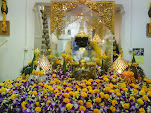
Phra That Phanom stupa, the religious heart of the Thais and Laotians along the Khong River, houses part of the Buddha’s relics (his chest bones), which his disciple, Phra Maha Kassapa Thera, kept on top of the Phu Kamphra hill.
Legend has it that the stupa was built jointly by five kings and that the decoration on the stupa was done by God Indra. The brick plates depicting ancient kings made by local artists can de dated back to the Dvaravati period (around 8th –10th Century AD). It is one of the oldest stupas in Northeast Thailand.
Phra That Phanom stupa had been restored and taken under royal patronage by successive Kings of the Lan Xang Kingdom. In 1680-1682, a monk, Phra Khru Pon Samet, brought 3,000 men from Vientiane, Laos, to restore and heighten the stupa to the form favored by the people of the Northeast. In 1940, the Government restored and heightened the stupa one more time. On 11 August 1975, the stupa collapsed due to heavy rainstorm, but it was once again restored to completion in 1979. There is a well inside the temple, which is one of the seventh wells around the country, whose water has been used during coronation ceremonies of King Rama VI, VII, VIII, and the present King. The annual Phra That Phanom stupa celebration is from the 10th night of the waxing moon until the 1st night of the waning moon of the 3rd lunar month.
Location -Chayangkun Road, Ban That Phanom, That Phanom district, Nakhon Phanom
Getting there
By Car -From Bangkok take highway No. 1 to Saraburi. Change to highway no. 2 at the 107th km. Go to Khon Kaen through Nakhon Ratchasima. Turn to highway no. 213 passing through Kalasin to Sakon Nakhon. Then, take highway no. 22 to Nakhon Phanom. The distance from Bangkok is about 760 km. Once in Nakhon Phanom, drive along highway no. 212 for another 50 km.
Sunday, 22 November 2009

Friday, 20 November 2009
Year of Goat: Phra That Doi Suthep Stupa, Chiang Mai
Phra That Doi Suthep stupa is situated on top of the Doi Suthep hill.
In 1373, King Kue Na of Lanna invited a monk from Sukhothai to Chiang Mai. The monk, Phra Sumon Thera, brought with him a piece of the Buddha’s relics found at the city of Pang Cha. This relic performed a miracle by multiplying into two pieces. One relic was kept at the Wat Buppharam temple. King Kue Na placed another relic on a holy elephant and asked the elephant to find a place to house the relic. The elephant walked up to the top of the Doi Suthep hill; cried three times; walked in circle three times and fell dead there. As a result, the King built a stupa to house the relic there.
In 1538, King Phra Mueang Ket Klao restored and enlarged the stupa to its present-day state. It is believed that worshipping the stupa from all four cardinal directions will improve a person’s intelligence. In the past, on Visakhabucha day, people will make a pilgrimage to the stupa.
Location - Mueang district, Chiang Mai
Getting there
By Car -From Bangkok take highway no. 32 to Nakhon Sawan and then take highway no. 1 passing through Tak to Lampang. After that take highway no. 11 to Chiang Mai. The distance from Bangkok is around 700 km. Once in Chiang Mai, drive along Huai Keo road to Doi Suthep hill.
In 1373, King Kue Na of Lanna invited a monk from Sukhothai to Chiang Mai. The monk, Phra Sumon Thera, brought with him a piece of the Buddha’s relics found at the city of Pang Cha. This relic performed a miracle by multiplying into two pieces. One relic was kept at the Wat Buppharam temple. King Kue Na placed another relic on a holy elephant and asked the elephant to find a place to house the relic. The elephant walked up to the top of the Doi Suthep hill; cried three times; walked in circle three times and fell dead there. As a result, the King built a stupa to house the relic there.
In 1538, King Phra Mueang Ket Klao restored and enlarged the stupa to its present-day state. It is believed that worshipping the stupa from all four cardinal directions will improve a person’s intelligence. In the past, on Visakhabucha day, people will make a pilgrimage to the stupa.
Location - Mueang district, Chiang Mai
Getting there
By Car -From Bangkok take highway no. 32 to Nakhon Sawan and then take highway no. 1 passing through Tak to Lampang. After that take highway no. 11 to Chiang Mai. The distance from Bangkok is around 700 km. Once in Chiang Mai, drive along Huai Keo road to Doi Suthep hill.
Wednesday, 18 November 2009
Year of Horse: Swedagon Pagoda, Myanmar and Wat Phra Borommathat Stupa, Tak
Those who were born in the year of horse can pay homage to the Phra Borommathat stupa in Tak instead of the Swedagon pagoda in Myanmar. Phra Khru Phitak, a chief monk at the Wat Phra Borommathat temple, built a stupa replicating the Swedagon pagoda over the original Phra Borommathat stupa.
It is believed that when the Buddha visited Tak, he arrived at the Mahiyangka hill where he gave his hair strand to his disciples. He asked them to keep his hair strand at that place after he entered nirvana. This temple is the place where the Buddha’s hair strand has been enshrined. On the 14th night of the waxing moon and the full moon night of the 7th lunar month every year, there is a celebration to pay homage to the Buddha’s relics.
Location - Mu 3, Ban Tha Phra That, Tambon Ko Tapao, Ban Tak district, Tak
Getting there
By Car-From Bangkok, drive along highway 32 to Nakhon Sawan and then highway no.1 to Tak. The distance from Bangkok is about 425 km. From Tak, take highway no. 1107 along the west bank of the Ping River for about 35 km. and turn left to highway no. 1175. Go straight on for another 1 km. before reaching the temple.
It is believed that when the Buddha visited Tak, he arrived at the Mahiyangka hill where he gave his hair strand to his disciples. He asked them to keep his hair strand at that place after he entered nirvana. This temple is the place where the Buddha’s hair strand has been enshrined. On the 14th night of the waxing moon and the full moon night of the 7th lunar month every year, there is a celebration to pay homage to the Buddha’s relics.
Location - Mu 3, Ban Tha Phra That, Tambon Ko Tapao, Ban Tak district, Tak
Getting there
By Car-From Bangkok, drive along highway 32 to Nakhon Sawan and then highway no.1 to Tak. The distance from Bangkok is about 425 km. From Tak, take highway no. 1107 along the west bank of the Ping River for about 35 km. and turn left to highway no. 1175. Go straight on for another 1 km. before reaching the temple.
Monday, 16 November 2009
Year of Snake: Bodhi three at Wat Photharam Mahawihan Temple, Chiang Mai
Bodhi tree is important to Buddhists because the Buddha attained enlightenment under such tree.
Lanna people still believe that Bodhi is sacred and can eliminate suffering. There is a tradition to offer props to Bodhi trees for support, along with other things.
For those born in the year of snake, their place of worship is the Bodhi tree at Buddhagaya in India. If that is not possible, they can also worship Bodhi trees in any temples. The Wat Photharam Mahawihan temple is a significant temple where the 8th world semimar on the revision of the Tripitaka took place.
King Tilokkarat who built the temple brought Bodhi trees from Sri Lanka to be planted there, and the Great Seven Places where the Buddha resided before the propagation of his teaching were demonstrated there.
The temple’s principal stupa was a replica of the Buddhagaya Chedi. The outer facade of the stupa’s base is decorated with beautiful stuccoed designs.
Location - Superhighway Road, Mueang district, Chiang Mai
Getting there
By Car- From Bangkok drive along highway no. 32 to Nakhon Sawan, then take highway no. 1 passing through Tak and Lampang. After that use highway no. 11 to Chiang Mai. The distance from Bangkok is 700 km. Once in Chiang Mai go down the Chang Pueak road to the Superhighway intersection. Turn left and go straight for 600 meters. The temple is on your right.
Lanna people still believe that Bodhi is sacred and can eliminate suffering. There is a tradition to offer props to Bodhi trees for support, along with other things.
For those born in the year of snake, their place of worship is the Bodhi tree at Buddhagaya in India. If that is not possible, they can also worship Bodhi trees in any temples. The Wat Photharam Mahawihan temple is a significant temple where the 8th world semimar on the revision of the Tripitaka took place.
King Tilokkarat who built the temple brought Bodhi trees from Sri Lanka to be planted there, and the Great Seven Places where the Buddha resided before the propagation of his teaching were demonstrated there.
The temple’s principal stupa was a replica of the Buddhagaya Chedi. The outer facade of the stupa’s base is decorated with beautiful stuccoed designs.
Location - Superhighway Road, Mueang district, Chiang Mai
Getting there
By Car- From Bangkok drive along highway no. 32 to Nakhon Sawan, then take highway no. 1 passing through Tak and Lampang. After that use highway no. 11 to Chiang Mai. The distance from Bangkok is 700 km. Once in Chiang Mai go down the Chang Pueak road to the Superhighway intersection. Turn left and go straight for 600 meters. The temple is on your right.
Sunday, 15 November 2009
PRAYER FOR FREEDOM FROM SUFFERING
May all beings everywhere plagued
with sufferings of body and mind
quickly be freed from their illnesses.
May those frightened cease to be afraid,
and may those bound be free.
May the powerless find power,
and may people think of befriending each other.
May those who find themselves in trackless,fearful wilderness--
the children, the aged, the unprotected--
be guarded by beneficent celestials,
and may they swiftly attain Buddhahood.
~~The Buddha
Saturday, 14 November 2009
Year of Dragon: Phra Phuttha Si Hing, Wat Phra Sing Temple, Chaing Mai
Phra Phuttha Si Hing is one of the most significant Buddha images of Chiang Mai.
It is believed to have originated around 2nd Century AD in present day Sri Lanka and had been transferred from one city to another until finally reached Chiang Mai in 1440 in the reign of Phaya Saen Mueang. At first the image was meant to be housed in a temple called Wat Buppharam, but when its carriage passed Wat Phra Sing temple (known as Wat Lee Chiang Phra then), the carriage could not be moved further.
As a result, the Buddha image has been housed in this temple since. In 1520, a King of Lanna, Phra Mueang Keo, built a temple hall called “Wihan Lai Kham” to house the image. This temple hall contains mural paintings depicting a folk tale, done by Lanna artists, and a story from the past lives of the Buddha, done by artists from Central Thailand, from the period of King Rama V.
During the Songkran festival of every year, Phra Phuttha Si Hing is taken in a procession around the city so that people can join the bathing ceremony.
Location - Sam Lan Road, Mueang district, Chiang Mai
Getting there
By CarFrom Bangkok, take highway no. 32 to Nakhon Sawan and then take highway no. 1 passing through Tak and Lampang. Then take highway no. 11 to Chiang Mai. The distance is 700 km.
It is believed to have originated around 2nd Century AD in present day Sri Lanka and had been transferred from one city to another until finally reached Chiang Mai in 1440 in the reign of Phaya Saen Mueang. At first the image was meant to be housed in a temple called Wat Buppharam, but when its carriage passed Wat Phra Sing temple (known as Wat Lee Chiang Phra then), the carriage could not be moved further.
As a result, the Buddha image has been housed in this temple since. In 1520, a King of Lanna, Phra Mueang Keo, built a temple hall called “Wihan Lai Kham” to house the image. This temple hall contains mural paintings depicting a folk tale, done by Lanna artists, and a story from the past lives of the Buddha, done by artists from Central Thailand, from the period of King Rama V.
During the Songkran festival of every year, Phra Phuttha Si Hing is taken in a procession around the city so that people can join the bathing ceremony.
Location - Sam Lan Road, Mueang district, Chiang Mai
Getting there
By CarFrom Bangkok, take highway no. 32 to Nakhon Sawan and then take highway no. 1 passing through Tak and Lampang. Then take highway no. 11 to Chiang Mai. The distance is 700 km.
Friday, 13 November 2009
Sharing
The great Buddhist sage Nagarjuna said:
If there is a remedy when trouble strikes,
What reason is there for despondency?
And if there is no help for it,
What is the use of being sad?
So come what may,
I'll never harm My cheery happiness of mind.
Depression never brings me what I want;
My virtue will be warped and marred by it.
Thursday, 12 November 2009
Wat Phra That Chae Haeng ( Rabbit Temple) Chiangmai
Wat Phrathat Chae Haeng is a sacred place of worship, situated on a mound on the eastern side of the Nan River, at the former centre of the Nan town after moving from Pua town.
Wat Phra Borommathat Chae Haeng was constructed during the rule of Chao Phraya Kanmueang (the Feudal Lord of Nan during 1326 – 1359) as an enshrining venue of 7 Buddha relics, silver and golden votive tablets presented by King Maha Thammaracha Lithai on the occasion that Chao Phraya Kanmueang assisted in the construction of Wat Luang Aphai (Wat Pa Mamuang in Sukhothai Province at present) in 1354.
It features a chedi in a bell shape. The pattern of Phrathat Chae Haeng is assumed to have been influenced by the chedi of Phrathat Hariphunchai. It is plated with Thong Changko or Thong Dok Buap – a combination of brass and copper. The staircase up to the Phrathat is in a Naga shape, while the gable above the entrance gate to the wihan is the stucco relief depicting intertwined Nagas, the unique characteristic of Nan fine art.
Phra Borommathat Chae Haeng represents the Year of the Rabbit.
Lanna people believe that travelling to pay respect to the Phrathat of their Year of Birth or “Chu That” would reap them great results.
Tourists can visit the temple everyday from 6.00 a.m. – 6.00 p.m.
To get there: Wat Phrathat Chae Haeng is located in Muang Tuet sub-district, King Amphoe Phu Phiang. From the centre of Mueang district, cross the Nan River Bridge and go along the Nan – Mae Charim route or on Highway No. 1168 for 3 kilometres.
Birth Year: 1999, 1987, 1975, 1963, 1951, 1939, 1927, 1915
**Nan is a city in Northern Thailand. It is located some 668 km north of Bangkok
Wat Phra Borommathat Chae Haeng was constructed during the rule of Chao Phraya Kanmueang (the Feudal Lord of Nan during 1326 – 1359) as an enshrining venue of 7 Buddha relics, silver and golden votive tablets presented by King Maha Thammaracha Lithai on the occasion that Chao Phraya Kanmueang assisted in the construction of Wat Luang Aphai (Wat Pa Mamuang in Sukhothai Province at present) in 1354.
It features a chedi in a bell shape. The pattern of Phrathat Chae Haeng is assumed to have been influenced by the chedi of Phrathat Hariphunchai. It is plated with Thong Changko or Thong Dok Buap – a combination of brass and copper. The staircase up to the Phrathat is in a Naga shape, while the gable above the entrance gate to the wihan is the stucco relief depicting intertwined Nagas, the unique characteristic of Nan fine art.
Phra Borommathat Chae Haeng represents the Year of the Rabbit.
Lanna people believe that travelling to pay respect to the Phrathat of their Year of Birth or “Chu That” would reap them great results.
Tourists can visit the temple everyday from 6.00 a.m. – 6.00 p.m.
To get there: Wat Phrathat Chae Haeng is located in Muang Tuet sub-district, King Amphoe Phu Phiang. From the centre of Mueang district, cross the Nan River Bridge and go along the Nan – Mae Charim route or on Highway No. 1168 for 3 kilometres.
Birth Year: 1999, 1987, 1975, 1963, 1951, 1939, 1927, 1915
**Nan is a city in Northern Thailand. It is located some 668 km north of Bangkok
TWENTY-FOUR BRAND-NEW HOURS ~~By Thich Nhat Hanh
Every morning, when we wake up, we have twenty-four brand-new hours to live. What a precious gift!
We have the capacity to live in a way that these twenty-four hours will bring peace, joy, and happiness to ourselves and others. Peace is present right here and now, in ourselves and in everything we do and see. The Question is whether or not we are in touch with it. We don't have to travel far away to enjoy the blue sky.
We don't have to leave our city or even our neighborhood to enjoy the eyes of a beautiful child. Even the air we breathe can be a source of joy. We can smile, breathe, walk, and eat our meals in a way that allows us to be in touch with the abundance of happiness that is available. We are very good at preparing to live, but not very good at living. We know how to sacrifice ten years for a diploma, and we are willing to work very hard to get a job, a car, a house, and so on. But we have difficulty remembering that we are alive at the present moment, the only moment there is for us to be alive.
Every breath we take, every step we make, can be filled with peace, joy, and serenity. We need only to be awake, alive in the present moment. ...
We have the capacity to live in a way that these twenty-four hours will bring peace, joy, and happiness to ourselves and others. Peace is present right here and now, in ourselves and in everything we do and see. The Question is whether or not we are in touch with it. We don't have to travel far away to enjoy the blue sky.
We don't have to leave our city or even our neighborhood to enjoy the eyes of a beautiful child. Even the air we breathe can be a source of joy. We can smile, breathe, walk, and eat our meals in a way that allows us to be in touch with the abundance of happiness that is available. We are very good at preparing to live, but not very good at living. We know how to sacrifice ten years for a diploma, and we are willing to work very hard to get a job, a car, a house, and so on. But we have difficulty remembering that we are alive at the present moment, the only moment there is for us to be alive.
Every breath we take, every step we make, can be filled with peace, joy, and serenity. We need only to be awake, alive in the present moment. ...
Tuesday, 10 November 2009
Year of Tiger: Phra That Cho Hae Stupa, Phrae
Phra That Cho Hae is located on top of a small hill. Judging from its architectural style, the temple can be dated back to the 14th Century.
However, it is believed that when the Buddha reached a hill called Kosithaya Chakkhabanphot, he met a Laotian prince named Lua Ai Khon. The prince offered food to the Buddha. The Buddha then predicted that there was going to be a city called Phrae there. Then, the Buddha’s disciples asked the Buddha for his hair strand, and gave it to the prince to be housed in a crystal container. The container was kept in a cave east of the hill. The Buddha stated that after his nirvana the relics of his left elbow would be kept there.
The name of the stupa was believed to have originated from the silk cloth (Cho Phrae in Thai) the prince used to accept the hair strand. Some also believed that the name was originated from silk cloths wrapped around the stupa. A big celebration of the Buddha’s relics is held annually on the 11th night of the waxing moon to the full moon night of the 4th lunar month. This important festival consists of the Tung (Lanna-styled flags) procession as well as other performances.
Location - Mu 5, Tambon Pa Daeng, Muaeng district, Phrae
Getting there
By Car From Bangkok use highway no. 1 and then no. 32 to Nakhon Sawan. Then take highway no. 117 to Phitsanulok, and highway no. 11 heading to Uttaradit. Once you reach Den Chai district, Phrae, take highway 101 to Phrae. The journey is about 580 km.
However, it is believed that when the Buddha reached a hill called Kosithaya Chakkhabanphot, he met a Laotian prince named Lua Ai Khon. The prince offered food to the Buddha. The Buddha then predicted that there was going to be a city called Phrae there. Then, the Buddha’s disciples asked the Buddha for his hair strand, and gave it to the prince to be housed in a crystal container. The container was kept in a cave east of the hill. The Buddha stated that after his nirvana the relics of his left elbow would be kept there.
The name of the stupa was believed to have originated from the silk cloth (Cho Phrae in Thai) the prince used to accept the hair strand. Some also believed that the name was originated from silk cloths wrapped around the stupa. A big celebration of the Buddha’s relics is held annually on the 11th night of the waxing moon to the full moon night of the 4th lunar month. This important festival consists of the Tung (Lanna-styled flags) procession as well as other performances.
Location - Mu 5, Tambon Pa Daeng, Muaeng district, Phrae
Getting there
By Car From Bangkok use highway no. 1 and then no. 32 to Nakhon Sawan. Then take highway no. 117 to Phitsanulok, and highway no. 11 heading to Uttaradit. Once you reach Den Chai district, Phrae, take highway 101 to Phrae. The journey is about 580 km.
Sunday, 8 November 2009
Death and the impermanence of life
Death and the impermanence of life
In the teaching of the Buddha, all of us will pass away eventually as a part in the natural process of birth, old-age and death and that we should always keep in mind the impermanence of life. The life that we all cherish and wish to hold on.
To Buddhism, however, death is not the end of life, it is merely the end of the body we inhabit in this life, but our spirit will still remain and seek out through the need of attachment, attachment to a new body and new life. Where they will be born is a result of the past and the accumulation of positive and negative action, and the resultant karma (cause and effect) is a result of ones past actions.
This would lead to the person to be reborn in one of 6 realms which are; heaven, human beings, Asura, hungry ghost, animal and hell. Realms, according to the severity of ones karmic actions, Buddhists believe however, none of these places are permanent and one does not remain in any place indefinitely. So we can say that in Buddhism, life does not end, merely goes on in other forms that are the result of accumulated karma. Buddhism is a belief that emphasizes the impermanence of lives, including all those beyond the present life. With this in mind we should not fear death as it will lead to rebirth.
The fear of death stemmed from the fear of cease to be existent and losing ones identity and foothold in the world. We see our death coming long before its arrival, we notice impermanence in the changes we see around us and to us in the arrival of aging and the suffering due to losing our youth. Once we were strong and beautiful and as we age, as we approach our final moments of life we realize how fleeting such a comfortable place actually was.
Grieving
It is natural to grieve the loss of family members and others we knew, as we adjust to living without their presence and missing them as part of our lives. The death of a loved one, or even someone we were not close to, is terribly painful event, as time goes on and the people we know pass away along the journey of life, we are reminded of our own inevitable ends in waiting and everything is a blip of transience and impermanent.
At a certain moment, the world seems suddenly so empty and the sense of desperation appears to be eternity. The greater the element of grief and personal loss one tends to feel sorry for oneself.
Some of us may have heard the story of the women who came to the Buddha in great anguish, carrying her dead child pleading him to bring the child back to life. The Buddha said Bring to me a mustard seed from any household where no-one had ever died and I will fulfill your wish. The woman's attempt to search for such seed from houses were in vain and of course she could not find any household in which no-one had ever died and suddenly she realized the universality of death.
In the teaching of the Buddha, all of us will pass away eventually as a part in the natural process of birth, old-age and death and that we should always keep in mind the impermanence of life. The life that we all cherish and wish to hold on.
To Buddhism, however, death is not the end of life, it is merely the end of the body we inhabit in this life, but our spirit will still remain and seek out through the need of attachment, attachment to a new body and new life. Where they will be born is a result of the past and the accumulation of positive and negative action, and the resultant karma (cause and effect) is a result of ones past actions.
This would lead to the person to be reborn in one of 6 realms which are; heaven, human beings, Asura, hungry ghost, animal and hell. Realms, according to the severity of ones karmic actions, Buddhists believe however, none of these places are permanent and one does not remain in any place indefinitely. So we can say that in Buddhism, life does not end, merely goes on in other forms that are the result of accumulated karma. Buddhism is a belief that emphasizes the impermanence of lives, including all those beyond the present life. With this in mind we should not fear death as it will lead to rebirth.
The fear of death stemmed from the fear of cease to be existent and losing ones identity and foothold in the world. We see our death coming long before its arrival, we notice impermanence in the changes we see around us and to us in the arrival of aging and the suffering due to losing our youth. Once we were strong and beautiful and as we age, as we approach our final moments of life we realize how fleeting such a comfortable place actually was.
Grieving
It is natural to grieve the loss of family members and others we knew, as we adjust to living without their presence and missing them as part of our lives. The death of a loved one, or even someone we were not close to, is terribly painful event, as time goes on and the people we know pass away along the journey of life, we are reminded of our own inevitable ends in waiting and everything is a blip of transience and impermanent.
At a certain moment, the world seems suddenly so empty and the sense of desperation appears to be eternity. The greater the element of grief and personal loss one tends to feel sorry for oneself.
Some of us may have heard the story of the women who came to the Buddha in great anguish, carrying her dead child pleading him to bring the child back to life. The Buddha said Bring to me a mustard seed from any household where no-one had ever died and I will fulfill your wish. The woman's attempt to search for such seed from houses were in vain and of course she could not find any household in which no-one had ever died and suddenly she realized the universality of death.
生命无常
人生苦短,生命无常,当一口气不来,生命即不再;而人既有生,则不免一死,死后往哪里去,我们不可不知,是往生极乐?或生天或堕地狱、或堕饿鬼、或沦为畜生或重返人间,无一不攸关此生所造之种种业果。
人生无疑是这个世界上最美丽,最珍贵无价的事物。然而人生于天地间,有如白驹过隙,忽然而已。生命有太多太多的美好,人们往往来不及去品尝,一生短短数十年,忽然间就已过了。只留下无穷的辛酸痛苦,无尽的悲伤遗憾。
佛说:生命在一呼一吸之间,可见生命其实就是这样的脆弱.
人生无疑是这个世界上最美丽,最珍贵无价的事物。然而人生于天地间,有如白驹过隙,忽然而已。生命有太多太多的美好,人们往往来不及去品尝,一生短短数十年,忽然间就已过了。只留下无穷的辛酸痛苦,无尽的悲伤遗憾。
佛说:生命在一呼一吸之间,可见生命其实就是这样的脆弱.
Year of Ox: Phra That Lampang Luang Stupa, Lampang
Phra That Lampang Luang temple is an ancient temple of Lampang province.
Legend has it that when the Buddha reached the Samphagariwan village, a man called Khon offered him honey and coconuts. The Buddha predicted that there would be a city called Lampang there, then he gave a strand of his hair to Khon, which was later kept in the Lampang Luang stupa. After the Buddha entered nirvana, some Buddhist monks brought part of his relics to be kept there. The stupa is situated in an ancient city, which is believed to have served solely religious purposes.
There are many attractions in the temple such as the Wihan Phra Phut, a beautifully decorated traditional Lanna style wooden temple hall, where people, when looking through a small hole on the Wihan’s wall, can see an impression of the stupa on a piece of cloth placed inside the hall. Wihan Nam Taem contains ancient Lanna mural paintings. Wihan Luang houses Phra Chao Lan Thong, a significant Buddha image of the temple, as well as mural paintings from the reign of King Rama V depicting the Buddha’s life and his past lives. The hall of the Buddha’s Footprint (Ho Phra Phutthabat) is another place where the stupa’s impression can be seen, but women are not allowed to enter this hall. Ho Keo houses Phra Keo, the most important Buddha image of Lampang, which was taken from the Phra Keo Don Tao Suchadaram temple.
Location541 Ban Lampang Luang, Ko Kha district, Lampang
Getting there
By CarFrom Bangkok drive along highway no. 32 to Nakhon Sawan. Then take highway no. 1 passing through Tak to Lampang (approx. 599 km.). From Lampang, take highway no. 1 heading to Thoen and turn right at the 586th km. to Ko Kha district. Then turn right to highway no. 1034. Go straight for about 3 km. and the temple is on your left.
Legend has it that when the Buddha reached the Samphagariwan village, a man called Khon offered him honey and coconuts. The Buddha predicted that there would be a city called Lampang there, then he gave a strand of his hair to Khon, which was later kept in the Lampang Luang stupa. After the Buddha entered nirvana, some Buddhist monks brought part of his relics to be kept there. The stupa is situated in an ancient city, which is believed to have served solely religious purposes.
There are many attractions in the temple such as the Wihan Phra Phut, a beautifully decorated traditional Lanna style wooden temple hall, where people, when looking through a small hole on the Wihan’s wall, can see an impression of the stupa on a piece of cloth placed inside the hall. Wihan Nam Taem contains ancient Lanna mural paintings. Wihan Luang houses Phra Chao Lan Thong, a significant Buddha image of the temple, as well as mural paintings from the reign of King Rama V depicting the Buddha’s life and his past lives. The hall of the Buddha’s Footprint (Ho Phra Phutthabat) is another place where the stupa’s impression can be seen, but women are not allowed to enter this hall. Ho Keo houses Phra Keo, the most important Buddha image of Lampang, which was taken from the Phra Keo Don Tao Suchadaram temple.
Location541 Ban Lampang Luang, Ko Kha district, Lampang
Getting there
By CarFrom Bangkok drive along highway no. 32 to Nakhon Sawan. Then take highway no. 1 passing through Tak to Lampang (approx. 599 km.). From Lampang, take highway no. 1 heading to Thoen and turn right at the 586th km. to Ko Kha district. Then turn right to highway no. 1034. Go straight for about 3 km. and the temple is on your left.
Friday, 6 November 2009
Year of Rat: Phra That Si Chom Thong Stupa, Chiang Mai
This stupa is located on top of the Chom Thong hill. It houses part of the Buddha’s relics. The relics are not buried, but instead kept in a small pagoda inside the temple hall, so people can bathe them.
Legend has it that the Buddha once visited this hill and stated that this place would later house part of his relics. In 1452, Two people, Meng and Soi, found the Buddha’s relics, so they built a pagoda to house them at the Ton Thong hill. This temple was later known as the Chom Thong temple. Phra Mueng Keo, the 14th King of the Mang Rai dynasty (1495-1525) enlarged the temple, and many Kings of Chiang Mai arranged for processions of the relics to Chiang Mai to be worshipped. On the full moon nights of the third and seventh lunar months of every year, the relics are brought to the temple hall where people can bathe them. Traditionally, the water used during the ceremony are to be taken from a river and scented with sandalwood.
Location 157 Ban Luang, Tambon Ban Laung, Chom Thong district, Chiang Mai
Getting there
By Car From Bangkok, drive along highway no.32 to Nakhon Sawan. Then, take highway no.1 through Tak to Thoen district, Lampang. After that, use highway no. 106 heading to Lampoon. Before reaching Ban Hong district turn left to highway no. 1010 to Chom Thong district, this road will meet highway no. 108. Turn left and the temple is on your left.
Legend has it that the Buddha once visited this hill and stated that this place would later house part of his relics. In 1452, Two people, Meng and Soi, found the Buddha’s relics, so they built a pagoda to house them at the Ton Thong hill. This temple was later known as the Chom Thong temple. Phra Mueng Keo, the 14th King of the Mang Rai dynasty (1495-1525) enlarged the temple, and many Kings of Chiang Mai arranged for processions of the relics to Chiang Mai to be worshipped. On the full moon nights of the third and seventh lunar months of every year, the relics are brought to the temple hall where people can bathe them. Traditionally, the water used during the ceremony are to be taken from a river and scented with sandalwood.
Location 157 Ban Luang, Tambon Ban Laung, Chom Thong district, Chiang Mai
Getting there
By Car From Bangkok, drive along highway no.32 to Nakhon Sawan. Then, take highway no.1 through Tak to Thoen district, Lampang. After that, use highway no. 106 heading to Lampoon. Before reaching Ban Hong district turn left to highway no. 1010 to Chom Thong district, this road will meet highway no. 108. Turn left and the temple is on your left.
Tuesday, 3 November 2009
南海观音
最近朋友的神坛(海洞坛~南海观音)有一些庆祝活动在进行,好象是观音诞,所以一连3天的庆祝活动, 我们也就友情帮忙了起来. 挺有意思的, 看见了一些道教的仪式和佛教是很不一样的, 看见他们大家一起合作,完成任务,互相帮忙,很佩服他们的凝聚力. 当然也要感谢那些出钱赞助"神袍"的人们.
基于好奇,就找了一些有关南海观音方面的资料.
南海观音-三面观音的释义
基于好奇,就找了一些有关南海观音方面的资料.
南海观音-三面观音的释义
三面观音为一体的三尊造型佛像:
- 正面观音手持经箧
- 右面观音手持莲花
- 左面观音手持念珠
依次象征智慧、平安、仁慈.每一尊法相蕴含一种大智能及感应功能、能增福添慧、保佑平安。 正面的手持经箧观音,体现观音的般若德即智慧德性。经箧代表六百卷般若经,表示观音"白度度人,智悲双运",既能自利、观理事无碍之境而了达自在,又有利他,观一切众生之机而化度自在,以般若启众生智慧。 左面的手持念珠观音,体现观音的解脱德,即彻底摆脱无明烦恼和种种束缚,达到大自由大自在的境界,表现"众生念佛,佛念众生"同等同体的慈精神。右面的手持莲花观音,体现观音的法身德。观音是密宋莲花部的本尊,莲花是观音的三味耶形,喻"常乐我净"四德;是佛门中的圣花,象征众生的肉团心,莲体清净,出淤泥而不染,根茎通心,象征"心佛众生,三无差别"。总体表示观音的清净和六根圆通。 观音圣像总体表示观音"大慈与一切众生乐,大悲拨一切众生苦"的大慈大悲形象。是"慈悲"、"智慧"与"和平"的精神象征。
Saturday, 31 October 2009
Robes offering @ Wat Kancanarama
There will be a Robe offering ceremony at Kancanarama Buddhist Temple (Lorong Ong Lye) on 1/11/2009. All are welcome.
Thot Kathin — At the time of the Buddha, this observance was a part of Buddhist practice and sustenence. As an exercise of self-reliance and humility, monks would cut, sew, and dye the cloth that would be used for their robes. (Some monks in the forest still dye their own cloth by cutting wood chips from the trunk of a Jackfruit tree, boiling them, and then stirring in the cloth to dye it an orange/yellow color.) The finished robes were then offered to the members of the monkhood who were worthy and needy. Currently, people tend to purchase manufactured robes, pre-packaged goods (including necessities like toiletries, towels, and so on), and then offer them to the temples. The events surrounding Kathin may involve intensive fund raising for various purposes, such as adding to or finishing a temple building. The time of Kathin can last up to a month from end of the Rains Retreat to the full moon of the twelfth lunar month (November).
Thot Kathin — At the time of the Buddha, this observance was a part of Buddhist practice and sustenence. As an exercise of self-reliance and humility, monks would cut, sew, and dye the cloth that would be used for their robes. (Some monks in the forest still dye their own cloth by cutting wood chips from the trunk of a Jackfruit tree, boiling them, and then stirring in the cloth to dye it an orange/yellow color.) The finished robes were then offered to the members of the monkhood who were worthy and needy. Currently, people tend to purchase manufactured robes, pre-packaged goods (including necessities like toiletries, towels, and so on), and then offer them to the temples. The events surrounding Kathin may involve intensive fund raising for various purposes, such as adding to or finishing a temple building. The time of Kathin can last up to a month from end of the Rains Retreat to the full moon of the twelfth lunar month (November).
Friday, 30 October 2009
Concern over monks' poor health
Tue, Oct 27, 2009The Nation/Asia News Network
Public Health Minister Witthaya Kaewparadai told a meeting yesterday of 100 officials from hospitals and health agencies about results from a random survey last year on the health of 80,945 monks in all regions (out of 300,000 Buddhist monks and novices around the country).While 44 per cent of the monks were healthy, some 56 per cent, or 45,333 monks were found to be unhealthy, he said.About 31 per cent of those deemed unhealthy, or 24,937 monks, were sick, mostly from high cholesterol, high blood pressure, diabetes, obesity, and emphysema.Another 25 per cent, or 20,396 monks, were said to be at risk of falling ill, mostly from coronary heart disease and diabetes, he said.Witthaya affirmed that sick monks and novices could get medical treatment from state hospitals freeofcharge via the universal healthcare system.Bangkok also had the Priests Hospital, the world's only hospital specifically for monks and novices.He said the health of monks, and other groups, would be well taken care of, due to plans to have 9,000 tambonlevel hospitals promoting good health and the training of 970,000 officials and volunteers by the year 2012.Priests Hospital director Waraporn Phumsawat said 70 per cent of admissions last year were sick monks and novices from upcountry. Most suffered chronic diseases that needed constant medication, or their illness could cause them to die or become disabled.She said yesterday's meeting aimed to set up a system to safely transfer chronically ill monks between the Priests Hospital and hospitals in Bangkok and upcountry so they could get medication and rehabilitation near their temples.
http://news.asiaone.com/News/Latest%...27-176177.html
Public Health Minister Witthaya Kaewparadai told a meeting yesterday of 100 officials from hospitals and health agencies about results from a random survey last year on the health of 80,945 monks in all regions (out of 300,000 Buddhist monks and novices around the country).While 44 per cent of the monks were healthy, some 56 per cent, or 45,333 monks were found to be unhealthy, he said.About 31 per cent of those deemed unhealthy, or 24,937 monks, were sick, mostly from high cholesterol, high blood pressure, diabetes, obesity, and emphysema.Another 25 per cent, or 20,396 monks, were said to be at risk of falling ill, mostly from coronary heart disease and diabetes, he said.Witthaya affirmed that sick monks and novices could get medical treatment from state hospitals freeofcharge via the universal healthcare system.Bangkok also had the Priests Hospital, the world's only hospital specifically for monks and novices.He said the health of monks, and other groups, would be well taken care of, due to plans to have 9,000 tambonlevel hospitals promoting good health and the training of 970,000 officials and volunteers by the year 2012.Priests Hospital director Waraporn Phumsawat said 70 per cent of admissions last year were sick monks and novices from upcountry. Most suffered chronic diseases that needed constant medication, or their illness could cause them to die or become disabled.She said yesterday's meeting aimed to set up a system to safely transfer chronically ill monks between the Priests Hospital and hospitals in Bangkok and upcountry so they could get medication and rehabilitation near their temples.
http://news.asiaone.com/News/Latest%...27-176177.html
Thursday, 29 October 2009
Buddhism in Thailand
The Thais are a deeply religious people. For the Buddhist majority it underlies all activities and is the backbone of the thai culture. 90% of the populations are Theravada Buddhist. Buddhist believes that existence called nibbana (nirvana).
Almost all Thais believe in reincarnation, hence they “make merit” by doing good deeds. Ways to make merit include giving money to beggars, bird releasing, becoming a novice in a temple for man in Thailand and giving food to monk who make their Alms round every morning.
There are 2 sects of Buddhist monks in Thailand, the orange robed Mahanikai and the stricter, more academic red-brown robed Thammayut who can only eat one meal a day (before noon), provided for them by those who wish to make merit. They are not allow to touch money.
Thais always requested service of monks for special occasion ie. New house, new car are blessed for good luck. For marriage, nine monks are invited to perform ritual and during a funeral, a group of monks are required to perform a 3days of chanting mantras.
There is no such thing as a good Buddhist or a bad Buddhist. Buddhism not only teaches tolerance, it practices it. It does not claim that other religions are false, it encourage you to make your own judgments ( not easy as human being always believe the more god/Buddha they follow, the better ‘protection” they have, so they choose to mixed different religion into one, which is ridiculous and disrespectful for the religions he believed )
There is no hard sell, and no requirement for monks to ‘Save’ a quota of souls. And either will it talk about using money can make you a different or better person.
In Thailand we call temple wats, a place exclusively Buddhist, as we know Buddhism originated from India, hence it natural that we can find Hindu God in a wat, but if a wat over-do it by allowing people to leave religious object to the wat , then a temple will be cluttered with religious bric-a-brac and it will become to much. It will lose its original meaning of a Wat.
Almost all Thais believe in reincarnation, hence they “make merit” by doing good deeds. Ways to make merit include giving money to beggars, bird releasing, becoming a novice in a temple for man in Thailand and giving food to monk who make their Alms round every morning.
There are 2 sects of Buddhist monks in Thailand, the orange robed Mahanikai and the stricter, more academic red-brown robed Thammayut who can only eat one meal a day (before noon), provided for them by those who wish to make merit. They are not allow to touch money.
Thais always requested service of monks for special occasion ie. New house, new car are blessed for good luck. For marriage, nine monks are invited to perform ritual and during a funeral, a group of monks are required to perform a 3days of chanting mantras.
There is no such thing as a good Buddhist or a bad Buddhist. Buddhism not only teaches tolerance, it practices it. It does not claim that other religions are false, it encourage you to make your own judgments ( not easy as human being always believe the more god/Buddha they follow, the better ‘protection” they have, so they choose to mixed different religion into one, which is ridiculous and disrespectful for the religions he believed )
There is no hard sell, and no requirement for monks to ‘Save’ a quota of souls. And either will it talk about using money can make you a different or better person.
In Thailand we call temple wats, a place exclusively Buddhist, as we know Buddhism originated from India, hence it natural that we can find Hindu God in a wat, but if a wat over-do it by allowing people to leave religious object to the wat , then a temple will be cluttered with religious bric-a-brac and it will become to much. It will lose its original meaning of a Wat.
僧人尸体不腐 挑战科学定律
最近在泰国南部仁廊府挽暖区樾挽暖佛寺发生一起奇特事件,该寺一位九十岁的高僧圆寂后被火化时尸体、袈裟不能被焚燬,令人称奇。此奇特现象经媒体披露后,再次引起各界对僧人身体出现的超自然现象的关注。
在东西方的历史记载中,高僧或是有修为的高德之士,出现肉身不腐的不乏其人,很多见诸报端。甚至有人历经许多年,依然颜状如生,有些甚至肉体还飘着澹澹的香气。按照科学定律,人的心跳一旦停止,体内细胞将因缺氧而在数分钟后死亡,所以,人体通常在死后数天开始腐烂。有分析指出,尸体不腐、甚至袈裟都不能被烧燬的现象对现代科学定律构成挑战。
泰南高僧火化尸体袈裟不毁 据《联合早报》报导,在泰国南部仁廊府挽暖区樾挽暖佛寺,高僧銮菩銮他嘛哇罗于今年十月十七日圆寂,享年九十岁,其火化仪式在十一月八日进行。在举行火化仪式的当天,天上连续下滂沱大雨,而到下午四点的时候,庙方将进行佛教诵经仪式时,大雨即时停下。佛教诵经仪式结束后,一部份虔诚信徒留下参加火化礼。火化礼在当晚九时进行,收尸老叟拿着装满汽油的加仑桶,把汽油淋在棺木上,然后点燃汽油,并开动风扇催促火力。大约在三十分钟过后,棺木及弔唁花等物被烈火化为灰烬,可是高僧的尸体却安然无恙、袈裟丝毫未受损,在场的众僧人啧啧称奇。众亲信及委员们立即下令终止火化,将高僧尸体换了一套新袈裟及另装入一副新棺木置放于大卧佛的佛堂内。
source- Udnbkk
在东西方的历史记载中,高僧或是有修为的高德之士,出现肉身不腐的不乏其人,很多见诸报端。甚至有人历经许多年,依然颜状如生,有些甚至肉体还飘着澹澹的香气。按照科学定律,人的心跳一旦停止,体内细胞将因缺氧而在数分钟后死亡,所以,人体通常在死后数天开始腐烂。有分析指出,尸体不腐、甚至袈裟都不能被烧燬的现象对现代科学定律构成挑战。
泰南高僧火化尸体袈裟不毁 据《联合早报》报导,在泰国南部仁廊府挽暖区樾挽暖佛寺,高僧銮菩銮他嘛哇罗于今年十月十七日圆寂,享年九十岁,其火化仪式在十一月八日进行。在举行火化仪式的当天,天上连续下滂沱大雨,而到下午四点的时候,庙方将进行佛教诵经仪式时,大雨即时停下。佛教诵经仪式结束后,一部份虔诚信徒留下参加火化礼。火化礼在当晚九时进行,收尸老叟拿着装满汽油的加仑桶,把汽油淋在棺木上,然后点燃汽油,并开动风扇催促火力。大约在三十分钟过后,棺木及弔唁花等物被烈火化为灰烬,可是高僧的尸体却安然无恙、袈裟丝毫未受损,在场的众僧人啧啧称奇。众亲信及委员们立即下令终止火化,将高僧尸体换了一套新袈裟及另装入一副新棺木置放于大卧佛的佛堂内。
source- Udnbkk
Wednesday, 28 October 2009
San Phra Prom - ศาลพระพรหม(4 faced Buddha) Birthday

photo source- thailandfans.com
The Erawan Shrine (San Phra Prom - ศาลพระพรหม) located by the Grand Hyatt Erawan Hotel. Phra Prom (Brahma) statue was enshrined at this location on November 9, 1956. The special ceremony is held on November 9 every year at this shrine, some people call this day as Phra Prom’s birthday
On this coming 9 November, monks will be at the venue at about 6am for some cermony and to give blessing to devotees.
11月9日是泰国四面佛誕的大日子,到时候将会有来自世界各地的信徒们聚集在曼谷一起参与盛会!
Address: 494 Rajdamri Road, Bangkok, 10330, Thailand
Hours: Daily dawn to 8pm
Cost: Free. Flowers and incense start at 20B.
Subscribe to:
Posts (Atom)