Sunday, 3 May 2009

Monk’s Living Quarters from Four Regions - Pt 3

Northeastern Region Monk’s Living Quarters


Phra Arjarn Mun Phurithatto Wat Pa Suthavas, Sakon Nakhon

He was born into the "Kaen Kaeo" family on January 20, 1870 at Baan Khambong, Khong Jeam District, Ubon Ratchathani, a province in northeastern Thailand. First ordained as a novice monk when he was 15 at Wat Khambong, he later had to leave the temple to help his family’s business. But when he turned 22, he was ordained as a monk again and learned Dhamma, meditation, and spiritual contemplation with Phra Arjarn Sao Kantasrilo, one of the most renowned and respected monks in the northeastern region who specialized in meditation and contemplation.

Phra Arjarn Mun Phurithatto is one of the most highly respected monks of the country. His disciples who are well known to most Thai people include Luangpu Dul Atalo, Luangpu Wan Sujinno, and Luangpu Fun Arjaro. Phra Arjarn Mun Phurithatto was dubbed by his student as "Arjarn Yai", meaning the head teacher or guru. Incomparably, Phra Arjarn Mun Phurithatto is the ideal prototype of a good monk who provided solace for Thai people whenever they faced problems or trouble in life. He lived his life as a monk for 56 years and passed away at the age of 79 on November 11, 1949 at Wat Pa Sutthavas.

Luangpu Rhean Woralapho Wat Arunbanphot, Sri Chiang Mai, Nong Khai

He was born on January 8, 1912 at Baan Mho, Sri Chiang Mai, Nong Khai, a province in northeastern Thailand. His former name was Rhean Jaikhan Samanasak. He bid goodbye to his parents and was ordained as a monk on January 1932 when he was 20 years old. He lived as a monk at Wat Baan Hong Thong, Tha Bo District, Nong Khai.

Luangpu Rhean Woraphapho had a very profound faith in Buddhism. He traveled to many places in the north, south, and Isaan region to practice meditation. He also met with many gurus such as Phra Arjarn Mun Phurithatto and Luangpu Tes Tesrangsi. Luangpu Rhean Woralapho ardently adopted their suggestions and advice about Buddhism. He also preached and helped disseminate Dhamma to general Thai Buddhists until he passed away at the age of 93.
Southern Region Monk’s Living Quarters


Phra Ratchamunee Sameeram Khunupamajarn (Luangpu Thuad)Wat Chang Hai, Pattani.

According to the history gazette, he was born in 1582 at Suan Jan Village, Sathing Phra City. The time was the late era of King Phra Maha Dhamma Racha of the Ayuthaya period. The exact time when he was first ordained is not indicated. He had the Buddhist name "Ramo Dhammamiko", but usually people called him "Chao Sameeram" or "Chao Sameeramo."He studied at many temples and sacred places before eventually journeying by boat to further his studies at the capital of the Ayuthaya Kingdom.

He stayed at Wat Kae and studied at Wat Lumpini Nawad and then stayed at the temple of Somdej Phra Sangkharaj (His Holy Highness the Supreme Patriarch). When he was dexterous enough in Dhamma and Buddhism, he journeyed to Wat Rachanuwad to practice Dhamma during the Khao Phansa or rains retreat period. The King Somdej Phra Ekathossarod promoted and appointed him as "Somdej Phra Rachamunee Sameeram Khunupamajarn" when he took the gauntlet from abroad and won in the competition of Buddha Riddles and Script Decoding. He also journeyed in many places to spread Dhamma and preach to people. Wherever he stayed, that site would be the centre of Buddhism for people of all classes to learn.

Phra Guru Visaisophon (Phra Arjarn Tim Dhamma Tharo)Wat Chang Hai, Pattani

Phra Arjarn Tim Dhamma Tharo, formerly known as Thim Phompradu, was born on August 21, 1912 at Baan Na Pradu, Khok Pho District, Pattani. He was ordained as a novice at the age of 18 before defrocking himself to help his parents on their farm. When he was 20, he was ordained as a monk at Wat Na Pradu and stayed there for two years before moving to Wat Mudjalin Thawapee Vihan to study Buddhist scripture and Dhamma. In 1941, he became abbot of the ancient Wat Rat Burana (Wat Chang Hai). The temple was very old and had been left unattended for so long he had to wholly redevelop and renovate all the facilities of the temple so that it would be more convenient for people to go there to make merit. He had to journey to and fro between Wat Chang Hai and Wat Pradu at the time since he was a monk student and at the same time he was also abbot.Phra Arjarn Tim Dhamma Tharo kept to the Buddhist path very stringently and was revered by both Thai Buddhists and foreigners. He eventually succumbed to digestive tract cancer and peacefully passed away on November 30, 1969.
Siam Cultural Park
Location : Bang Phae County, Ratchaburi Province (100 km west of Bangkok)
Information-Tel. 0 3238 1401-2
Duration of visit -About half day
Open -Daily, 08.00 - 17.00 hrs.
Accessibility-Daily coach service from Southern Bus Terminal and train service from Hua Lamphong and Bangkok Noi Stations

胡

Monk’s Living Quarters from Four Regions - Pt 2

Northern Region Monk’s Living Quarters


Guru Ba Srivijaya SirivichyoWat Bang Pang, Lee District, Lamphun
Guru Ba Srivijaya was regarded as the ideal "Saint" of Thai Lanna. "Fuan" or "In-Fuan" was his former name since there was heavy rain and thunder during the time he was born on June 11, 1878 at Pang Village, Mae Tuen Sub-district, Lee District, Lamphun.

He was ordained as a novice at the age of 18 and then became monk in 1898 at Wat Ban Hong Luang, Bang Hong District, Lampoon. While in the monkshood, he was given the Buddhist name "Siri Vichyo Phikhu" and learnt spiritual contemplation with Phra Guru Ba U-Pala at Wat Doi Kae, Mae Tha District, Lamphun.

Guru Ba Srivijaya was very stringent in his practice of Buddhism. This made Thai Buddhists very devoted to him and they had strong faith in him until they were inspired to build a special road up to Doi Suthep, Chiang Mai, in his honor. The special road was first started on November 9, 1934 and finished on April 30, 1935.He was also the main force in rearranging the Thai Lanna Tripitaka (book of holy scriptures) and took part in the development and renovation of many temples. It is not surprising that he is called the "Saint" of Thai Lanna or "Phra Guru Ba Sri Dhamma Chao" as he noticeably did many things beneficial to Buddhism.


Luangpu Wan SujinnoWat Doi Mae Pang, Phrao District, Chiang Mai

Luangpu Wan Sujinno was regarded as "Phra Ariyasong", an enlightened one. He was born on January 16, 1887 at Ban Pong District, Muang District, Loei. His mother faced a severe illness when Luangpu Wan was only 5 years old. Before she died, she asked him to live his whole life as a monk. He was ordained as a novice at the age of 9 at Wat Pho Ban Pong, Loei Province, and then moved to Wat Sang Tho Nok, Ubon Ratchathani Province, to study Buddhism.

He then became a full monk and lived at the temple until he was 20 years old. Luangpu Wan traveled to Sakon Nakhon Province in the Northeastern part of Thailand to be a disciple of Phra Arjarn Man Phurithat Toh before moving to Wat Phra Boromniwas in Bangkok to meet with Phra U Ba Lee Khu Nuu Pa Jarn (Siri Chantho), who once learnt Dhamma under the Venerable Phra Arjarn Man Phurithat To. He was also the monk that Phra Arjarn Man Phurithat Toh had praised and admired about his good morality and Dhamma. Then, Luangpu Wan returned to the north on a pilgrimage during the lunar month in 1962 and stayed to live at Wat Doi Mae Pang. He passed away on July 2, 1985, when he was 98 years old. He had lived his life as a monk for 78 years.

Source - Siam Cultural Park

胡

Saturday, 2 May 2009

Pictures of Amma taken at the Airport

Amma at T1

While on her way to the departure hall, she starts her darshan! I got it and I'm really HAPPY!

A better view of Amma

This uncle is my colleague! So lucky of him. He missed the 3 day event but he still gets Amma's darshan at the Airport!

Hmm... I don't know this lady, but can see from her face, She is ALL Smiles!
(p.s. if anybody happens to know her, you may want to contact me and i'll send you the photo, drop me a mail!)

Sorry for the delay! And i kept my promise, I put the pictures up!
胡

A very meaningful Buddha's Day


Messy Messy busy packing Waiting to be organised


Here we go! canned food,noodle,biscuit etc busy counting Loads of RICE
Today is Buddha's day and i think it's also a very meaningful day for me. I went to help out a charity Group to pack the Goodies Bag for the old folks who are staying at those rental flat at Toa Payoh & also at Owen road.

There were total of 2200 bags to be pack ( each packet consist of 12 items like canned food, cereal, coffee,oil, biscuit, cakes,soya milk,etc... ) and our target is to get everything ready for distribution tomorrow. It's very tiring packing and arranging those packets of rice. Apart from that we have to put all the goodies and arrange them in an order.

I am sure those ah gongs and ah ma will like the bag and best of all during this "bad time" they can feel the warmth and care of people who cares for them. It's not very expensive stuff but it's the thought that counts. And the organization is trying to help as much as we can. From 1000 bags last year, they are giving 2200 this year, hopefully more people will benefit from this act.
Happy Vesak Day!

Monk’s Living Quarters from Four Regions - Part 1

Central Region Monk’s Living Quarters

Somdej Phra Puttajarn (Toh Prommarangsri) Wat Rakhang Khositaram Worawiharn, Bangkok .

Most Thai people recognize him by the short name "Somdej Toh." Somdej Phra Puttajarn (Toh Prommarangsri) is a legend of the Rattanakosin Era. Even if he passed away more than 100 years ago, his name is still mentioned until now as his amulets are the most famous of all. Somdej Toh was born on 17 April 1788, during the reign of King Rama 1. Many kings favored Somdej Toh very much because he was good at teaching and preaching. He was very well versed in Dhamma, Buddhist principles, regulations, and precepts. He was a sagacious and intelligent monk and yet his conduct was rather eccentric. His mind was also full of generosity and mercy for poor people. He loved to live alone and lived his life peacefully and practiced Dhamma regularly. He passed away at the age of 85.

His Holy Highness the Supreme Patriarch Somdej Phra Ariyowongsakotayan (Yu Yanothai)

Wat Saket Ratcha Wora Maha Wihan

Somdej Phra Ariyowongsakotayan (Yu Yanothai) was born in Bangkokyai-Thonburi District, Bangkok, on 1 December 1874 during the reign of the King Rama V. Somdej Phra Ariyowongsakotayan received his first education from his own father and then started spending his life as a monk and studied "Pali" language at Wat Sa Ket. He received many Buddhism awards since he was 28. He was also the first monk to win "Pariean 9 Prayok", the highest level of studying Pali language, during the reign of King Rama V. He was a magnificent monk at the time and whenever there were any religious rites or someone invited him to preach or teach about Buddhism, he would be taken by royal limousine to the temple. This tradition has been developed from generation to generation until now we have to provide a bus or car to take monks from the temple to the place where a religious rite takes place.

Somdej Phra Ariyowongsakotayan was the "15th Sangkharaj" (His Holy Highness the Supreme Patriarch) in 1963 during the Rattanakosin Era. He passed away at the age of 91 in the year 1965. He was one of the model monks of the country who supported many religious education activities, developed and supported social activities, and supported the development and renovation of temples and monasteries, especially Wat Sa Ket, where he was the main drive for building the Golden Pagoda. It became one of the most significant examples of Buddhist architecture.

Source- Siam Cultural Park

胡

Friday, 1 May 2009

The Four Different stages of Phra Ariyasong

Buddhism is Thailand’s national religion so most people follow what the Lord Buddha taught and adapt Dhamma to match with their way of living.
  • Monks are the ideal example of Buddhists who can successfully follow the footsteps of the Lord Buddha and disseminate precepts or Dhamma to other human beings.
  • Monks preach to people and advise them about morality and goodness. They teach us to avoid doing bad things and urge us to do good things.

Monks who have reached the enlightenment stage and who can shun away from negative things in the world are called "Phra Ariyasong." Phra Ariyasong can control their minds to fight against greed and many other bad things.

There are four stages of the state of Phra Ariyasong:

Phra Sodaban means a person who knows goodness and does not want to go back down;

Phra Sokkhathami means a person who will not do bad things anymore;

Phra Anakami means a person who has won over sexual desire, has no need of sex anymore, but has something better, meaning he can sit with his eyes closed and can see anything, called countless happiness;

lastly, is Phra Aurahan, meaning one who can achieve happiness on the Anakami level, who is not afraid of death, and has no ego all the time.

Phra Ariyasong of these four stages can be found in many temples and monasteries throughout Thailand.

胡

Wednesday, 29 April 2009

Praying to Buddha Image.‏

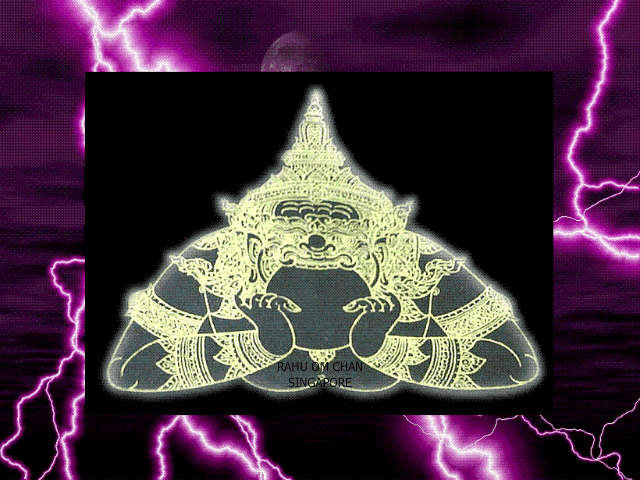
I met a guy at the temple last evening, he was talking about renting a statue back home. The problem is, he needs to persuade his mother/family to accept what he "believed". He wanted to get a Rahu Statue and the "Tua Pek Gong" he had at home was taken care by his mother, and hence out of respect he needs to get his mother's permission before he place the statue on the altar table.

I guess this is normal. Everyone has their beliefs, and we can’t forced others to accept what we deem is right. I know it’s not easy, so I told him, give his mother some time and don’t let this affect their relationship. Furthermore, this is the first time he pray to Rahu, I hope he can consider before rushing into getting a statue home, for the sake of getting.
I told him, he should see if he can make the effort to drop by the temple and pray, so what if he have the statue at home, when he is "busy" he is "busy" even if it’s right in front of him, he can turn a blind eye too.

I remember about 10 years ago, we don’t even have the Rahu Statue, but our group of friends went to the extent of looking for a dark and quiet spot middle of the night and set up our altar with all the black offerings and we JUST PRAY! It’s not easy and I would say it’s kinda scary too, cos I don’t know who and what am I praying to!

To me, it’s the "heart" that counts~~ A piece of clay or bronze or jade is not the object of our respect and worship. When we bow before Buddha images, we are recalling the qualities of the enlightened beings. It is their impartial love and compassion, generosity, morality, patience, joyous effort, concentration and wisdom that we are showing respect to. The statue or painting serves to remind us of the qualities of the Buddha, and it is the qualities, not the clay, that we are bowing to. We need not have a statue in front of us in order to bow to or respect the Buddhas and their qualities.

Luangpor Khoon discharged from hospital

Revered monk Luangpor Khoon Parisuttho was discharged from the Nakhon Ratchasima Hospital and returned to his Ban Rai temple Wednesday morning.

The monk left the hospital at 7:45 am.

He was admitted to the hospital for high fever and fatigue on Sunday.

The Nation

Tuesday, 28 April 2009

Wats in Phuket

Phuket island is located in the tropical zone off the west coast of the southern part of Thailand in the Andaman Sea and is connected to Phang-nga province by Sarasin Bridge and Thep Krasattri Bridge. It is 862 km. away from Bangkok by road and one hour and 20 minutes by air.


Wat Chalong

This is Phuket's most beautiful and renowned temple. Located about 8 km. from town, the temple enshrines the gilt statues of monk-hero Luang Pho Chaem and his assistant Luang Pho Chuang, both much revered by local people because of their roles in quelling the miner rebellion in 1876.A recent addition to the temple is a 61.4-meter high chedi containing the Phra Borom Sareerikatat relic, a piece of the Lord Buddha's bones brought over from Sri Lanka. The Phra Mahathat Chedi is a mixture of southern, central and northeastern architectural styles and is the first in this region to house the holy Buddha's relic.


Wat Phra Nang Sang (Thep Krasattri Road)

This old temple, about 20 km. from town, is also an important temple of the province.The compound was once used as a Burmese military camp in 1785. Inside there are 3 historically valued bronze heads of Buddha images recently discovered, estimated to be over a thousand years old. The ubosot is where the three oldest and biggest tin Buddha images are enshrined. They are called the Three Kings and are positioned in between three other large statues.


Wat Phra Thong (Thep Krasattri Road)

For people in Thalang District, Wat Phra Thong is the most important Buddhist temple, enshrining a most revered Buddha image called "Phra Thong", meaning the Gold Buddha. The image is also called "Phra Phut" which means a Buddha image emerging from the ground. According to local legend, about 200 years ago the villagers found the image buried in the ground and tried to excavate it for enshrinement, but only the upper part could be uncovered. Later they built a temple over it and covered it with gilded stucco, and it has remained so ever since. Inside the temple area is a museum, whose collection of historical objects includes a raincoat worn by miners at the time when tin mining on the island was flourishing.The temple is located approximately 20 kilometers from Phuket City. Travel along Thepkrasattri Road, upon reaching the Thalang District Office, turn right and proceed directly to the temple.

Source- Thaiwaysmagazine
胡

Monday, 27 April 2009

Luang Phor Khoon Admitted to Hospital


Luanpor Khoon Parisuttho is admitted to the Nakhon Ratchasima Hospital at 11 am yesterday. A preliminary diagnosis found the much-revered monk has infection in the respiratory system.

The Turtle Raft, a Thai children's story

Once upon a time in the province of Nakhon Si Thammarat there lived a kind old farmer and his wife. They led a peaceful life planting crops and vegetables and catching fish from the streams. One day the two could find no fish and so they walked sadly home. On the way, they met a blind old turtle whose shell was so dry that it almost seemed to crack. The kind couple helped carry the turtle to a shady pond where they left him to go about his own way. The very next day the two decided to fish on different sides of the stream.What happened next could be called coincidence or chance or whatever you might want to call it, but wherever the old man threw his net he could only catch that same blind old turtle. The old turtle would be freed only to be caught by the woman's bamboo dip net over on the other side of the stream. This happened all day long. The old man was so angry that he finally called his wife saying, Let's go back home and make the old creature into turtle soup!

My dear man: replied the old woman, its flesh must be as tough as rawhide, and how will you chew it?

After much debate the old man and woman decided to keep him as a pet along with their host of dogs. Time passed by. The old couple, their dogs and one turtle were quite happy in a peaceful way. One quiet dark night, the turtle crept into the old man's mosquito net and said, "Old man, old man! Get cut of bed and build a raft! The floods are coming!" At first the man wouldn't listen but the turtle was persistent. Finally he got out of bed, put on his rubber thongs, and with his axe began to chop the bamboo trees. The neighbors heard the commotion and when they found out he was building a raft they roared with laughter. "Why listen to a stupid old turtle?" they jeered. Even the old woman tried to stop him, for she did not want her husband to be the laughing stock of the village.

That night a terrible storm brewed. The river swept in and the whole village was brought down, some drowned while others were swept away by the current, but the old man, his wife, their dogs and the old turtle were safe on the raft. As the raft drifted along the river, a venomous snake slithered on board. The old man was about to kill it his axe but at the turtle, he decided to let it stay on the raft.

By and by, a bevy of forest animals such as a squirrel, a lizard, a monkey and a tiger joined the raft team. Each time a fierce animal climbed onto the raft the old man would aim to kill but he was stopped by the wise old turtle. Then one day, the old man and woman heard a young man splashing in the waters, shouting for help. The old turtle did not want the young man saved; but no matter how persistent it was, the old couple took pity on the young man and pulled him onto the raft. For several days they nursed and fed him until he became strong.

Soon the storm subsided as did the floods, and sadly each animal bade farewell to the kind old man and his wife. Back at their hut again, the two began to weed the soil and plant crops and vegetables as they did before. The forest animals were not forgetful and through the years they would each bring the old couple gifts such as wild fruits and beautiful plants. One day the tiger who had been on the raft was walking through the forest when he sniffed the aroma of good rich food. Peering through the leaves he saw some workers setting some gold and silver dishes onto a beautifully embroidered table cloth. When the waiters saw the tiger they dropped and fled. The tiger immediately picked the table cloth from all four corners with his mouth and with the food and dishes still in their place; he took the riches to the old couple's hut. Although the couple was out working in the fields, when they returned they saw the tiger's claw prints and assumed that the gift was from their tiger friend.

Soon afterwards there was another visitor this time it was no animal but that very young man whom the two had saved from the floods. Boasting that he was a courtier from the King's palace, the young man began to eat and drink the humble food which was offered to him on gold and silver plates. The first query which the young man had on his mind was: where was that treacherous turtle who wished to have him drowned?

When he found out the dwelling place of the turtle, he dashed off to seek revenge. It happened that the turtle was just about to journey to the old couple's house when the young man spotted him. The man started to throw stones at the turtle but the latter, as blind and old as he was, managed to slip into a nearby pond. Furious, the young man ran back towards the old couple's house and demanded an explanation as to how they obtained the gold and silver plates. "From the tiger," explained the old man. This was no satisfactory explanation for the vengeance-seeking human and he swiftly proceeded to call the palace soldiers. By this time the injured and sick turtle had reached the little hut but it was too late the old man and woman had already been taken captive by soldiers. The two were to be punished in the capital city.

Very soon, the turtle had broadcast the fate of the old man and woman. The animals in the forest had a conference to decide on how they could help their dear friends. As planned, the snake slithered into the chamber of the beautiful royal princess, the King's only child, and bit her in the arm. The poison caused her to fall into a deep slumber. The royal gong was sounded throughout the kingdom but no doctor could cure the ailing princess. It was all confusion at the palace gates and the monkey found this to be the right time to sneak into the prison where the old man and woman were imprisoned. When the monkey saw them he placed a magical cure of grounded leaves taken from the top of a tree in their hands and bade them to cure the princess with it. When news of their magical curing power reached the King's ears, they were sent for. The young princess was immediately cured; the old man and woman were set free, handsomely rewarded by the King and lived happily ever after.

The moral of this story is: those who are ungrateful are more harmful than the most vicious animals.

Wat Chang Hai Rat Buranaram

This monastery is at Ban Pa Rai, Tambon Tung Pala, close to the railway (Hat Yai - Sungai Kolok route) between Na Pradu and Pa Rai Stations. It is located about 31 kilometres from Pattani town.

This old monastery was built for more than 300 years, with the sculpture of Luang Pu Tuad, once an abbot of the temple. Also, the architecture of stupa, chedi, temple, and bell tower are magnificently beautiful.

Luang Pu Thuat, Wat Chang Hai, being respected by people all over the country, Luang Pu Thuat was an educational monk. It was told that he was able to turn sea water into fresh water. The history shows that Luang Po Tuad, who was respected by the southern people, came to visit and stays before his death in Malaysia. His remain was brought, burned and cremated at Wat Chang Hai, soon after the people built a stupa to place his cremated bone at Wat Chang Hai.

The annual festival to pay respect to his bone and ashes is in April. At Wat Chang Hai, visitors can pay respect during 8 a.m.-5 p.m. daily.

www.watchanghai.com

By Train - Express and rapid train services from Bangkok to Pattani province. Tourist who want to visit Pattani, get off the train at Khok Pho Railway Station.

Sunday, 26 April 2009

Ayutthaya's Great Blessings: Paying Homage to Nine Temples

The reason for choosing "nine" is this: Thais pronounce the number "9" เก้า as "kao" which is a homophone of the word ก้าว "kao" which means to step and to progress.

Thus, they believe that the worship they show to the Buddha at nine sacred temples will bring prosperity to their lives.

1. Wat Yai Chai Mongkhon
Great blessings: Victory over enemies, forgiveness and being the beloved
Located in the Southeast of the Ayutthaya Muang Island, the temple was established in 1357 AD in the reign of King U-thong (1350-1369). The Great Chedi Chai Mongkhon, a token of King Naresuan's victory over the Crown Prince of Burma in the duel on elephant back, was erected later in the reign of King Naresuan (1590-1605) at the same time of the temple renovation. Phra Phuttha Chaiya Mongkhon in the ordination hall is one of the most sacred Buddha images in Ayutthaya.

2. Wat Phanan Choeng
Great blessings: Smooth-running business, prosperity in one's job
This is a Mahayana temple situated to the Southeast of the Ayutthaya Muang Island. It is presumed to be built before the establishment of the Ayutthaya kingdom. The huge maravijaya* Buddha image (height 19 m./width 20.17 m) in the ordination hall, Luang Pho To (the big Buddha) or Sampokong, is greatly revered not only by the Thais and the Chinese-Thais but also by the Chinese from abroad. This is because most worshippers have found that their business and trading have become prosperous after paying homage to Luang Pho To.

*Maravijava (conquering mara) posture is a sitting position with legs crossed, the left hand on the lap and the right hand on the right knee with fingers pointing down to the ground

3. The Vihara of Phra Mongkhon Bophit
Great blessings: Prosperity in trade, success in one's job
Situated in the south of Wat Phra Si Sanphet on the Ayutthaya Muang Island, the monastery has no monks residing. The principal bronze Buddha image, Phra Mongkhon Bophit, is presumed to be built in the reign of King Sanphet VIII or King Tiger (1703-0708). In 1767, when Ayutthaya fell to the Burmese, the vicinity of the monastery was set on fire to remove the gold that gilded the stupas there. Phra Mongkhon Bophit was burnt too.The right arm from the shoulder fell off. A few years ago, the Fine Arts Department discovered lots of small Buddha images inside the left chest.

4. Wat Thammikkarat
Great blessings: Being the beloved, good health
Situated in the east of the site of ancient royal palace, the temple has existed since the reign of King Borom Trai Lokkanat (1448-1488). There is a stupa encircled by lion figures, reflecting the Khmer influence. Legend has it that Queen Ubon Dhevi of this king asked the gods for the recovery of her son. The prayer was granted. Thus, she erected the reclining Buddha image with a length of 12 metres there. Both soles were gilded with gold leaf and decorated with stained glass.

5. Wat Phutthai Sawan
Great blessings: Being the beloved, invulnerability, good health
The temple is located in the southern side of the Chao Phraya River, opposite the Ayutthaya Muang Island. It was established in the reign of King U-thong (1350-1369). At that time, the vicinity was called "wiang lek"and used to be the palace of the king.

6. Wat KasattrathiratGreat blessings:
Being the beloved, invulnerability, prosperity in one's jobs
Located on the Chao Phraya riverside, to the west of Ayutthaya Muang Island, this ancient temple was renovated in the first reign of the Rattanakosin Period (1782-1809). The double bai simas* of the ordination hall were magnificently carved.

*A bai sima is a heart-shaped stone placed outside a temple to mark its boundary. Usually, there are eight of them in eight directions. As for the royal temples, there are sixteen of them.

7. Wat Tha Ka Rong
Great blessings: A great merit of worshipping the triple gem of the Buddha
The temple is located near the Chao Phraya riverside to the west of the Ayutthaya Muang Island. It was built before Ayutthaya became capital. There is no evidence telling who the founder was. The ancient principal Buddha image in the ordination hall, Luang Pho Rattana Mongkhon, is highly revered by the villagers.

8. Wat Na Phra Mane
Great blessings: Prosperity, being the beloved
Situated in the north of the Ayutthaya Muang Island, it is the only temple in Ayutthaya that was not destroyed during the siege of 1767, because it was used as headquarters of the Burmese invaders. The ordination hall has no windows like other temples erected in the Ayutthaya period. Instead, it has several small openings on the walls with carved stone bars for ventilation.

9. Wat Nakhon Luang
Great blessings: Being the beloved, strong health, safety from all weapons
Situated on the Pa Sak riverside in Amphoe Nakhon Luang (20 km from the provincial town). In the Ayutthaya period, the area was part of the royal route for all kings who travelled to pay homage to Phra Phuttha Bat (the Buddha's footprint) in Saraburi province. In the same vicinity of the temple, Nakhon Luang Palace which was used as royal residence for all kings and royal families is situated. It is presumed to be built in the reign of King Song Tham (1610-1628) and was renovated in the reign of King Prasat Thong (1629-1656).

Source- thaiwaysmagazine
胡

Saturday, 25 April 2009

NINE SACRED TEMPLES WITH AUSPICIOUS NAMES ~Chiangmai

In Thai culture, nine is considered to be an auspicious number. All of the temples listed below have auspicious names. It is believed that a merit-making pilgrimage to these nine sacred sites will bring good luck. Individual who complete the journey will earn much merit.

  1. Wat Chiang Man
  2. Wat Phra Sing
  3. Wat Chedi Luang
  4. Wat Chaimongkon
  5. Wat Loi Kroh
  6. Wat Dab Pai
  7. Wat Chiang Yuen
  8. Wat Muen Ngoen Khong
  9. Wat Phra Thad Doi Suthep

I will find out more information on all these temples soon.

Friday, 24 April 2009

Pictures_ Wat Mahathat, Ayutthaya


Famous Buddha head in the Tree Trunk

Wat Mahathat is typical of the Ayutthaya ruins: large crumbling stupas surrounded by low laterite walls and rows of headless Buddhas.


Rows of Headless Buddhas


Buddha Image in the viharn at Wat Mahathat, Ayutthaya

Thursday, 23 April 2009

My Bangkok Trip~~End


9th Stop~~ Wat Hualamphong, 3rd Class Royal Temple
A very BUSY temple with LOTS of Buddha statues and I would say it’s a good place to take pictures. To our surprise, the place for donating coffins is just NEXT to it. So of course we walk over and donated coffin. It’s a very crowded Chinese temple and the people that speaks very good teochew.
~~~~~~~~~~~~~~~~~~~~~~~~~~~~~~~~~~~~~~~~~~~~~~~~~~~~~~~~~~~~~~~~~~~
We managed to complete our mission in about 5-6 hours, Tiring but for fulfilling and amazingly all of us felt so peaceful and warm after the whole session. In fact before we make our trip, many people around us made lots of negative comment to dampen our enthusiasm. Telling us that this is a MISSION IMPOSSIBLE, no way will we be able to complete all the 9 temples in one day. I’ve chosen to ignore and forgive their ignorance. If the thais can do it on their birthday and special occasion like SONGKRAN, it’s proven that this can be done.

A little setback, the driver changed my destination which I have planned, and I’m really upset with their unprofessionalism. As I do not want to upset and rest of the members, I choose to keep quiet and follow the routes since only the last 2 temples was changed by them, they thought I’m not aware, I do. Anyway, though disappointed, but I would say as long as we are sincere, it doesn’t really matters which temple we goes to. So far, this is another meaningful trip after the trip to Surin in 2005. And I hope in near future I would be able to return and complete the 9 temple as planned.
胡

Wednesday, 22 April 2009

My Bangkok Trip Part Four

Alright, finally last 3 temples.... by then we are kinda tired but at least it's something to keep us moving, we are so near to our final destination.
7th Stop~~ Wat Rakhang 2nd Class Royal Temple. Very Old Temple and renovation going on. There’s some little "street stall" next to the temple. Had always heard people talking about amulet of "wat Rakhang" and finally I know why. The temple "rent" lots of amulet, it’s like a little amulet shop and business was good. It’s a pity as there was quite a queue for blessing from the monk, we did not join in the queue. Oh ya I was told that this is one of the royal temple because King Rama I stayed there during his early years.


8th Stop~~ Wat Ratchanadaram 3rd Class Royal Temple, under renovation. Still get to climb up the temples to pray. There is an Amulet market beside the temple, full of people, can see that most are mass production. The famous Pagoda called "Loha Prasat" as size 36 metres high with 37 surrounding spires. The surrounding I would say ~~ VERY QUIET and PEACEFUL.

胡
 
eckhart tolle