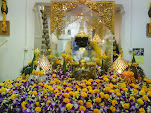
There will be a Robe offering ceremony at Kancanarama Buddhist Temple (Lorong Ong Lye) on 1/11/2009. All are welcome.
Thot Kathin — At the time of the Buddha, this observance was a part of Buddhist practice and sustenence. As an exercise of self-reliance and humility, monks would cut, sew, and dye the cloth that would be used for their robes. (Some monks in the forest still dye their own cloth by cutting wood chips from the trunk of a Jackfruit tree, boiling them, and then stirring in the cloth to dye it an orange/yellow color.) The finished robes were then offered to the members of the monkhood who were worthy and needy. Currently, people tend to purchase manufactured robes, pre-packaged goods (including necessities like toiletries, towels, and so on), and then offer them to the temples. The events surrounding Kathin may involve intensive fund raising for various purposes, such as adding to or finishing a temple building. The time of Kathin can last up to a month from end of the Rains Retreat to the full moon of the twelfth lunar month (November).
Saturday, 31 October 2009

Friday, 30 October 2009
Concern over monks' poor health
Tue, Oct 27, 2009The Nation/Asia News Network
Public Health Minister Witthaya Kaewparadai told a meeting yesterday of 100 officials from hospitals and health agencies about results from a random survey last year on the health of 80,945 monks in all regions (out of 300,000 Buddhist monks and novices around the country).While 44 per cent of the monks were healthy, some 56 per cent, or 45,333 monks were found to be unhealthy, he said.About 31 per cent of those deemed unhealthy, or 24,937 monks, were sick, mostly from high cholesterol, high blood pressure, diabetes, obesity, and emphysema.Another 25 per cent, or 20,396 monks, were said to be at risk of falling ill, mostly from coronary heart disease and diabetes, he said.Witthaya affirmed that sick monks and novices could get medical treatment from state hospitals freeofcharge via the universal healthcare system.Bangkok also had the Priests Hospital, the world's only hospital specifically for monks and novices.He said the health of monks, and other groups, would be well taken care of, due to plans to have 9,000 tambonlevel hospitals promoting good health and the training of 970,000 officials and volunteers by the year 2012.Priests Hospital director Waraporn Phumsawat said 70 per cent of admissions last year were sick monks and novices from upcountry. Most suffered chronic diseases that needed constant medication, or their illness could cause them to die or become disabled.She said yesterday's meeting aimed to set up a system to safely transfer chronically ill monks between the Priests Hospital and hospitals in Bangkok and upcountry so they could get medication and rehabilitation near their temples.
http://news.asiaone.com/News/Latest%...27-176177.html
Public Health Minister Witthaya Kaewparadai told a meeting yesterday of 100 officials from hospitals and health agencies about results from a random survey last year on the health of 80,945 monks in all regions (out of 300,000 Buddhist monks and novices around the country).While 44 per cent of the monks were healthy, some 56 per cent, or 45,333 monks were found to be unhealthy, he said.About 31 per cent of those deemed unhealthy, or 24,937 monks, were sick, mostly from high cholesterol, high blood pressure, diabetes, obesity, and emphysema.Another 25 per cent, or 20,396 monks, were said to be at risk of falling ill, mostly from coronary heart disease and diabetes, he said.Witthaya affirmed that sick monks and novices could get medical treatment from state hospitals freeofcharge via the universal healthcare system.Bangkok also had the Priests Hospital, the world's only hospital specifically for monks and novices.He said the health of monks, and other groups, would be well taken care of, due to plans to have 9,000 tambonlevel hospitals promoting good health and the training of 970,000 officials and volunteers by the year 2012.Priests Hospital director Waraporn Phumsawat said 70 per cent of admissions last year were sick monks and novices from upcountry. Most suffered chronic diseases that needed constant medication, or their illness could cause them to die or become disabled.She said yesterday's meeting aimed to set up a system to safely transfer chronically ill monks between the Priests Hospital and hospitals in Bangkok and upcountry so they could get medication and rehabilitation near their temples.
http://news.asiaone.com/News/Latest%...27-176177.html
Thursday, 29 October 2009
Buddhism in Thailand
The Thais are a deeply religious people. For the Buddhist majority it underlies all activities and is the backbone of the thai culture. 90% of the populations are Theravada Buddhist. Buddhist believes that existence called nibbana (nirvana).
Almost all Thais believe in reincarnation, hence they “make merit” by doing good deeds. Ways to make merit include giving money to beggars, bird releasing, becoming a novice in a temple for man in Thailand and giving food to monk who make their Alms round every morning.
There are 2 sects of Buddhist monks in Thailand, the orange robed Mahanikai and the stricter, more academic red-brown robed Thammayut who can only eat one meal a day (before noon), provided for them by those who wish to make merit. They are not allow to touch money.
Thais always requested service of monks for special occasion ie. New house, new car are blessed for good luck. For marriage, nine monks are invited to perform ritual and during a funeral, a group of monks are required to perform a 3days of chanting mantras.
There is no such thing as a good Buddhist or a bad Buddhist. Buddhism not only teaches tolerance, it practices it. It does not claim that other religions are false, it encourage you to make your own judgments ( not easy as human being always believe the more god/Buddha they follow, the better ‘protection” they have, so they choose to mixed different religion into one, which is ridiculous and disrespectful for the religions he believed )
There is no hard sell, and no requirement for monks to ‘Save’ a quota of souls. And either will it talk about using money can make you a different or better person.
In Thailand we call temple wats, a place exclusively Buddhist, as we know Buddhism originated from India, hence it natural that we can find Hindu God in a wat, but if a wat over-do it by allowing people to leave religious object to the wat , then a temple will be cluttered with religious bric-a-brac and it will become to much. It will lose its original meaning of a Wat.
Almost all Thais believe in reincarnation, hence they “make merit” by doing good deeds. Ways to make merit include giving money to beggars, bird releasing, becoming a novice in a temple for man in Thailand and giving food to monk who make their Alms round every morning.
There are 2 sects of Buddhist monks in Thailand, the orange robed Mahanikai and the stricter, more academic red-brown robed Thammayut who can only eat one meal a day (before noon), provided for them by those who wish to make merit. They are not allow to touch money.
Thais always requested service of monks for special occasion ie. New house, new car are blessed for good luck. For marriage, nine monks are invited to perform ritual and during a funeral, a group of monks are required to perform a 3days of chanting mantras.
There is no such thing as a good Buddhist or a bad Buddhist. Buddhism not only teaches tolerance, it practices it. It does not claim that other religions are false, it encourage you to make your own judgments ( not easy as human being always believe the more god/Buddha they follow, the better ‘protection” they have, so they choose to mixed different religion into one, which is ridiculous and disrespectful for the religions he believed )
There is no hard sell, and no requirement for monks to ‘Save’ a quota of souls. And either will it talk about using money can make you a different or better person.
In Thailand we call temple wats, a place exclusively Buddhist, as we know Buddhism originated from India, hence it natural that we can find Hindu God in a wat, but if a wat over-do it by allowing people to leave religious object to the wat , then a temple will be cluttered with religious bric-a-brac and it will become to much. It will lose its original meaning of a Wat.
僧人尸体不腐 挑战科学定律
最近在泰国南部仁廊府挽暖区樾挽暖佛寺发生一起奇特事件,该寺一位九十岁的高僧圆寂后被火化时尸体、袈裟不能被焚燬,令人称奇。此奇特现象经媒体披露后,再次引起各界对僧人身体出现的超自然现象的关注。
在东西方的历史记载中,高僧或是有修为的高德之士,出现肉身不腐的不乏其人,很多见诸报端。甚至有人历经许多年,依然颜状如生,有些甚至肉体还飘着澹澹的香气。按照科学定律,人的心跳一旦停止,体内细胞将因缺氧而在数分钟后死亡,所以,人体通常在死后数天开始腐烂。有分析指出,尸体不腐、甚至袈裟都不能被烧燬的现象对现代科学定律构成挑战。
泰南高僧火化尸体袈裟不毁 据《联合早报》报导,在泰国南部仁廊府挽暖区樾挽暖佛寺,高僧銮菩銮他嘛哇罗于今年十月十七日圆寂,享年九十岁,其火化仪式在十一月八日进行。在举行火化仪式的当天,天上连续下滂沱大雨,而到下午四点的时候,庙方将进行佛教诵经仪式时,大雨即时停下。佛教诵经仪式结束后,一部份虔诚信徒留下参加火化礼。火化礼在当晚九时进行,收尸老叟拿着装满汽油的加仑桶,把汽油淋在棺木上,然后点燃汽油,并开动风扇催促火力。大约在三十分钟过后,棺木及弔唁花等物被烈火化为灰烬,可是高僧的尸体却安然无恙、袈裟丝毫未受损,在场的众僧人啧啧称奇。众亲信及委员们立即下令终止火化,将高僧尸体换了一套新袈裟及另装入一副新棺木置放于大卧佛的佛堂内。
source- Udnbkk
在东西方的历史记载中,高僧或是有修为的高德之士,出现肉身不腐的不乏其人,很多见诸报端。甚至有人历经许多年,依然颜状如生,有些甚至肉体还飘着澹澹的香气。按照科学定律,人的心跳一旦停止,体内细胞将因缺氧而在数分钟后死亡,所以,人体通常在死后数天开始腐烂。有分析指出,尸体不腐、甚至袈裟都不能被烧燬的现象对现代科学定律构成挑战。
泰南高僧火化尸体袈裟不毁 据《联合早报》报导,在泰国南部仁廊府挽暖区樾挽暖佛寺,高僧銮菩銮他嘛哇罗于今年十月十七日圆寂,享年九十岁,其火化仪式在十一月八日进行。在举行火化仪式的当天,天上连续下滂沱大雨,而到下午四点的时候,庙方将进行佛教诵经仪式时,大雨即时停下。佛教诵经仪式结束后,一部份虔诚信徒留下参加火化礼。火化礼在当晚九时进行,收尸老叟拿着装满汽油的加仑桶,把汽油淋在棺木上,然后点燃汽油,并开动风扇催促火力。大约在三十分钟过后,棺木及弔唁花等物被烈火化为灰烬,可是高僧的尸体却安然无恙、袈裟丝毫未受损,在场的众僧人啧啧称奇。众亲信及委员们立即下令终止火化,将高僧尸体换了一套新袈裟及另装入一副新棺木置放于大卧佛的佛堂内。
source- Udnbkk
Wednesday, 28 October 2009
San Phra Prom - ศาลพระพรหม(4 faced Buddha) Birthday

photo source- thailandfans.com
The Erawan Shrine (San Phra Prom - ศาลพระพรหม) located by the Grand Hyatt Erawan Hotel. Phra Prom (Brahma) statue was enshrined at this location on November 9, 1956. The special ceremony is held on November 9 every year at this shrine, some people call this day as Phra Prom’s birthday
On this coming 9 November, monks will be at the venue at about 6am for some cermony and to give blessing to devotees.
11月9日是泰国四面佛誕的大日子,到时候将会有来自世界各地的信徒们聚集在曼谷一起参与盛会!
Address: 494 Rajdamri Road, Bangkok, 10330, Thailand
Hours: Daily dawn to 8pm
Cost: Free. Flowers and incense start at 20B.
Thursday, 22 October 2009
Burmese Buddhist Temple 缅佛寺
This Burmese Temple is just oppsite the thai temple. It's doing some upgrading like building a pagoda and some renovation works around.


Ths is like a wishing well??? We try to throw the coins into container which was labelled "Health","luck","Money", "career", "Education"" Blissful Marriage". Seems easy, but not all of us managed to throw it in. (After rounds & rounds of coins, decided to give up and proceed to the main hall for Monk's blessing then i realized there's similiar container inside the hall, all u need to do is place your donation in any one of them, easy job!)
This temple looks much more "grand" then the Thai Temple, you may like to drop by when you go to Penang.
This temple looks much more "grand" then the Thai Temple, you may like to drop by when you go to Penang.
Tuesday, 20 October 2009
Kuan Yin @ Wat Chaiya Mangalaram
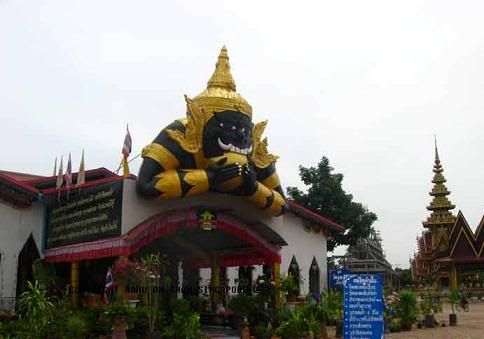
I'm just curious ? Is it rahu at the entrance to the Kuan Yin hall?

The Statue of Kuan Yin inside the hall.

Monday, 19 October 2009


Sunday, 18 October 2009


Saturday, 17 October 2009
Rahu in Wat Chaiya Mangalaram, Penang


Thursday, 8 October 2009
泰国9位僧皇
- สมเด็จพระพุฒาจารย์ี (โต) (譯音)崇迪帕布祂瞻多(亞贊多)
- สมเด็จพระพุทธปาพจนบดี (譯音)崇迪帕布祂巴婆甲哪巴滴
- สมเด็จพระพุฒาจารย์ี (譯音)崇迪帕布祂瞻
- สมเด็จพระมหาธีวาจารย์(譯音)崇迪帕嗎蛤梯哇瞻
- สมเด็จพระมหารัชมังคลาจารย์(譯音) 崇迪帕嗎蛤喇差芒咖拉瞻
- สมเด็จพระพุทธโฆษาจารย์(譯音) 崇迪帕布祂摳撒瞻
- สมเด็จพระพุทธชินวงศ์(譯音)崇迪帕布祂勤那翁
- สมเด็จพระมหาวีรวงศ์(譯音)崇迪帕嗎蛤威那翁
- สมเด็จพระญาณวโรดม(譯音)崇迪帕央拿哇摟冬
Monday, 5 October 2009


Saturday, 3 October 2009
Luang Phor Sothon

Thursday, 1 October 2009
Wat Phra That Lampang Luang วัดพระธาตุลำปางหลวง
About 20 kilometers from Lampang is the old temple of Wat Phra That Lampang Luang.
On first glance, this walled citadel sited on a man-made mound of earth has a very fortress-like look to it. That's because the temple was built on the site of an eighth century fortification, called a wiang, that guarded the routes to Lampang.
The temple buildings seen today were built in the fifteenth century, and one of the reasons for the temple's popularity is the relatively pure state of all the temple buildings. Unlike most of the temples in Chiang Mai, Wat Phra That Lampang Luang hasn't been 'improved' to conform to modern Thai ideas about temples.
The courtyard is still filled with sand, and the huge main wiharn (prayer hall) is still open on all sides.To enter the temple, you must pass a pair of guardian lions and climb the naga stairway up to the massive main gate. The main prayer hall, the Wiharn Luang, stands close inside the main entrance. The wiharn is open on all four sides, forming a huge covered hall. Sturdy columns support the roof.
The columns are finished in black lacquer and stenciled with gold leaf designs.At the back of the Wiharn Luang sits a massive gilded ku, a sort of Laotian prang sheltering the main Buddha image. The Buddha image is the Phra Chao Lang Thong, cast in 1563. On either side of the Ku are throne-like pulpits, sometimes used by monks but more often used to house other Buddha images on important ceremonial days. Behind the main prayer hall stands the 45 meter tall chedi. The chedi was faced with copper and bronze sheets, which over the centuries have oxidized into a variety of green and blue shades. The chedi has somehow escaped the gilding which is now universally applied to chedis, even if they weren't originally built that way.
Flanking the chedi on the south side is another prayer hall, the Wiharn Phra Phut, a small chapel built in 1802 with a beautifully carved fascade. Behind the Wiharn Phar Phut is a tiny tower-like structure, the Ho Phra Phuttabat. It houses a Buddha footprint sculpture. The building is generally only open on important festival dates, and may never be entered by women.Wat Phra That Lampang Luang was one of the Nine top Thai spots named by The Bangkok Post's online travel campaign.
On first glance, this walled citadel sited on a man-made mound of earth has a very fortress-like look to it. That's because the temple was built on the site of an eighth century fortification, called a wiang, that guarded the routes to Lampang.
The temple buildings seen today were built in the fifteenth century, and one of the reasons for the temple's popularity is the relatively pure state of all the temple buildings. Unlike most of the temples in Chiang Mai, Wat Phra That Lampang Luang hasn't been 'improved' to conform to modern Thai ideas about temples.
The courtyard is still filled with sand, and the huge main wiharn (prayer hall) is still open on all sides.To enter the temple, you must pass a pair of guardian lions and climb the naga stairway up to the massive main gate. The main prayer hall, the Wiharn Luang, stands close inside the main entrance. The wiharn is open on all four sides, forming a huge covered hall. Sturdy columns support the roof.
The columns are finished in black lacquer and stenciled with gold leaf designs.At the back of the Wiharn Luang sits a massive gilded ku, a sort of Laotian prang sheltering the main Buddha image. The Buddha image is the Phra Chao Lang Thong, cast in 1563. On either side of the Ku are throne-like pulpits, sometimes used by monks but more often used to house other Buddha images on important ceremonial days. Behind the main prayer hall stands the 45 meter tall chedi. The chedi was faced with copper and bronze sheets, which over the centuries have oxidized into a variety of green and blue shades. The chedi has somehow escaped the gilding which is now universally applied to chedis, even if they weren't originally built that way.
Flanking the chedi on the south side is another prayer hall, the Wiharn Phra Phut, a small chapel built in 1802 with a beautifully carved fascade. Behind the Wiharn Phar Phut is a tiny tower-like structure, the Ho Phra Phuttabat. It houses a Buddha footprint sculpture. The building is generally only open on important festival dates, and may never be entered by women.Wat Phra That Lampang Luang was one of the Nine top Thai spots named by The Bangkok Post's online travel campaign.
Wednesday, 30 September 2009

Monday, 28 September 2009
Phra Pitha
พระปิดตา(译音)帕必达,其中ปิดตา泰文的意思是闭眼或遮眼的意思 因此可以称之为闭眼佛或是遮眼佛,而泰国的遮眼佛有很多种类型 有双手遮眼的法相,也有四臂、六臂、或是布满经咒文如同皱纹般的法相 都是属於遮眼佛(必达佛),不同的译音只是外在的法相特徵不同而已
而必达佛的佛牌,是泰国民众普遍喜爱佩带的佛牌之一,据说佩带遮眼佛 可以帮信众挡掉很多不好的事情、麻烦、避灾挡险,能够保信众的平安 也能够帮信众招来很多很好的财运,因此必达佛也是泰国的致富佛像之一!
当帕必达在世时,几世之前就已经不断累积很多的福德资粮 。在其中一世,有许多僧侣与帕必达一起修行,结果没想到在某天夜晚时, 发生了洪水,眼看就要将他们灭顶。此时,佛陀赶紧命令帕必达前去 将水阻止不动,以免这些僧侣灭顶。因此当时有许多的天人和凡人们,
都因此信服他的能力,并对他非常敬仰。此外,在帕必达之前的一世中, 他常常用鲜花供养佛陀及许多的高僧。接著帕必达转世在另一世之後, 则生为一户养牛人家的孩子。早晨的时候,他常常看到高僧沿街托钵化缘後, 会在一个空地修行打坐。由於他看到高僧总在烈日下修行,想到这必然非常辛苦, 因此趁高僧不在时,为高僧搭起简单的棚子,让高僧在打坐时可以遮阳避雨, 他也因此累积很大的福德。因此在临命终时,得升天道;但他在生为天人後,
并未耽溺於天道的逸乐,反而常常广行佛事,不断地累积福德资粮。此後, 帕必达的法像就被制作为如今所看到的样子,象徵祂用手将六根遮住, 即眼、耳、鼻、舌、身、意皆被遮止;以免受到这六根所对应到的六尘所扰, 此六尘则为外界的色、声、香、味、触、法,让人能谨记佛陀的教诲。
因此佛子佩带必达佛牌的时候,无论是在修行佛法 或是行事思考之时, 都能够让心念更加全 心专注,提升自己的思考层面;此外,在世俗上, |
Thursday, 24 September 2009
Sunday, 20 September 2009
Buddha With Sunglass

There is a small shrine in Maha Chai province Thailand, it is about 2 hours drive from Bangkok. The shrine is just next to a very busy fishing port where seamen load and unload their catch daily. There is a story why this particular Buddha is wearing sunglasses.
Luangpor Poo above is one special Buddha in Wat Krok Krak at Samutsakorn Province. The statue of Luangpor Poo actually floated along the large river bank nearby and a shrine was later enacted especally for him. Maha Chai used to be just a small fishing port but has now become a major and important place where business takes place. A man once went to Luangpor Poo and seeked for helped hoping that his life and business would improve. His wish was granted not too long and this faithful devotee actually went back to do thanks giving. He did what any normal devotee would by giving traditional offerings, before he left the temple he was asking himself what else has he not given to Luangpor Poo alas he found that he has a sunglass with him and he put it on the Buddha.I am not sure if this one here is true but someone actually removed the sunglasses from the buddha because he thought that it was disrespectful. Some people said that he became blinded after doing that and he went to replace the glasses back.
Luangpor Poo is also known to grant his devotees wishes qucikly and swiftly so if you want your wish to come true go pay Luangpor Poo a visit.
Luangpor Poo above is one special Buddha in Wat Krok Krak at Samutsakorn Province. The statue of Luangpor Poo actually floated along the large river bank nearby and a shrine was later enacted especally for him. Maha Chai used to be just a small fishing port but has now become a major and important place where business takes place. A man once went to Luangpor Poo and seeked for helped hoping that his life and business would improve. His wish was granted not too long and this faithful devotee actually went back to do thanks giving. He did what any normal devotee would by giving traditional offerings, before he left the temple he was asking himself what else has he not given to Luangpor Poo alas he found that he has a sunglass with him and he put it on the Buddha.I am not sure if this one here is true but someone actually removed the sunglasses from the buddha because he thought that it was disrespectful. Some people said that he became blinded after doing that and he went to replace the glasses back.
Luangpor Poo is also known to grant his devotees wishes qucikly and swiftly so if you want your wish to come true go pay Luangpor Poo a visit.
Friday, 18 September 2009
monks robes
The full set of Monk robes should consist of the following:
- 1 Undergarment, this is like a short sari1 main sari, this is the garment worn around the waist and over the shoulder
- 1 main belt, wide
- 1 woven belt. This is to secure the suit
- 1 under vest. This is a one shoulder vest so it fits all
- 1 gift mat. For placing of offering so people (esp women don't touch the monks)
For Thai Monk ~~ Bright Orange Robe
For Forest Monk ~~ Blown Robe
Saturday, 12 September 2009
Paying Homage to the Lord Buddha's Left Footprint
Wat Phra Phuttha Bat Ratcha Wora Maha Wihan,Phra Phuttha Bat District, Saraburi Province
This is a Thai Buddhist belief, Lord Buddha's "Left Footprint" was probably discovered in the reign of King Song Tham. The stairways, which were constructed in the era of King Rama I consist of three paths, each of which is decorated with a Naga figure. Each path starts with a five headed naga named "Muchalin." From left to right, the 3 paths are supposed to represent silver, crystal and gold. People believe that a wish for money and gold will be granted if they climb silver and gold stairs respectively, and prestige and other endowments if they ascend the crystal stairs.
Wat Phraputthabat Ratcha Wora Maha Wihan is located in Tambon Khun Khlon, 28 kilometres north of the town, turn left and travel for one km before arriving in Phra Phutthabat district. The historical Lord Buddha's Footprint was found on a stone panel near Suwan Banpot Hill or Satchaphanthakhiri Hill.
Lord Buddha's Footprint measures 21 inches wide, 5 feet long, and 11 inches deep. The footprint was discovered during the reign of King Songtham of Ayutthaya. The footprint had 108 religious aspects, so he commanded a temporary Mondop be built to cover the footprint and it has been refurbished several times. The Mondop is a square building, has a seven-tier castle roof and each tier is covered with green glazed tiles. Each level is decorated with an arch supported by wood, gold and coloured glasses. The external walls are also decorated with gold and coloured glasses in the shapes of mythological gods and lotus top. The pearl inlaid artwork on the Mondop doors represent some of the best craftsmanship in the country. A five-headed Naga, cast in bronze, flanks the stairs. The Mondop is surrounded by bells, which visitors can ring to make merit. The surrounding Ubosot and Vihara were built according to the architectural styles of the Ayutthaya and early Rattanakosin periods.
In the temple compound there is the Phra Phutthabat National Museum which displays various precious artifacts including King Songthams attire, ceramics, bronzeware, old weapons, a replica of Lord Buddha's footprint, an old Mondop top, Phat Yot (ecclesiastical fans) from various periods, and a pipe dating from the King Narai period.The Phra Phutthabat Festival is held twice a year, during the eighth day of the waxing moon until the first day of the waning moon in the third month and the fourth month of the lunar calendar.
Bo Phran Lang Nuea is a small stone well near the temple. At the mouth of the well are knee prints, there are stone slopes and a deep hole the size of a milk can near the well. The water that flows from the hole is believed to be holy water. According to legend, Bun, a hunter who found Lord Buddha's Footprint, washed game meat at this well, while kneeling down a small hole was made by his spear which pierced the ground. There is a continuous flow of water from the well.
Paying homage to Lord Buddha’s Footprint is a Buddhist festival that has been celebrated since the Ayutthaya period and is held between February and March. During the festival the temple opens daily from 6.00-19.00 hr. Buddhists come from around the world especially Chinese Buddhists who like to visit during the Chinese new year.
This is a Thai Buddhist belief, Lord Buddha's "Left Footprint" was probably discovered in the reign of King Song Tham. The stairways, which were constructed in the era of King Rama I consist of three paths, each of which is decorated with a Naga figure. Each path starts with a five headed naga named "Muchalin." From left to right, the 3 paths are supposed to represent silver, crystal and gold. People believe that a wish for money and gold will be granted if they climb silver and gold stairs respectively, and prestige and other endowments if they ascend the crystal stairs.
Wat Phraputthabat Ratcha Wora Maha Wihan is located in Tambon Khun Khlon, 28 kilometres north of the town, turn left and travel for one km before arriving in Phra Phutthabat district. The historical Lord Buddha's Footprint was found on a stone panel near Suwan Banpot Hill or Satchaphanthakhiri Hill.
Lord Buddha's Footprint measures 21 inches wide, 5 feet long, and 11 inches deep. The footprint was discovered during the reign of King Songtham of Ayutthaya. The footprint had 108 religious aspects, so he commanded a temporary Mondop be built to cover the footprint and it has been refurbished several times. The Mondop is a square building, has a seven-tier castle roof and each tier is covered with green glazed tiles. Each level is decorated with an arch supported by wood, gold and coloured glasses. The external walls are also decorated with gold and coloured glasses in the shapes of mythological gods and lotus top. The pearl inlaid artwork on the Mondop doors represent some of the best craftsmanship in the country. A five-headed Naga, cast in bronze, flanks the stairs. The Mondop is surrounded by bells, which visitors can ring to make merit. The surrounding Ubosot and Vihara were built according to the architectural styles of the Ayutthaya and early Rattanakosin periods.
In the temple compound there is the Phra Phutthabat National Museum which displays various precious artifacts including King Songthams attire, ceramics, bronzeware, old weapons, a replica of Lord Buddha's footprint, an old Mondop top, Phat Yot (ecclesiastical fans) from various periods, and a pipe dating from the King Narai period.The Phra Phutthabat Festival is held twice a year, during the eighth day of the waxing moon until the first day of the waning moon in the third month and the fourth month of the lunar calendar.
Bo Phran Lang Nuea is a small stone well near the temple. At the mouth of the well are knee prints, there are stone slopes and a deep hole the size of a milk can near the well. The water that flows from the hole is believed to be holy water. According to legend, Bun, a hunter who found Lord Buddha's Footprint, washed game meat at this well, while kneeling down a small hole was made by his spear which pierced the ground. There is a continuous flow of water from the well.
Paying homage to Lord Buddha’s Footprint is a Buddhist festival that has been celebrated since the Ayutthaya period and is held between February and March. During the festival the temple opens daily from 6.00-19.00 hr. Buddhists come from around the world especially Chinese Buddhists who like to visit during the Chinese new year.
Subscribe to:
Posts (Atom)