Sunday, 7 October 2007

捐棺材为拜神「义德善堂」


曼谷的Wat Hua Lamphong 24小时都很热闹。除了因为这裡有庙和六位神像供参拜之外,主要是因为这裡是「义德善堂」的捐款部。

「义德善堂」是一个负责「生救死执」的慈善机构,创办人是一位潮洲华侨,但现已过世。但他所做的一切,对泰国都十分有贡献。原来,在泰国发生意外,第一时间到达现场的并非医护人员,而是「义德善堂」的职员。死的由他们清理尸体,无亲无故的,他们会把善信捐出来的棺材把他们安葬。
他们大部份的工作人员都是义工,此外,泰国人也喜欢到来捐钱买棺材做善事。来到「义德善堂」询问处捐钱后,在表格上填上名字,然后把一张粉红纸贴在任何一副棺木上,另一单据则拿到旁边的庙烧掉,取20支香,拜六位神,每位3支香,然后再到门外左右各一枝。捐献的金额随意, 不过听說他們为一位穷人下葬连棺材和寿衣等一共需要500泰銖. 他们相信,这样做可为自己积福,下次到曼谷,也不妨为自己积一点福吧!


「义德善堂」
728/3 Rama 4 Bangrak, Bangkok 10200

If you would like to help by donating coffins ( total cost approx: Thb$500 or you may donate ANY amount.) to those people who were poor and couldn't afford a proper burial, this is the right place to go.

Saturday, 6 October 2007

夜拜泰五世皇


泰王在泰国人心目中地位祟高,在任何家庭、公司都会把泰王的照片掛在高高的地方。
就在国会大楼门前有个五世王骑著马的铜像,每晚均有不少泰国人去求拜。据说,五世王生前很爱啤酒及雪茄,所以除了莲花外,也有很多人带这两种食品许愿还神。

最多人拜祭的时间为星期二的晚上九时至凌晨十二时,信眾一批一批的来,这位五世王有多灵验可想而知。传闻越夜越灵验,信不信由你。

Ratchadamnoen, Bangkok只可搭的士去,由市區去要20分鐘。

Wednesday, 3 October 2007

Pra Pitha

由缅甸传入泰国,除了对个人运程与财源(正/横)有帮助外,也可用来避凶趋吉,得贵人扶持,远离小人陷害。

掩面佛,泰语称为(必打~pitha)相传,佛祖坐下有一弟子,名为"拍马哈格咋也呐",他非常聪明,长相俊郎而且样貌与佛祖有几分相似,所以到任何地方都受到善信特别热诚的对待,更有善信误认他为佛祖,但这些也做成他修行的障碍. 部份师兄弟间也有很多闲言闲语,更因为有些女善信对他的款待,被人说他与女子有染犯下重戒. "拍马哈格咋也纳"有见及此,便利用神通法力将容貌改变、身材变成矮小、肥胖,此外,他也将自己的双眼阖上,用手掩住面孔,表示所有阻碍他修行的事物都不能从眼、耳、口、鼻进入身体去影响他的心灵,让他专注修行。后来便演变成配戴必打佛祖能挡灾避险,让一切不好的事物、不好的运气无从进入我们的身躯。

An Old Thai closed eyes Buddha amulet. The Closing Eye Buddha that knowed as ' 'PHA-PIT-Tah' or 'Pha-PID-TA' meaning ' Closed eye buddha' .The Buddha sitting in cross legs posture and two hands cover both eyes (see no evil), that is a nice character. depict a Buddha with hands firmly pressed against his face to obscure his sight. The amulets remind us that the world of the senses is uncertain and filled with illusion, hence the dramatic of Buddha rejection, But there is also a worldly lesson to be learnt: Thai people believed this amulet can bring you happiness and protect and secure good fortune for the owner And also believe the closing eye Buddha reminds us to be wary, and not be taken in easily by everything we see.

Thursday, 27 September 2007

Monk in thailand

Take a look at the video and see how real monks in thailand collects their alms. They don't ask for $$ and instead villagers offer them food.

http://www.youtube.com/watch?v=H_R3MEUrxtc


Chiang Mai project gives poor children a shot at education

A hilltribe girl has the chance to study in the same way as other Thai students, even though her family does not have enough money to support her.

Chiang Mai Polytechnic College director's special project and Don Chan Temple's abbot provide help for disadvantaged, orphaned and poor children. Chanokporn Lekpaijit, 16, is one of 511 hilltribe students studying at Wat Don Chan School in Chiang Mai's Muang district. She is studying for a vocational certificate in accounting.
"I dream of being an accountant after graduation," she said, adding she would study for a higher degree at the same time if she could. It may not sound as grand as some people's dreams, but to have a good job and earn money for herself and her family is a very great thing for this hilltribe girl.
"My family is poor, but I'm very glad that I have a school where I can study. Studying here, my mother's financial burden has decreased," the Hmong girl said with smile.
There are about 560 students in the school, studying from Prathom 1 to Mathayom 6 and aiming for vocational and higher vocational certificates. College director Chamnan Thammachai said he had started the project for disadvantaged students in May. "I wanted these students to have vocational knowledge so that they would have the chance to get a good job, leading them to a better quality of life," he added.
The project offers training in two fields - accounting and computers.
In addition, the director has assigned some teachers in conjunction with private companies to train students in cooking, baking, computer repairs and playing musical instruments.
Meanwhile, Phra Athikan Anan Anantoe, the abbot of the temple, has supported hilltribe students around the northern region for at least 23 years, including Hmong, Akha, Karen, Yao, Tai Yai (Shan) and Lisu.
He said he wanted to do something good for the country and His Majesty the King. Since the children placed a burden on the country, he had decided to help them.
"Only Thai people's kindness supports these children's expenses. The temple doesn't ask for financial support from any organisation. It's up to organisations and individuals who desire to help," Phra Athikan Anan said.
He has taught the children to follow the King's sufficiency philosophy, instructing them to eat together as well as to learn and live happily in simple conditions.
"The food for the students under the temple's patronage is donated by local people, including vegetables, fruits, seasonings and rice," Phra Athikan Anan said.
The children still need consumer products for daily use, especially washing powder and toothpaste. To offer these or other donations, call 05-324 0184.
Wannapa Phetdee
The Nation
Published on September 10, 2007

Wednesday, 26 September 2007

sharing no 3


Sharing No. 2


Real Friendship is shown in times of troubles; prosperity is full of friends.
Action speaks louder than words!!!!

Buddhist Sharing..

Sometime to give up on your faith, is as good as giving up yourself.
True Friendship is like sound health;the value of it is seldom known until it be lost
In life, at times, there is just no turning back!

Tuesday, 25 September 2007

The Wat Srisathong Temple!

Found this on You Tube. Enjoy ya!

http://www.youtube.com/watch?v=WFX2U4istpQ

For those who have not visited the temple in Thailand, at least have a glimpes of it then!


The Death of Jatukham Fever

Found this news at the following website. Sad to say, it comes and goes so soon. Especially in Singapore, many places are still selling this, I hoped they won't resort to go on Sale for amulet. Personnally I'm very against on putting up sales for amulet, I don't think we are being respectful, but there are shops which they have to use this as a gimmick, well, we can't blame them, since this is their rice bowl. As far as i'm concern, I only take amulet from Monks, I won't buy from shops, especially places where they claim "SALES"


http://www.thai-blogs.com/index.php?blog=8&cat=167


Wednesday, 19 September 2007

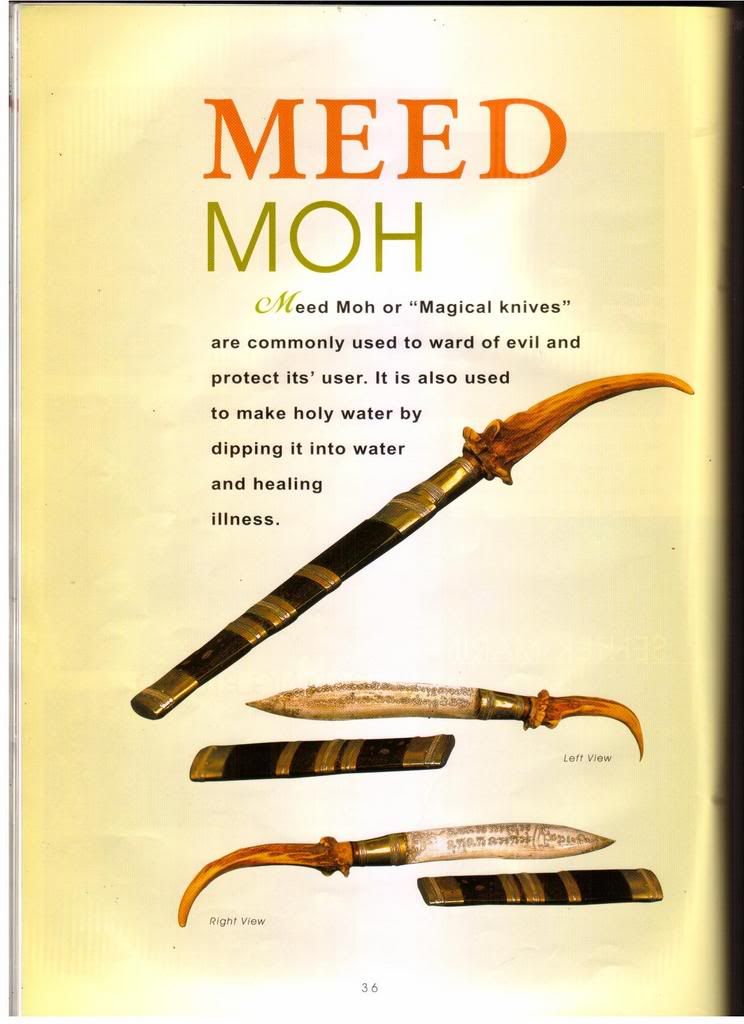
Meed Moh


Meed in thai = Knife

Mor in Thai = Doctor, healer or specialist.

It's also called Mit Prab Pairee, meaning knife that conquers the enemy . Knife that possess special magical power. It is believed that magical knife is energized with the power of

  1. Protection
  2. Exorcism

  3. Victory

  4. Defeating negative forces such as black magic

  5. Courage

  6. Confidence

Mantra

Sakkassa WachiravuthangWessasuwanna SakathawuthangAlawaka Thusawuthang Yamasa NaiyanawuthangNaraiyasa Chakrawuthang Pancha AwuthanangAetaesang Anuphawena Pancha AwuthanangPhakka PhakkhaWijunnang Wijunna Lomangmamena BuddhasantiKajcha Amumhi Okasetithahi


Confession to Rahu

I'm sorry, I'm like a fool! All was well before last August. I think I'm still not very clear minded despite being a not-so devoted buddhist for few years. I have still not been able to reach certain level, which I sinerely hoped Rahu will guide me through.

Looking at the numbers of viewer of the blog for Rahu since June, I'm happy that it's had broke the record of 300 in just 2months, all because of some setback from some selfish people out there, I was rash to have made the decision to close the blog, which though I DID NOT. I realised after changing the names of the blog ( which I can't have it back as it used by someone else) the viewers seems to lost contact with me and the numbers turned slow. I was upset, not because people don't read my blog anymore, but i'm upset, because of my rashness, people who supported Rahu lost the chance to read more. Sorry for being selfish, sorry for being childish, I shouldn't have take those crap so seriously. All I have to do is severe all ties with unnecessary people and we shall each go our separate ways, I shouldn't have acted this way. I hope whoever took my old blog address, For Rahu's sake, please contact me and if possible, let me have the old blogger address again to fulfil my words to Rahu. His/her kindness will be very much appreciated.
不应该有"恨"但因为某一些人,我失去的是谁也不能补偿的...代价太大了,所以要消除对他们的"恨"并非一朝一夕的事.


Monday, 17 September 2007

Real Monks & Bogus Monks

Very often we can see Monks walking around at the Market with their Alms bowl and a handful of amulet. They will approach us to ask for donation and we will be given a amulet as a token. So, How True are they? Sometime I do wonder are they real monk or are they not. I do not wish to offend anyone, but as far as I know, monks in thailand will come out of the temple early in the morning to ask for donation, most of the time villager will offer food to them and they will then bring back to the temple and consume the food for breakfast/lunch. They DO NOT ask for Money.

How to Tell: Who is Real? Who is Bogus?

Real (food-collecting) Monks

1. Stand still outside hawker centre.
2. Wait for food donor to approach.
3. Alms bowl covered with a lid which is opened when donor wishes to offer food.
4. Do not carry pendants/ amulets.

Bogus (monetary-collecting) Monks

1. Walk from table to table in hawker centre.
2. Approach patrons at tables.
3. Alms bowl open all the time.
4. Carry pendants/ amulets as a form of repayment to donors.

For Thai Buddhist monks present in Singapore, there is a Singapore Thai Sangha Council (i.e. Singapore Thai Samatca) and they take a serious view of any Thai Buddhist Monks violating precepts and they will take disciplinary action as well. Thai Buddhist monks are actually issued with identification cards as proof of their monkhood.

Table information extracted from for you buddhism article~ provided by Palelai Buddhist Temple.


Friday, 14 September 2007

NEW ERA of HOPE - New Giant Swing pillars

Photo: Thousands of people turn out to celebrate the unveiling of the new Giant Swing at Lan Kon Muang civic ground outside City Hall.


New Giant Swing pillars, blessed by His Majesty the King, bring hope of unity and prosperity to troubled nation. The inauguration of the new Giant Swing has given rise to hope the trouble-ridden country will be more harmonious and prosperous from now on.Thousands of people gathered at the Giant Swing compound in front of Bangkok City Hall yesterday to take part in the historic event and to show respect to Their Majesties the King and Queen, who presided over the inauguration ceremony at 5pm.Many believed the new Giant Swing, two red wooden pillars, would bless the country with luck.His Majesty was happy to see so many people turn out for the event. His Majesty also welcomed the city’s plan to clone one million teak saplings from the 99-year-old tree used to make the Giant Swing pillars, for distribution to people to create a sense of harmony.


不可思议!!!

胖瘦歹徒潛入北欖坡某寺,暗殺住持與寺中和尚,但兩位和尚可能身上所配戴的佛像保護,都刀槍不入。警推測肇因可能與爭住持寶座有關,刻正調查真相,偵緝兇手。
北欖坡府植基縣警署值勤課長素塔警少校前天凌晨2.30時,接到植基縣市府區他威猜路越弗他尼密佛寺的住持拍梭疋探瑪努頌法師(36歲)報說,有2歹徒潛入僧舍,傷害和尚,據報即率員前往調查。警抵達後發現,住持禪房窗門的鐵欄被撬開,被拆下4扇百葉玻璃窗,房裡有明顯搏鬥痕跡,東西被打翻,散滿一地。住持被刺中胸部與右臂,但刀刺不進去,只留下一點紅色痕跡而已。
另外,住在其隔壁房的拍昌喃和(47歲)被砍中胸部與右臂,同樣刀砍不進去,右肋中彈,彈頭埋在皮膚底下但射不進去。住持拍梭匹疋探瑪努頌法師說,當時他已入寢,有2歹徒(1胖1瘦,都以絨帽蒙面、戴手套、穿襪子)分持1尺長刀子及手槍,潛入房來。
那胖的歹徒衝上前來,揮刀猛砍他的胸部,並刺他的右臂,但都刺不進去。 歹徒見情,便改以用手扼住他的脖子,以致他寂靜不動。另1瘦的歹徒則闖到隔壁房去,揮刀猛砍仍在睡夢中的拍昌喃和尚的胸部,並猛刺其右臂,但都不入,歹徒被嚇了一跳。
拍昌喃和尚被驚醒。他身材較歹徒高大,所以就與與搏鬥。他用手抓住歹徒的雙手腕,並抬腳踹踢歹徒,連自己的腳都踢得浮腫。歹徒見勢不妙,掙脫雙手後奔逃出去,還關上房門,把拍昌喃關在房中,同時開了1槍。子彈穿透房門,擊中拍昌喃和尚的右肋,但彈頭只埋在表皮底下,沒射進去。2歹徒相偕逃逸。
警方馬上帶拍昌喃到植基醫院取出彈頭。發現那是9毫米彈頭。照情形看,歹徒志在人命,並無意於財物,因沒動任何財物。住持又說,他和拍昌喃和尚都未曾與人結怨。他以前在曼谷越塔通佛寺落髮出家,後來獲選來該寺轄下的越弗他尼密佛寺當住持。
當時,寺中其他和尚也有持異議者,但他已和他們互相有了解,因此真的不知歹徒何以要他的命。至於他和拍昌喃和尚所以能刀槍不入,可能是他們身上都佩戴數尊佛像,也许就是佛祖保護。
警推測此案肇因可能與爭奪住持寶座有關。警刻正調查真相,偵緝兇手。

Thursday, 13 September 2007

曼谷鞦韆架修繕落成 皇上主持典禮

泰皇陛下昨天由皇后殿下及詩琳通公主殿下陪同駕臨市民廣場,賜主持鞦韆架修繕落成典禮。上圖為泰皇陛下在鞦韆架前點法粉和灑聖水。
泰皇陛下偕詩麗吉皇后殿下昨天(12日)下午5時15分駕臨曼谷市政府辦事處前市民廣場,御賜主持鞦韆架修繕落成典禮。數萬名市民身著黃色衣服,在鑾駕路線沿途恭迎聖駕。 皇上、皇后及詩琳通公主殿下昨天駕臨市民廣場後,曼谷市長阿披叻稟奏修繕鞦韆架概況,並恭請皇上主持修繕落成典禮。皇上駕臨大鞦韆架前,按傳統儀式在鞦韆架上點金粉、灑聖水、並賜粉紅色錦布讓市長繫在鞦韆架上,然後主持佛教僧侶誦經法會,宣告新鞦韆架正式落成。
曼谷市長向皇上敬獻釋迦牟尼金佛像共9枚、紀念鞦韆架修繕落成的佛像9枚、以及1座使用建造鞦韆架金柚木所剩木料製成的鞦韆架模型。
據悉,大鞦韆架高21米,基座寬10米半,建成於公元1784年,由叻達納哥信王朝第一世皇賜建,以用於舉行古老的皇家儀式。當時由於1位婆羅門教祭司稟奏第一世皇,應該按婆羅門教的信仰建造鞦韆架,以顯示曼谷是國家的「軸心」,並每年在此舉行盪鞦韆儀式。直至1933年,盪鞦韆儀式終止,藝術廳把這座鞦韆架例為國家重要古跡,而大鞦韆架一直成為曼谷市的標誌性古建築物。2005年3月8日,市政府宣布發現鞦韆架歷經222年風風雨雨,木柱內部嚴重損壞無法再修複,因此決定重建鞦韆架。修繕工程從去年正式展開,市政府獲得帕府登猜縣贈送6棵樹齡100年以上的金柚木,並在去年底修繕完成。

Wednesday, 12 September 2007

Thai Man who wears 200 amulet!


泰國政局不明朗,民眾急需心理寄托,使乍都康佛像在泰國風頭正旺,許多民眾紛紛佩戴開光的乍都康佛牌,期望得到佛祖的保佑。曼谷市則有1名奇男子,對乍都康佛牌情有獨鐘,脖子上戴著200尊佛牌,令人驚訝。該名男子現年36歲,名為春立。他脖子上戴著200尊佛牌,總重量達20公斤,其中最大的1塊直徑為10指,重量整整1公斤。春立說,開始的時候僅佩戴1尊乍都康佛牌,但某日夢見佛像顯靈,醒來時隱隱發現佛牌周圍有淡藍色的光暈,從此一發不可收拾。他購買多尊佛牌後,將佛牌帶到各大寺廟請高僧開光,目前佩戴的佛牌達200尊之多。
Not that I'm promoting the jaktukam amulet, just happen to see this interesting article so I thought I'll put up to share. Did he over do it? No comment, it's his faith and belief in the amulet. It's no joke to wear more than 200 amulet which weight more than 20kg! The best part, look at the biggest amulet he have with him!

Monday, 10 September 2007

Pladkik


Pladkik (ปลัดขิก)
A phallus, usually carved from wood. They come in all possible sizes and smaller ones are often worn by men around their waist hanging from a string or chain as an amulet. It symbolizes the Hindu god Shiva and is supposed to avert misfortune and trigger good luck - Shiva is Sanskrit or 'auspicious'. It is seen by some as a fertility symbol and thus comparable to the linga. Some pladkik may have the figure of a tiger, a monkey or some other animal or even a lady attached to it. Some may also have cabalistic writing and yan signs carved on them.

Friday, 7 September 2007

Pictures to show

I've found some REALLY nice picture drawn by Thai Artist.. They were simply Gorgeous!! That's why in future when we go to Thailand and visit those Wats, always take some time to admire the beauty of those drawing, you will be amazed!


Monday, 27 August 2007

Blood Moon Eclipse on August 28 2007

On August 28 at 5:52 pm Singapore / Hong Kong time (09:52:22 UT), a total lunar eclipse will occur when the Sun, Earth and Moon align.

This is a rare occurrence as the Moon usually passes above
or below the imaginary line connecting Earth and the Sun.

During the eclipse, also known as the Blood Moon eclipse, the full Moon will take on a dark red colour as it will be illuminated slightly by sunlight passing through the Earth’s atmosphere. The moon will be in its deepest red for about 30-45 minutes.

This is the first central total eclipse since 2000.

Note: Thank you Stephen who make the effort to email me the document for me to place on my blog. Thank you very much.


Wednesday, 22 August 2007

Garuda

The National Emblem (National Symbol) of Thailand features the Garuda ,a figure from both Buddhist and Hindu mythology. In Thailand, this figure is used as a symbol of the royal family. This version of the figure is referred to as Krut Pha, meaning "garuda with outstretched wings."

A large and savage mythological bird, mount of the Hindu god Vishnu. He is the king of birds and half-brother, and arch-enemy of the nagas and snakes. He is depicted with a human body and the wings, feet and beak of a bird, and in art often in battle with a snake or naga. In Thailand he is also called Krut and is the nation's royal symbol, showing the connection between the Thai monarch as the protector of the nation, and the mighty god Vishnu as the protector of the universe.


PRAH NARAI


Finally after all the research and help from some contacts from a thai forum, i managed to confirmed that the name of this statue is PRAH NARAI and not Prah Isuan which someone told me. We have this particular statue in our reading room, somehow I think I want to know more about it. And research shown as follow:


  • PRAH NARAI aka Vishnu standing on his vahana, the Garuda.
  • Vishnu is always to be depicted holding the four attributes associated with him, being:

A concj shell or Shankhya, named "Panchajanya", held by the upper left hand, which represents creativity. The Panchajanya is the originator of the five elements or Panchabhoota - water, fire, air, earth and sky or space. The sound that evolves from blowing this conch is the primeval sound of creation.

Ananta Shesha as Brahma emerges from a lotus risen from Vishnu's navel

The chakra , a sharp-spinning discus-like weapon, named " Sudarshana" , held by the upper right hand, which symbolizes the mind. The name Sudarshana is derived from two words - Su, which means good, and Darshan, which means vision. The chakra as a weapon thus indicates the necessity of destroying one's ego and illusory self-existence and developing the vision to identify the eternal truth. The discus has six spokes and symbolizes a lotus with six petals , thus representing the power that controls all six season .

A mace or Gada, named" Kaumodaki", held by the lower left hand, which represents individual existence. It symbolizes the primeval force from which all mental and physical strength is derived.

A lotus flower or Padma, held by the lower right hand, which represents liberation or dispersion. It symbolizes the power from which the universe emerges. It represents the concentration of truth or Satya, the originator of the rules of conduct or Dharma, and knowledge or Gyana in a single symbol.


Tuesday, 21 August 2007

Monday, 20 August 2007

นางกวัก or "NANG KWAK"


NANG KWAK is a spirit supposed to bring money in the household. Its statue represents a woman in Thai traditional clothes, sitting on her knees with the right hand up and the hand making the gesture to bring money to her-self. Thai people like to have this statue in their home or their shop.

According to the legend, the real name of Nang Kwak was Supawadee. She was the daughter of Sujitbrahma, her father and Sumontha, her mother. She was born in merchant family in Matshikasun City. When she was young, she was blessed to bring wealth to her family by one of her masters. Since then her family was gradually wealthier and wealthier. Later, many people respected her. After she passed away, people cast her statue to worship and ask for their wealth. Nang Kwak is believed to be helpful for shop-owners. Her statues usually are found near cash registers in most Thai restaurants. A small glass of water is often found in front of her statue as an offering. Some people even wear her small statue pendant as
they believe that Nang Kwak brings money luck to them.


僧伽羅佛像 Phra Phuttha Sihing

Subduing Mara, Calling the Earth to WitnessThe left hand lies in the lap, palm upward. The right hand bends over the right knee, with fingers slightly touching the ground. During meditation, Siddhartha is subjected to many temptations many posed by the evil Mara, who bombards him with his demons , monsters, violent storms and his three seductive daughters. The Buddha remains steadfast. Then to testify to Mara of his meritorious past, he points to the earth with his hand and calls the Earth Goddess. Thorani, the Earth Goddess rises from the ground and wrings the water from her long black hair, by this action raising a torrential flood that drowns Mara and his army of demons. This gesture symbolizes enlightenment, as well as steadfastness (imperturbability).


Saturday, 18 August 2007

Thai~~Animal Per day system

Found some interesting info from the web. As far as most of us were aware, Chinese have a system of 12 horoscopes sign for the year and they are: Rat , Cow , Tiger , Rabbit , Dragon , Snake , Horse , Goat , Monkey , Rooster , Dog , Pig.

The system in Thai as we know sat prajam wan (สัตว์ประจำวัน)
'Animal per day' in which each day of the week corresponds with a certain mythological or real animal, that is, the Garuda for Sunday, the tiger for Monday, a lion or horse for Tuesday, an elephant for Wednesday, that is a tusked elephant before noon and a tuskless elephant for the afternoon or evening, a rat for Thursday, a Guinea pig for Friday and a serpent or snake for Saturday. The choice of animals is derived from the mounts of seven important gods, who in turn are associated with celestial bodies laid out in the dao prajam wan system. Animals assigned to the days of the week vary in the different Southeast Asian countries, and may as well differ locally.


Friday, 17 August 2007

Phra Siwalih (พระสิวลี)

Name of a venerated monk. He is the son of princess Suppawasah, daughter of the king of Kohliya. From early on in her pregnancy, when he was still in his mother's womb, Siwalih already caused a lot of good fortune to his mother, due her adoration for him. According to legend he stayed in his mothers womb for seven years and she was in labour pains for seven days, but immediately after his birth she started to work again as usual. Later, Siwalih ordained as a monk with Sariputta. On the day of his ordination, as soon as he got his hair cut off, with the very first cut of the razorblade, he attained Enlightenment, as a result of his merit. And from the moment he had his head completely shaved, he became an Arahan. He perfected his luck factor, caused a lot of gain amongst his fellow monks and received praise from the Enlightened One, who said he was a champion in bringing luck. It is therefore since long believed that anyone who worships Phra Siwalih or a relic of him, will receive peace in the form of happiness and good luck. Phra Siwalih is usually portrayed as a travelling monk, walking with a klot (the closed umbrella on his shoulder), a staff and a yahm
shoulder bag.

His is well known as an Arahan monk lives in Buddha's period that always has good luck and wealth, he's NEVER been sick in his life.


Ganesha ~~ 象神


象神 Ganesha or Ganesh 他是福德之神,也是知識智慧之神(Lord of Wisdom),在眾多印度神祇當中,受歡迎的程度相當高 Ganesha是象頭人身,他是印度三大神之一(Hindu Trinity)的破壞神濕婆神(Shiva)和雪山女神帕瓦蒂(Parvati)的大兒子。

他的出生故事相當有趣,是印度神話中非常著名的一段。一日,一向遁世而居的Shiva又離家數日,深入雪山冥想修行,妻子Parvati一向渴望溫暖的家庭,於是就自行使用法力,將身上的灰垢變成一個小男孩。喜為人母的Parvati就令小男孩為她守護山洞口,讓她好好休憩一番。返家的Shiva完全不知自己多了個兒子,就與忠誠守護洞口、抵死不讓Shiva進入山洞的小男孩起了衝突,Shiva一怒之下就把小孩的頭給砍了。接下來,為了安撫傷心欲絕的太太,Shiva把路過的第一個生物,也就是一頭大象的頭給砍了下來,安置在男孩的身體上,於是就成了象頭人身的大象神Ganesha。
Ganesha有Parvati女神給的身體,Shiva安置的象頭,於是堪稱為陰陽和諧的完美呈現.Ganesha也是福德之神,也就是我們的財神,想生財的都要拜拜他。Ganesh在神話中是女神的守護者,在此也代表著福德之神,去除不好的障礙。
据知,象头神一共有卅二大化身,时而3头,4头,时而4手,6手,8手,多手,时而青肤、红肤、黄肤、黑肤。他造型的特别点是断了右旁的弯象牙,有时那半截象牙握在其中一只手上。半截的折牙象征着,世上不会有完好理想的命运,凡要达到成功,知识或智慧,都要作出牺牲。象头神在天界是大门的守者,所以他经常坐在四瓣莲花所化的檀城上,他管理了记忆及知识所能到的范围,以监督记忆,原因,影响力,推动力,爱及隔离感六种,所以在鼻上绑了一个铃子,以作为警惕。
象头神的神诞是在印度AVANI月(阳历八至九月间)月圆之日
Ganesha — the elephant-deity riding a mouse — has become one of the commonest mnemonics for anything associated with Hinduism. This not only suggests the importance of Ganesha, but also shows how popular and pervasive this deity is in the minds of the masses.
The Lord of SuccessThe son of Shiva and Parvati, Ganesha has an elephantine countenance with a curved trunk and big ears, and a huge pot-bellied body of a human being. He is the Lord of success and destroyer of evils and obstacles. He is also worshipped as the god of education, knowledge, wisdom and wealth. In fact, Ganesha is one of the five prime Hindu deities (Brahma, Vishnu, Shiva and Durga being the other four) whose idolatry is glorified as the panchayatana puja.
Ganesha's head symbolizes the Atman or the soul, which is the ultimate supreme reality of human existence, and his human body signifies Maya or the earthly existence of human beings. The elephant head denotes wisdom and its trunk represents Om
, the sound symbol of cosmic reality. In his upper right hand Ganesha holds a goad, which helps him propel mankind forward on the eternal path and remove obstacles from the way. The noose in Ganesha's left hand is a gentle implement to capture all difficulties.
The broken tusk that Ganesha holds like a pen in his lower right hand is a symbol of sacrifice, which he broke for writing the Mahabharata
. The rosary in his other hand suggests that the pursuit of knowledge should be continuous. The laddoo (sweet) he holds in his trunk indicates that one must discover the sweetness of the Atman. His fan-like ears convey that he is all ears to our petition. The snake that runs round his waist represents energy in all forms. And he is humble enough to ride the lowest of creatures, a mouse.
Ganesha, the Destroyer of PrideGanesha is also the destroyer of vanity, selfishness and pride. He is the personification of material universe in all its various magnificent manifestations.


Thursday, 16 August 2007

Luang Poo Yiam

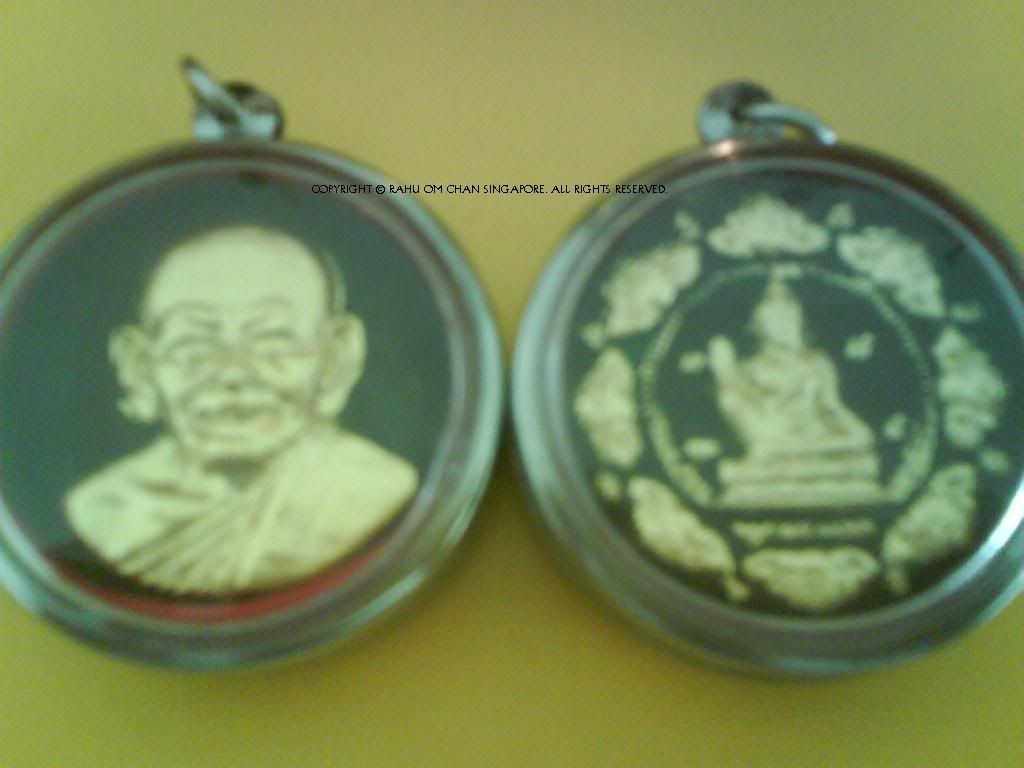
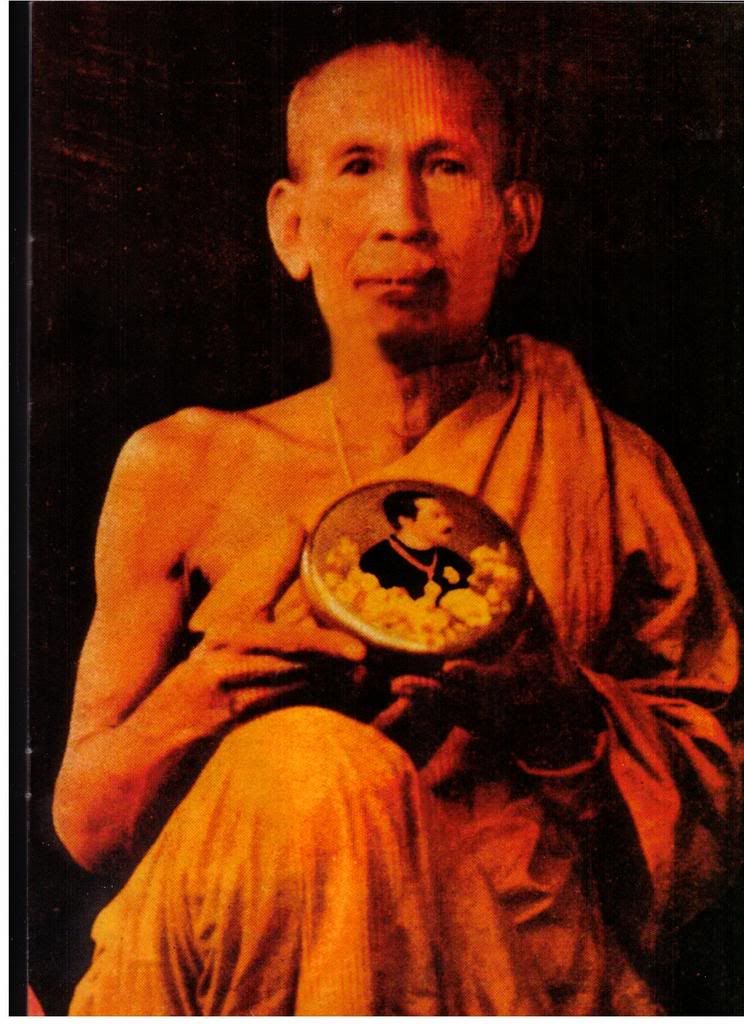
生于2375年11月5日,在曼坤天地区。9岁因家贫而寄居在越朗寺。后来对佛学产生了兴趣而出家为小沙弥,拜阿僧洛大师为师,勤修佛学与各种救世法门。11岁那年被大力推荐前往当时仅有的佛教大学越波完佛寺进修佛理。19岁那年因为家计,暂时还俗,协助父母进行种植与农耕等生活。 尽管如此,他每天一大清早还是步行到越朗佛寺,随高僧诵读经文,从未间断的与师傅联络。 在佛历2397年时,他重新出家,为了学习更深一层的佛法,他决定从他的出家地[越朗]佛寺开始,做为他苦行生涯的起点,先由北上一直步行到清迈,清莱与缅甸等著名佛教胜地,后来又继续南下游遍了泰南各府的山区佛寺,并得到了南北大山区长者的教诲与真传。佛历2440年由于他对佛理有深奥的理解而受到第五世皇赏识,而于佛历2441年封为皇室之护法,并安排他与当时极负盛名的顺德拍不他占多大师,龙甫乐大师和阿曾甘潘大师,一起在宫中研究佛理与经文。 大师为人乐观,从不言别人之闲话,他有句名言[少说话多做事,是为公德]。 大师最擅长督造遮面招财佛,俗称“比打”。龙甫炎在世传法多年,年迈是定居于“越朗”佛寺。在佛历2469年在寺里的禅寺“坐化”西归,享年94岁。在完寂几天,一交代好自己的生后事,并劝弟子不要太过伤心,万事以法轮为重。

Luang Poo Yiam Wat Nang, Bangkok passed away at the age of 94, on 29th April BE2469.Luang Poo Yiam or Jow Koon Dtow is a very famous monk in Thailand, especially to those who like to collect his Kreung Rahng(magical items) and rian amulets. uang Poo Yiam's rians are the top amulet in the series of BenJaPahKeeRian; the Great Five Rians. Luang Poo Yiam was a monk who has observed the precepts of a monk strictly. He has never accepted material things given to him by the lay people, except those which were meant to build Wat Nang. Many people respected Luang Poo Yiam, and his metta travelled both far and near, such that many people would bring their children to be ordained under Luang Poo Yiam. The 5th King was one who respected Luang Poo Yiam very much and treated Luang Poo Yiam as his teacher. Luang Poo Yiam has ever taught the 5th King a special kathah for Metta MahaNiyom (Loving-Kindness), and the 5th King would always use this kathah where ever he go. This kathah is called Kathah ItTiPiSoh Rian Dteui:

It Ti Pi Soh We Se Se It It Se Se
Put Tat Nah Me It It Me Nah
Put Tat Dta Soh It It Soh Dta
Ta Put Dti It"


Wednesday, 15 August 2007

The Buddhist Flag


The Buddhist Flag is a symbol of faith and peace used throughout the world to represent the Buddhist faith. The six colours; Blue (nila), Yellow (pita), Red (lohita), White (odata), Scarlet (manjestha), and the mixture of these six colours (prabaswara) of the flag represent the colours of the aura that emanated from the body of the Buddha when He attained Enlightenment under the Bodhi Tree.
The Horizontal Stripes represent the races of the world living in harmony and the Vertical Stripes represent eternal world peace. The colours symbolize the perfection of Buddhahood and the Dharma.
  • The Blue light that radiated from the Buddha’s hair symbolises the spirit of Universal Compassion for all beings.
  • The Yellow light that radiated from the Buddha’s epidermis symbolises the Middle Way which avoids all extremes and brings balance and liberation.
    The Red light that radiated from the Buddha’s flesh symbolises the Blessings that the practice of the Buddha’s Teaching brings.
  • The White light that radiated from the Buddha’s bones and teeth symbolises the Purity of the Buddha’s Teaching and the Liberation it brings.
  • The Orange light that radiated from the Buddha’s palms, heels and lips symbolises the unshakable Wisdom of the Buddha’s Teaching.
  • The Combination Colour symbolises the universality of the Truth of the Buddha’s Teaching.

Therefore, the overall flag represents that regardless of race, nationality, division or colour, all sentient beings possess the potential of Buddhahood.


Reusi

reusi (ฤาษี) Thai
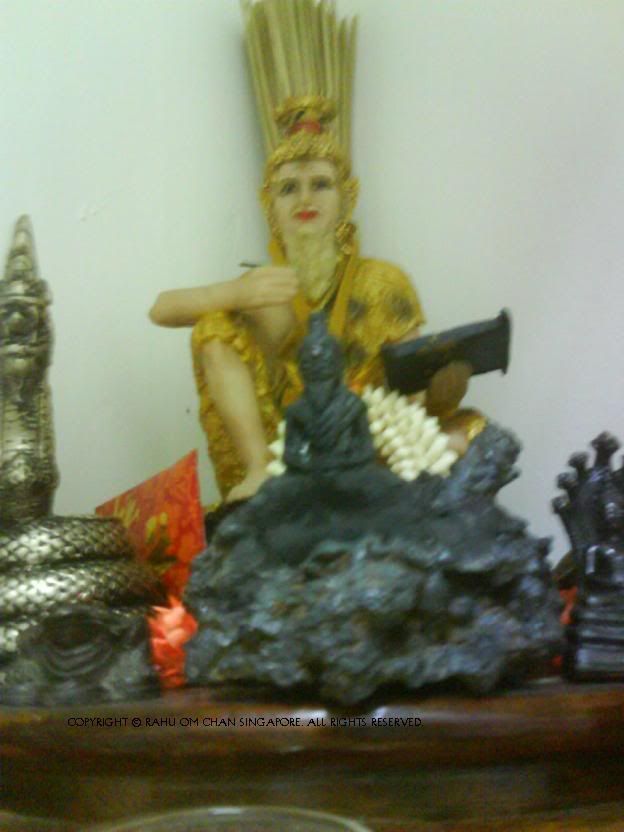
'Hermit' or 'recluse'. A sage or wise character in the Ramakien and other Thai folk tales, who has the capability to exhibit special magical powers. He usually lives in a cave as an ascetic or hermit and is depicted with a white beard and wearing tiger fur. He is at times related to the Hindu god Vishnu being portrayed with multiple arms and heads and holding similar attributes and as reusi nah seua , having the body of a man and the head of a tiger thus referring to Vishnu's fourth avatara Narasingha.

Sanskrit
Hindu sage, ascetic, hermit or recluse, usually living in the Himalayas . In Hinduism generally a holy person who received the revelation of the Vedic hymns and often depicted as seated wearing a beard and a headdress made of bark.

Sunday, 12 August 2007

Yak~~Half God / Fearful Monster


"YAK" are sometimes fearful monsters or half-gods
Fearful Yak inside a garden showing a Buddhist hell. The god Yama (พระยม) is supervising the hells.
When a Yak is very angry, his face is becoming green with revulsive red eyes.


Huge statues of giants called "YAK" (ยักษ์) stand in front of temples. They intend to frighten the spirits and protect the Buddha statues from the spirits. The most famous "YAK" in Thailand are located in the Royal temple "WAT PHRA KAEW" (วัดพระแก้ว) in Bangkok. This temple contains the famous Emerald Buddha statue made of jade. It is said that the jade is coming from a mountain where "YAK" are supposed to have been living long ago. It is a rare case where the "YAK" are facing the temple inner.


Friday, 10 August 2007

善伽财佛


  • 双手抱肚,面带笑容. 功能为保钱财不漏,家庭和睦,富贵吉祥.

  • 双手平直招财手式;能招财进宝,使财源广进,接受福德,财运亨通.
善伽财佛显神通,自毁容貌,证明慈心的伟大,身材肥胖,貌若痴呆,人闲心不闲,四处传法,人缘极佳,公德无量.

An Arahan Monk lives in Buddha's period. His body looks chubby because he don't want to be disturb by woman, so he use magic to transform into an ugly chubby guy.


Thursday, 9 August 2007

Phra Rahu


"PHRA RAHU" is the mythical god of darkness.

Rahu is said to swallow from time to time his two brothers, the moon and the sun, and throw them out again. It is the popular explanation for eclipses.


In year 1997, Wat Srisa Thong in Nakhon Pathom took part in a ceremony seeking blessings from Rahu, god of darkness. The ceremony was important to Rahu followers because of the total lunar eclipse. Followers believe the eclipse was caused by Rahu's shadow over the full moon. Wat Srisa Thong is most popular with Rahu followers because it has a giant statue of Rahu, the biggest in Thailand.

The Prime Minister Chavalit's wife, Khunying Phankrua Yongchaiyudh, was to seek help from Rahu, the mythical god of darkness, to keep her husband's coalition government in one piece. Seeking the blessing of Rahu to repel bad luck is a common practice.

information extracted from
www.thaiworldview.com/bouddha/animism.htm


Wednesday, 8 August 2007

LP Hong Jaktukam


This Jaktukam was a limited edition made by Luang Poo Hong . There are also more amulets from LP Hong in The temple.


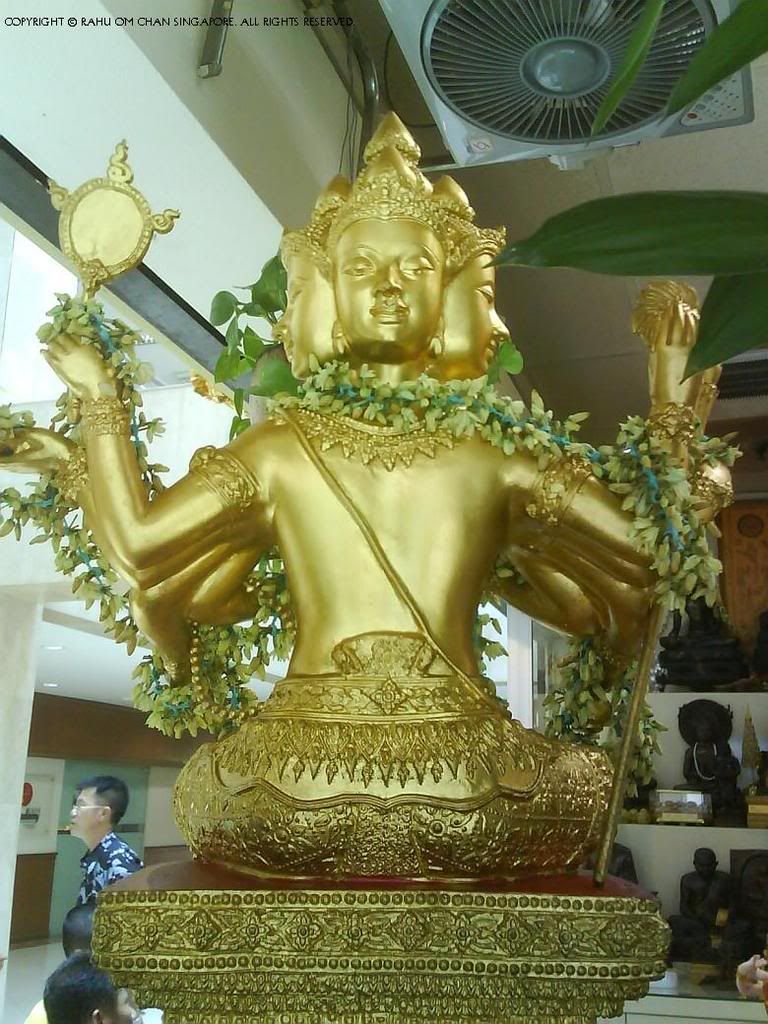
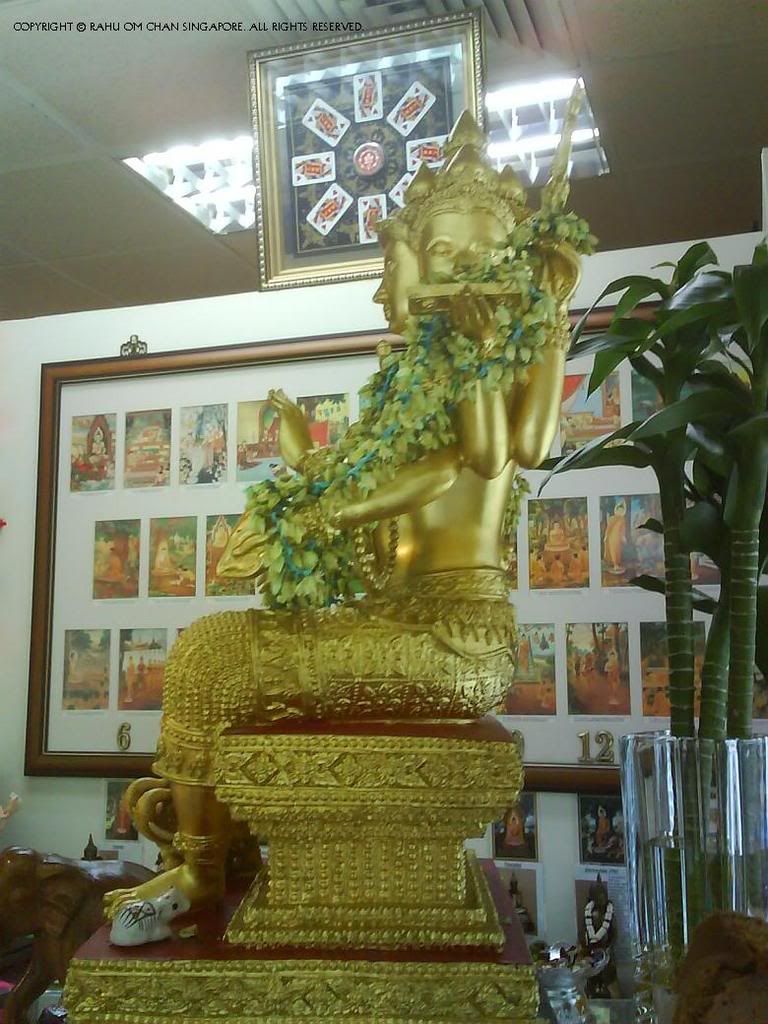
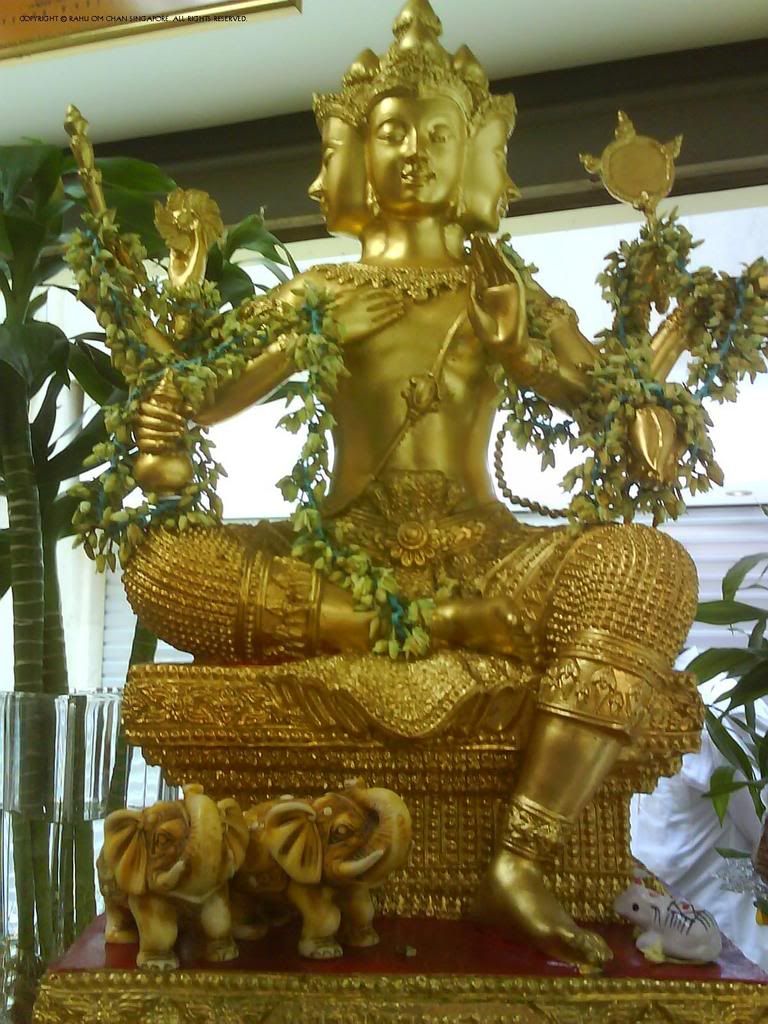
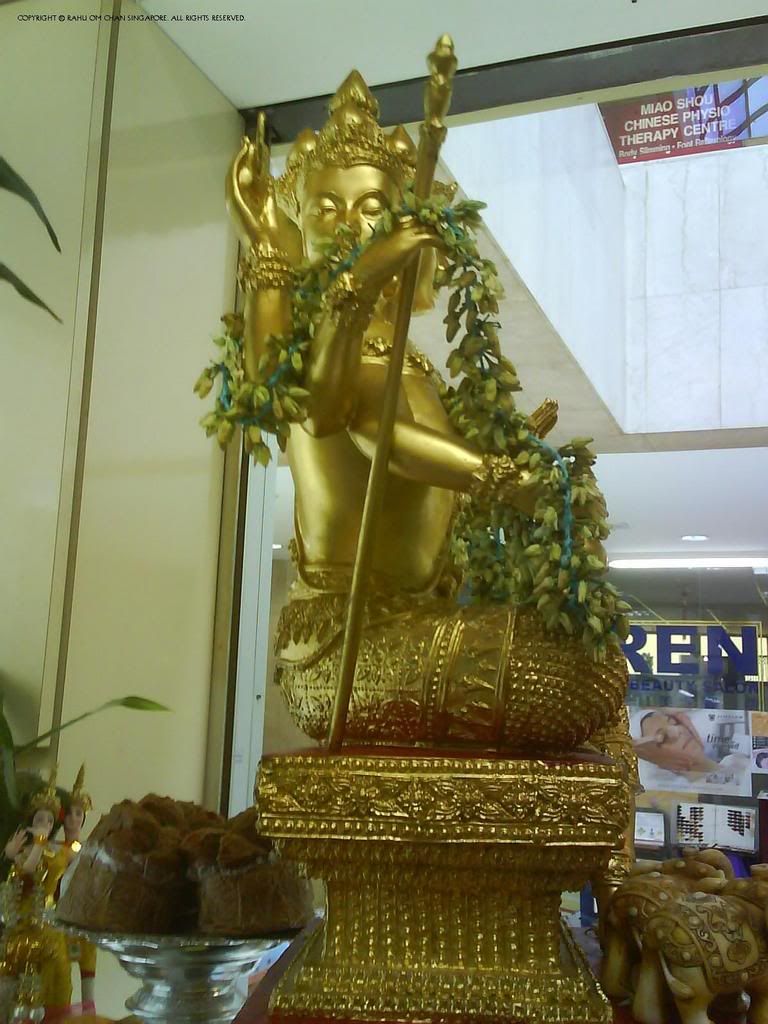
四面佛~~The Four Faced Buddha


四面佛手上所持的各种法物,其救护世间贫苦的代表如下:


  1. 书本 – 代表无上智慧,可求赐与学业成功.

  2. 念珠 – 代表轮迴与修行.

  3. 枪棍 – 代表驱除一切魔障

  4. 水壶 – 代表解渴;有求必应.

  5. 螺壳 – 代表赐福,赐财,赐宝物.

  6. 按胸手印 – 代表庇佑平安吉祥.

  7. 法轮 – 代表消灾,收服一切邪魔外道.

  8. 如意宝 – 代表万事如意,财源广进.


The four faces symbolize the four books of the Vedas, the Hindu scriptures and the source of all knowledge in the creation of the universe.


  • The eight hands, symbolize the omnipresence and power of Lord Brahma.

  • The upper right hand carries a rosary, symbolizing the cycle of life from creation to death.

  • The upper left hand carries the Vedas, symbolizing knowledge and intellect.

  • The lower left hand carries a pot of water representing cosmic energy of creation.

  • The lower right hand bestows grace and protection.


Tuesday, 7 August 2007

Tawd Gathin

Gaining merit through the offering of gifts to monks is an ancient Buddhist tradition that can be witnessed in the centre of bustling cities and in the dusty streets of rural villages on a daily basis. There is a special significance, however, in the thirty-day merit-making period that follows Awk Pansa, and known as Tawd Gathin - or "the laying down of robes."
Among the many gifts offered to the country's monks during this period, the most significant are new robes. Again, this is based on ancient Buddhist teachings, as the gift of new saffron robes dates back to the time of Lord Buddha.

It is written that some thirty or so holy monks set out on a journey from Patha to Savatthi in India at the end of the wet season to visit the Buddha. Travelling along wet and muddy roads, the good brothers presented themselves before Buddha in a most bedraggled and forlorn state. When the Buddha saw his followers in their soiled robes, he decreed that they should be given fresh robes annually at the end of each rainy season. Gathin ceremonies traditionally favour water processions to temples for the presentation of new robes, although this can also be done by land if necessary. Being the sole sponsor of a Gathin ceremony can be very expensive, and many Thai people today participate in a Gathin Samakkee, or United Gathin. Prayers will be held in a temple on the eve of the festival. Early the following morning, the Gathin procession, led by musicians, heads to a selected temple. Upon arrival at the temple, the new robes are carried round the main sanctuary three times before being presented, along with food, toiletries and simple utensils to the monks, following their midday meal. Money is also offered towards the upkeep of the temple; the notes being arranged as leaves on the branches of silver and gold coloured money trees. On completion of a Gathin ceremony, two crocodile flags are placed at the temple's entrance to show that it has received the annual Gathin donations, and that worshippers should find another temple from which to gain their seasonal merit.

Monday, 6 August 2007

Awk Pansa

The month of October in Thailand is marked by festivals of faith held to celebrate the end of Buddhist Lent, and known as Awk Pansa and Tawd Gathin.

These ceremonies follow the three-month rainy season and are rooted in the country's agricultural tradition, based on the lunar calendar that marks the passing of the seasons and dictates the planting and harvesting of crops; mainly rice.

Awk Pansa means "leaving the period of rain" and normally falls on around early October till early November and this year it is 7th October. The occasion is to mark the end of Lord Buddha's retreat to heaven in the wet season, during which he preached to his mother. Upon his return to Earth, his followers presented Lord Buddha and his disciples with gifts of food. This event is celebrated today by the presentation of food and other gifts to the nation's monks as they emerge from their rainy season retreat in temples across the land. The monks prepare for this occasion by shaving their heads and eyebrows, and donning fresh robes before leaving their temples and travelling throughout the countryside. Awk Pansa falls on the night of the full moon when Thai people will visit their local temple to pray and to pay respects to the sacred relics and structures (such as chedis) within the temple grounds. Candles will be lit and placed outside homes and in temple compounds across the country. This is to mark the end of the rains that have brought sustenance to the land.

This occasion comes on the eve of a thirty-day period of merit-making for the people of Thailand.

Saturday, 4 August 2007

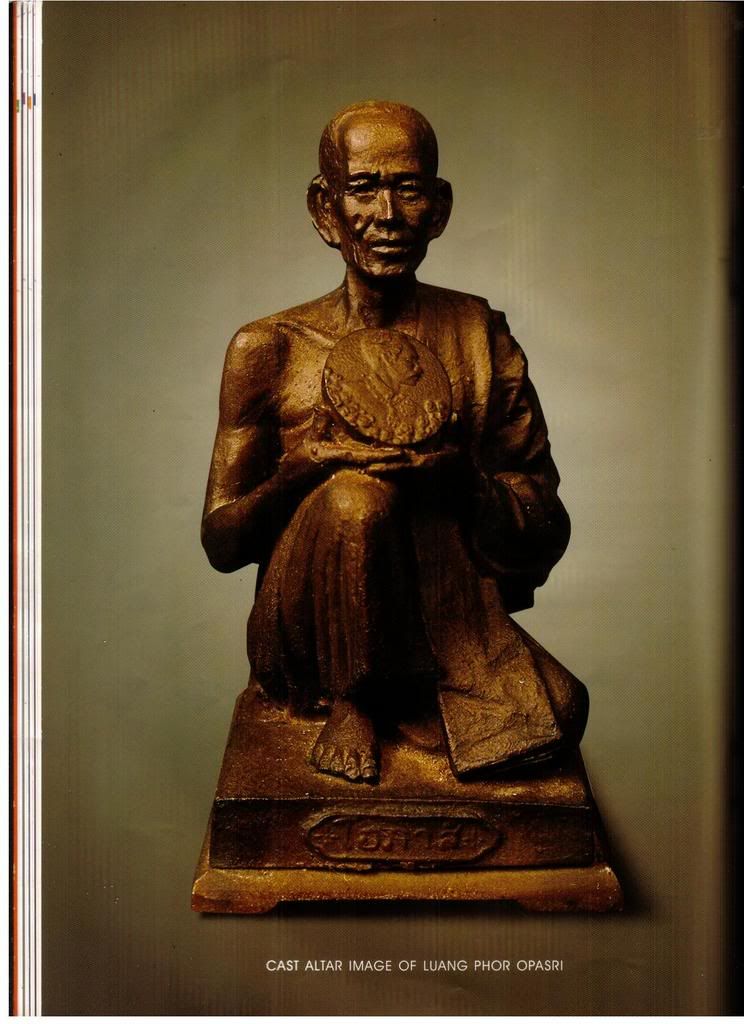
LUANG PHOR OPASEE


Luang Phor Opasee was believed to be born around 1877 to 1887. He was the eldest of eight siblings. He started his formal studies at the tender age of five and became a novice at Wat Tai when he was thirteen. His teacher, seeing talent in him, advised him to travel to the city to further his education. Luang Phor Opasee, heeding his teacher's advice, left for Wat Ta Poh and studied there for a short period of time before leaving for Bangkok to learn Pali. He then became a monk at Wat Bovornives.

Luang Phor Opasee was keen on learning and therefore studied many different languages. He was soon able to speak English, Chinese, Tamil, Malay, Japanese and Pali and many other languages. He stunned many with his outstanding intelligence. He was also a disciple of Luang Phor Kob Wat Tham Salika from Lopburi. Though they have never met before, it is believed that they communicated through meditation. When Luang Phor Opasee was about to reach the highest level of Dhamma, his behaviour started to change. He would stare at burning flames over a long period of time.

Luang Phor Opasee observed all the precepts of a monk strictly. He never accepted anything that was offered to him. He would just burn them, saying that the things are just temptations and that they would lead to unhappiness and that fire could destroy this. There was once he nearly burned down the whole of Wat Bovornives. The villagers were unhappy with him. They were unsure as to why he was behaving like this and they soon concluded that he was insane. Fearing for him, Phra Sangharaj Chao told Luang Phor Opasee to leave Wat Bovornives. Ajahn Bao Er found a place at Wat Arsom Bang Mok for Luang Phor Opasee upon hearing that he was moving out.

Many years later a chief monk in India came to know about Luang Phor Opasee. He sent a letter inviting Luang Phor Opasee to attend a conference held on the 28th of October 1955 in India. He had two disciples that were also invited to go along. Luang Phor Opasee was not able to make it on the 28th, but could only be there on the 31st. He then told his disciples to go over there first to inform them of his late arrival. On the 31st, many people were at the airport to see Luang Phor Opasee off, but he never showed up. Wondering why, they visited the temple only to find out that Luang Phor Opasee had passed away. At that time, his two disciples had met Luang Phor Opasee. They later received news that he had passed away but they thought it was impossible as Luang Phor Opasee was there at the conference interacting with Buddhist monks from other countries.

Friday, 3 August 2007

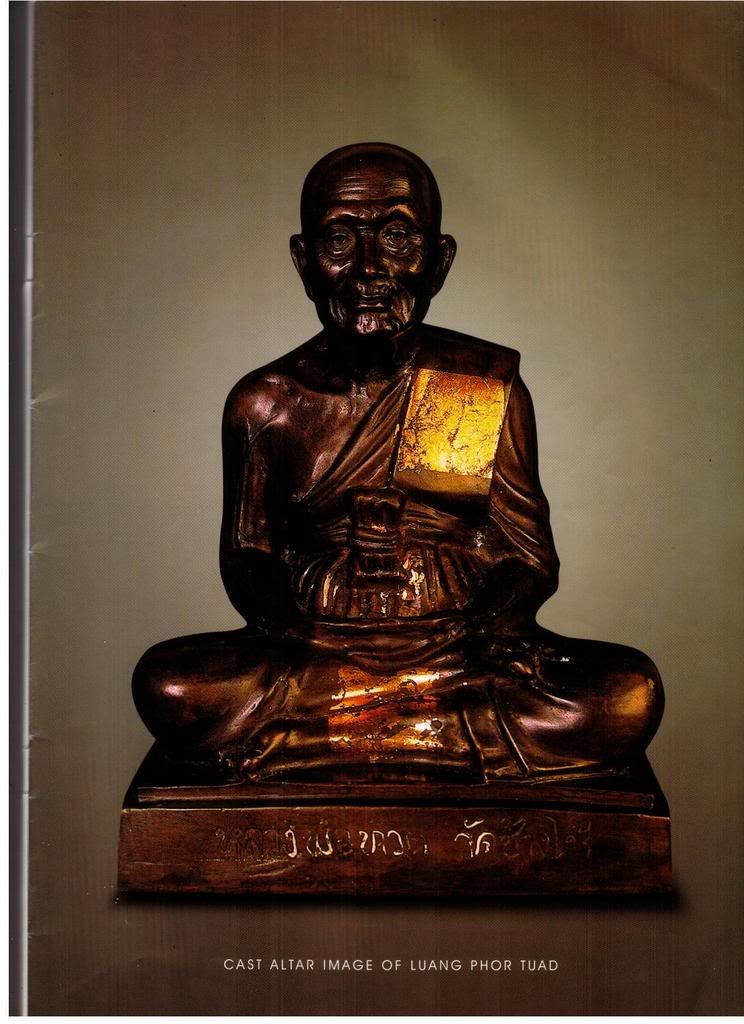
龙甫托


佛历几百年前,大约是在2100年时代左右,出生在泰南约看地区的一个小乡村里.父母是农家,生活贫苦,从出生就随父母一起到田里耕种.传说在佛历三百多年前的某一天,当大师的父母正在忙碌耕作时,他们照常把小龙甫托放在棚架里当他们耕作完毕,正准备喂小龙甫用午餐,发现一条大金蛇! 这条蛇的身体足足有小车轮般大,还会发出闪闪金光.这条蛇的身子正弯弯曲曲卷着正在熟睡的小龙甫托.大蛇两眼发出红色的光芒注视着熟睡的孩子,鼻孔还不断喷出白白的浓烟. 龙甫托大师的母亲见到了这种情形,在害怕与惊慌之余,大喊救命,连同丈夫双双跪地求蛇神开恩,放过孩子. 这时候,金蛇,忽然对着小龙甫的头部,张开血盘大口,露出了一排排尖利的毒牙,说也奇怪,这条金蛇并没有一口把小龙甫吞进肚里,反而吐出一粒晶莹闪亮的珠子.同时还轻轻的用鼻子把水晶宝珠推至小龙甫手里,最后用舌头舔了他的脸几下,就化成了一道白烟消失在树林中.

Thursday, 2 August 2007

Buddha Chinarat


This Chinnarat Statue was placed in the room where Monks put up at our temple during special occassion. Sorry it was not open to public since it is where the Monks will sleep. Will try to take a full picture of the altar. A good place for meditation too.

 
eckhart tolle